
Jalen Ngonda Upcoming Tours
Discover the latest concert dates, artist blogs, and exclusive entertainment news all in one place. We keep fans ahead of the crowd with up-to-date tour announcements and in-depth stories about top performers from around the world.
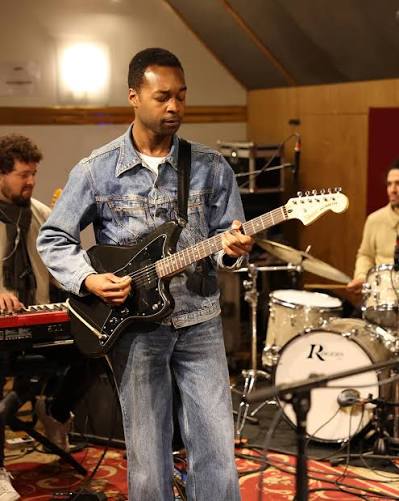 Jalen Ngonda
 Artist Guide
Read the complete Jalen Ngonda guide with current background, live-show context, ticket planning notes and useful fan information.
Jalen Ngonda has emerged as one of the most distinctive modern voices in soul music by drawing deeply from the sound, songwriting and emotional directness of classic R&B without treating the past as a costume. Born and raised in Wheaton, Maryland, near Washington, D.C., Ngonda moved to Liverpool in 2014 to study music and ultimately built his career in England. His distinctive falsetto, strong melodic instincts and love of 1960s and 1970s soul quickly separated him from artists who simply reproduce vintage production styles. The 2023 debut album Come Around and Love Me brought that identity into full focus, combining romantic songwriting, orchestral arrangements, rhythm-and-blues energy and a voice capable of moving from tenderness to dramatic intensity within a few lines. His second album, Doctrine of Love, expanded the formula with more groove, horns, gospel-influenced backing vocals and the confidence of an artist shaped by years of touring. For listeners searching for Jalen Ngonda tours, concert tickets, songs or albums, his story is about a musician who respects soul tradition while insisting that the music belongs in the present.
Growing Up in Wheaton, Maryland
Jalen Ngonda grew up in Wheaton, Maryland, a diverse community outside Washington, D.C. His early environment exposed him to several kinds of music, but classic soul became the fascination that would ultimately shape his career.
Ngonda has spoken about discovering Motown at a young age after hearing music from his father's collection. The Temptations became an especially important gateway, opening the door to a wider world of 1960s and 1970s vocal groups, soul singers and songwriters.
That discovery was not simply about liking old records. Ngonda became interested in how those songs were constructed: melody, harmony, rhythm, vocal phrasing and the ability to communicate complicated emotions in a compact arrangement.
As a teenager, he developed his own musicianship across several instruments. Piano, guitar and drums all became part of his musical education, giving him a broader understanding of arrangement than a singer who works only from the microphone.
This multi-instrumental background later became useful both in songwriting and performance. Even though audiences primarily know Ngonda for his voice, his understanding of rhythm and harmony can be heard in the way his songs are built.
Why Jalen Ngonda Moved to Liverpool
Ngonda's life changed significantly when he moved from Maryland to Liverpool in 2014 to study at the Liverpool Institute for Performing Arts.
The decision was unusually bold. He was leaving the United States for a city he knew largely through music and the reputation of its performing-arts culture. Liverpool gave him access to musicians, small venues, open-mic environments and a community where playing regularly could become as important as formal study.
Although education brought him to England, the local music scene helped persuade him to stay.
Ngonda began playing with other musicians, performing in local spaces and developing the confidence required to carry a room with his own material. Liverpool's musical history also suited someone already obsessed with songwriting. The city is famous for guitar bands, pop craftsmanship and working musicians, and Ngonda absorbed that environment without abandoning the American soul traditions that had shaped him.
Over time, England became home rather than a temporary stop for education. His career developed there through live work, management relationships and the slow building of an audience.

From Student Gigs to Supporting Established Artists
Ngonda's rise did not begin with a sudden viral moment. He spent years performing, writing and developing his stagecraft before the debut album brought international attention.
Early opportunities included support appearances for respected artists such as Martha Reeves, Lauryn Hill and Laura Mvula. These experiences mattered because soul music places unusual demands on a live singer. The songs often leave little room to hide behind production, and an audience can immediately hear whether a vocalist can control dynamics, phrasing and pitch.
Ngonda's voice became the obvious centre of his performances, but his stage identity was built through repetition rather than spectacle. Small venues taught him how to hold attention. Larger support slots showed how the same songs needed to project differently in bigger rooms.
By the time he became widely known through Come Around and Love Me, he had already spent years learning what worked in front of real audiences.
Jalen Ngonda Upcoming Tours
The Voice That Defines Jalen Ngonda's Sound
Jalen Ngonda's voice is the first thing many listeners notice. His upper register can rise into a light, flexible falsetto, but he is equally capable of dropping into a fuller tenor or adding grit when a song needs more urgency.
Those contrasts invite comparisons with classic soul singers, especially artists associated with Motown and the sophisticated romantic R&B of the late 1960s and early 1970s.
However, the most interesting part of Ngonda's singing is not resemblance to any one predecessor. It is the way he uses vocal movement to shape the emotional architecture of a song.
A phrase can begin almost conversationally, climb suddenly into falsetto and then return with more weight. This creates drama without requiring oversized production.
His control also allows him to work with relatively concise arrangements. Strings, guitars, piano, bass and percussion can provide colour while the vocal remains the main storytelling instrument.
That balance is one reason his recordings feel rooted in classic soul but still personal rather than anonymous.
Classic Soul Influence Without Simple Imitation
Ngonda is often described through the language of Motown, Northern soul, R&B and vintage soul, but he has resisted the idea that music inspired by earlier decades must be considered old-fashioned.
His influences include figures such as Marvin Gaye, The Temptations and the great soul writers and arrangers of the twentieth century, but his listening has never been limited to one category. He has also expressed admiration for artists and songwriters such as Burt Bacharach, Brian Wilson and The Beatles.
That wider interest can be heard in his attention to melody.
Many Ngonda songs feel immediately familiar because the chorus arrives with the clarity of classic pop writing, yet the chords, arrangement and vocal choices give the music more detail than a straightforward revival exercise.
He is therefore better understood as a contemporary songwriter who works inside a soul tradition rather than someone attempting to reproduce a museum version of 1960s music.
Signing with Daptone Records
Daptone Records became an important part of the Jalen Ngonda story because the label's musicians and producers share his respect for classic recording techniques while continuing to make new soul music.
Ngonda signed with Daptone after years of developing his material in the UK. Plans for recording were complicated by the pandemic period, but the delay gave him additional time to write and refine songs.
He eventually worked with producers and arrangers Michael Buckley and Vincent Chiarito, musicians with deep experience in the Daptone world.
The collaboration gave Ngonda access to a studio approach that suited his writing: live-feeling rhythm sections, carefully placed strings, backing vocals, keyboards and guitars used for emotional effect rather than excessive decoration.
The result was not a generic retro-soul record. It was an album built around Ngonda's own songs and voice, with production designed to support both.
Come Around and Love Me: The Debut Album
Come Around and Love Me was released in 2023 and became the album that introduced Jalen Ngonda to a much wider international audience.
The record contains eleven songs, including the title track, “If You Don't Want My Love,” “Lost,” “That's All I Wanted From You,” “Please Show Me,” “Just Like You Used To,” “What A Difference She Made,” “Give Me Another Day,” “So Glad I Found You,” “It Takes A Fool” and “Rapture.”
Across those tracks, love is approached from several angles: devotion, uncertainty, longing, rejection and the desire to repair or preserve a connection.
The arrangements draw from classic soul without allowing nostalgia to overwhelm the songs. Strings can add sweep, backing vocals can create warmth and the rhythm section can keep the music moving with understated precision.
Ngonda's singing provides the main sense of drama. Rather than forcing every track into a huge climax, he changes tone from song to song, sometimes sounding fragile and sometimes remarkably assured.
Why “If You Don't Want My Love” Became a Standout Song
“If You Don't Want My Love” became one of the tracks most strongly associated with Ngonda's rise.
The song demonstrates how efficiently he can combine a classic soul framework with contemporary emotional clarity. The arrangement is compact, the melody is immediate and the vocal performance carries both confidence and vulnerability.
The central idea is simple enough to understand immediately: love cannot survive if the other person does not truly want it. Yet the performance gives that familiar subject additional tension.
Ngonda's falsetto does not merely decorate the chorus. It heightens the feeling of uncertainty and emotional exposure.
The track became an accessible entry point for listeners who had never heard him before because it communicates his entire musical world in a short space: strong songwriting, disciplined arrangement, vintage soul influence and an unmistakable voice.
“That's All I Wanted From You” and the Power of Restraint
“That's All I Wanted From You” shows another side of Ngonda's writing. The song is emotionally direct but avoids becoming melodramatic.
The rhythm keeps moving while the vocal phrasing creates a sense of longing, allowing the track to feel both graceful and urgent.
This ability to balance movement and sadness is central to much classic soul music. A song can make people dance while describing disappointment, loneliness or romantic frustration.
Ngonda understands that contradiction well.
His strongest songs rarely depend on one emotional colour. Joy can contain anxiety, devotion can contain doubt and heartbreak can be delivered through an arrangement that still feels warm and inviting.
That complexity gives the debut album much of its replay value.
“Lost,” “Rapture” and the Range of the Debut
Come Around and Love Me works best as a complete album because tracks such as “Lost” and “Rapture” demonstrate how much range exists inside Ngonda's version of soul music.
“Lost” gives his voice space to move between softer passages and more expressive peaks. The performance feels intimate without becoming fragile.
“Rapture,” which closes the album, brings more rhythmic drive and leaves the record with a stronger sense of momentum.
Those differences matter. If every track simply imitated the same Motown tempo and arrangement, the album would quickly become predictable.
Instead, the production varies the relationship between rhythm, strings, backing vocals and lead singing while maintaining a coherent sonic identity.
The result feels like one album rather than a collection of disconnected attempts at different retro styles.
Singles Between the First and Second Albums
After the debut, Ngonda continued releasing music rather than disappearing completely between album cycles.
“Illusions” and “Here to Stay” expanded his catalogue, while “Anyone in Love” became an important bridge toward the second album.
“Anyone in Love” continues his interest in the emotional complications of romance, but its arrangement shows a growing confidence in larger orchestral detail and carefully layered backing vocals.
“Just as Long as We're Together” offered another example of his ability to write a direct soul song around commitment and connection.
He also collaborated with veteran keyboardist and producer Victor Axelrod on “All About Me,” a track that moved into a reggae-influenced groove and demonstrated that Ngonda's voice could work naturally outside the exact sound of his debut album.
These releases showed that his musical identity was broad enough to stretch without losing recognition.
Doctrine of Love and the Second Album
Ngonda's second studio album, Doctrine of Love, was released in 2026. The record builds on the orchestral soul of the debut but places greater emphasis on groove, horns, backing vocals and the energy developed through extensive live performance.
The title reflects an idea running through the record: love should function as more than a romantic subject. It can also be understood as a way of treating other people with compassion and dignity.
The album contains ten tracks: “Anyone in Love,” “Doctrine of Love,” “Mr. Train Conductor,” “Burning Temptation,” “Love Is Gone,” “I Can't Ever Leave You,” “Hannah, What's the Matter?,” “Good Good Love,” “Hang It On The Shelf” and “Taken Out of the Picture.”
Compared with the debut, the second record often feels more prepared for the stage. Rhythms hit harder, horns provide sharper accents and gospel-influenced backing vocals give certain songs a larger communal feeling.
How Doctrine of Love Expands the First Album's Sound
The progression from Come Around and Love Me to Doctrine of Love is less about abandoning one style than making it more physically immediate.
The debut often emphasizes elegance, strings and the romantic atmosphere of late-1960s and early-1970s soul. The second album keeps those qualities but adds more grit and rhythmic drive.
Years of touring played an important role in that development.
A song that works beautifully on headphones may need a stronger pulse to command a large room. Ngonda's later material reflects a greater awareness of how arrangements move an audience.
That does not mean the songs sacrifice detail. The horns, backing vocals and melodic structures remain carefully controlled, but the music feels more prepared to breathe and stretch on stage.
This makes Doctrine of Love a natural second chapter rather than a repetition of the debut.
“Burning Temptation” and the More Energetic Side of Jalen Ngonda
“Burning Temptation” highlights the greater physical energy of the second-album period.
The track uses rhythm and arrangement to create forward momentum while preserving the vocal elegance associated with Ngonda.
This balance is important because soul music has always connected emotion with movement. The most powerful performances can communicate yearning or conflict while still making the rhythm impossible to ignore.
Ngonda's later material increasingly embraces that idea.
Rather than presenting himself only as a ballad singer with a high falsetto, he uses tempo and groove to broaden the emotional range of the show.
That development also helps explain why the second album feels closely connected to the stage.
Love as the Central Theme of Jalen Ngonda's Songwriting
Love is the most obvious recurring subject across Ngonda's work, but the songs rarely treat it as one simple emotion.
Romance can involve devotion, insecurity, jealousy, absence, regret, excitement or the fear that another person is moving away.
Ngonda is drawn to these emotional states because they are universal enough to feel timeless but personal enough to produce specific songs.
That places him within a long soul tradition. Many of the genre's greatest records use romantic relationships as a way of exploring pride, vulnerability, loyalty and disappointment.
Ngonda continues that tradition while writing from his own time and perspective.
Doctrine of Love also widens the idea by connecting love with compassion more generally, giving the theme a social and ethical dimension beyond couple-based romance.
Why His Music Is More Than a Motown Revival
Motown is an unavoidable reference point when discussing Jalen Ngonda, but describing him simply as a Motown revival artist is too narrow.
His vocal influences extend through several areas of classic soul and R&B, while his melodic interests also reach into pop and rock songwriting.
Burt Bacharach's sophisticated melodic sense, Brian Wilson's harmony, The Beatles' pop craftsmanship and different strands of American soul all contribute to the larger musical vocabulary around him.
The modern element comes from the fact that Ngonda is not attempting to recreate one specific year or label sound.
He chooses instruments and recording techniques that serve his songs, even when those choices are inspired by earlier decades.
The lyrics are his, the melodies are his and the live energy has been shaped by his own years of touring.
That distinction is what keeps the music from becoming simple imitation.
Jalen Ngonda as a Multi-Instrumentalist
Although Ngonda is known primarily as a singer, his musical background includes several instruments.
He developed skills on piano, guitar and drums while still young, and those abilities continued to matter after he moved to England. During his early Liverpool years, he played different instruments in bands as he learned the local scene.
This matters to his songwriting because a multi-instrumentalist can hear a song from several positions at once.
A singer may focus first on melody. A drummer hears the shape of the groove. A keyboard player understands harmony differently, while a guitarist may hear rhythmic or melodic space in another way.
Ngonda does not need to display every instrument in every performance for that knowledge to influence the music.
It appears in the arrangements and in the way his songs leave room for rhythm, harmony and voice to interact.
Why Jalen Ngonda's Live Performances Matter
Live performance has been central to Ngonda's development from his earliest years in Liverpool.
His voice naturally creates attention, but a concert reveals more than vocal range. He can alter phrasing, extend sections and allow the band to create different levels of intensity from one night to another.
This is especially important in soul music, where the relationship between singer, rhythm section and backing vocals can transform familiar material.
A studio version may be carefully arranged, but the stage gives the song room to breathe.
Ngonda has spoken about enjoying the process of changing arrangements over time, which means the live experience is not designed simply to reproduce the recording note for note.
That flexibility gives returning audiences a reason to hear the same songs again.
From Small Rooms to Major Stages
Ngonda's live career has expanded significantly since his early Liverpool performances.
He has played major festivals, headlined increasingly large venues and reached audiences in multiple countries. That growth matters because his music does not rely on enormous visual production to make an impression.
The central attraction remains the interaction between songs, musicians and voice.
Large rooms can actually highlight the strength of his arrangements. A call-and-response passage becomes communal. A falsetto phrase can create silence before the rhythm returns. Horns and backing singers can make a chorus feel larger without overwhelming the melody.
This ability to scale upward is one reason Ngonda's career has grown strongly after years of steady development.
Where New Listeners Should Start
For someone hearing Jalen Ngonda for the first time, Come Around and Love Me remains the clearest starting point because it presents his core sound in a complete album format.
“If You Don't Want My Love” is useful for understanding his falsetto and romantic songwriting, while “That's All I Wanted From You” highlights his sense of groove and restraint. “Lost” demonstrates the emotional control in his voice, and “Rapture” shows a more driving side of the debut.
After that, the singles “Illusions,” “Here to Stay” and “Anyone in Love” provide a bridge into the next phase.
Doctrine of Love then shows how touring and greater confidence changed the arrangements, particularly through stronger rhythm, horns and gospel-influenced backing vocals.
Listeners interested in a stylistic detour should also hear “All About Me” for its reggae influence.
The Albums That Define Jalen Ngonda's Career
- Come Around and Love Me — the 2023 debut that established Ngonda's blend of classic soul influence, orchestral detail, romantic songwriting and expressive falsetto.
- Doctrine of Love — the second studio album, expanding the debut's foundation with more rhythmic drive, horns, gospel-influenced backing vocals and a stronger sense of live energy.
Ngonda's album catalogue is still relatively compact compared with artists who have been recording for decades, which makes it particularly easy to explore in full.
The singles released around those albums are equally valuable because they show how quickly his sound continues to develop.
What Makes Jalen Ngonda Different in Modern Soul
The modern soul landscape includes many artists inspired by earlier decades, but Ngonda stands out because his strongest asset is not vintage production equipment or period styling. It is songwriting combined with a genuinely distinctive voice.
A convincing retro sound can attract attention once. A memorable song is what brings listeners back.
Ngonda's best tracks have choruses that remain in the memory after the production details fade. His falsetto is technically impressive, but it becomes meaningful because he uses it to communicate hesitation, desire, joy or hurt.
That combination allows him to respect the traditions he loves without being trapped by them.
He can work with strings, horns, reggae rhythm or a stripped-back band because the centre of the music remains the same: melody, emotional clarity and performance.
The Lasting Jalen Ngonda Story
Jalen Ngonda's career connects two musical geographies in a particularly interesting way. He grew up in Maryland absorbing American soul, then crossed the Atlantic to Liverpool and built his professional identity within the British live-music scene.
That combination shaped an artist who understands classic American R&B from the inside but developed much of his stagecraft and career in England.
The debut album showed how naturally those influences could come together. The second album demonstrated that he was not interested in simply repeating the first record.
His story also shows the value of patience. Years of small performances, support slots and songwriting came before the wider recognition attached to Come Around and Love Me.
That long development helps explain why the success did not immediately overwhelm the music. Ngonda had already learned how to perform, collaborate and write before a much larger audience arrived.
For fans searching for Jalen Ngonda tours, concerts or tickets, the live show adds another layer to the records. His songs are carefully arranged in the studio, but they were built by a musician who understands that soul music changes when a real audience enters the room.
Explore Jalen Ngonda Tours and Live Performances
Jalen Ngonda's concerts bring together the romantic orchestral soul of his debut, the stronger groove of his later material and the flexibility of a singer who has spent years learning how to reshape songs on stage.
Exact setlists, venue arrangements, performance times and ticket availability can change between individual shows, so fans should always check the most current Jalen Ngonda concert information before making travel plans.
Whether you discovered him through “If You Don't Want My Love,” Come Around and Love Me, “Anyone in Love” or Doctrine of Love, his live performances offer the clearest way to hear how classic soul influence and contemporary songwriting meet. The records may introduce the voice, but the stage reveals the full musician behind it.
Jalen Ngonda FAQs
Get ready for the Jalen Ngonda live show. Find the best Jalen Ngonda tickets, check tour setlists, and get essential venue details. Read our quick fan FAQ to make the most of your Jalen Ngonda music concert experience.
Who is Jalen Ngonda and where is he from?
Jalen Ngonda is an American soul singer, songwriter and multi-instrumentalist who grew up in Wheaton, Maryland, near Washington, D.C., before moving to England in 2014. He relocated to Liverpool to study music at the Liverpool Institute for Performing Arts and later built his professional career in the UK. Ngonda became widely known through his 2023 debut album Come Around and Love Me, released by Daptone Records. His music draws strongly from classic soul, Motown and R&B while remaining focused on original songwriting. Although he is best known for his expressive falsetto and tenor vocals, his musical background also includes guitar, piano and drums.
Why did Jalen Ngonda move to England?
Jalen Ngonda moved from Maryland to Liverpool in 2014 after gaining a place at the Liverpool Institute for Performing Arts. The move gave him an opportunity to study music while also entering a city with a strong live-performance culture and important songwriting history. Liverpool quickly became more than a temporary student destination. Ngonda began performing regularly, joining bands, developing his own material and building professional relationships within the local music community. Those experiences eventually helped him decide to remain in the UK rather than return immediately to the United States. He later relocated to London, but England remained the base from which much of his recording, touring and songwriting career developed.
What type of music does Jalen Ngonda make?
Jalen Ngonda primarily makes soul and R&B influenced by the great vocal and songwriting traditions of the 1960s and 1970s. Motown is an important reference point, but his music also reflects interests in doo-wop, Northern soul, pop, rock, orchestral soul and artists known for sophisticated melody, including Burt Bacharach, Brian Wilson and The Beatles. His recordings often feature strings, piano, guitar, bass, drums, backing vocals and, on later work, prominent horns and gospel-influenced vocal arrangements. The result sounds rooted in classic soul without being a direct recreation of one historical style. Ngonda creates contemporary music shaped by older traditions rather than nostalgia alone.
What is Come Around and Love Me by Jalen Ngonda?
Come Around and Love Me is Jalen Ngonda's debut studio album, released in 2023 through Daptone Records. The eleven-track record includes songs such as “Come Around and Love Me,” “If You Don't Want My Love,” “Lost,” “That's All I Wanted From You,” “Just Like You Used To,” “What A Difference She Made” and “Rapture.” Producers and arrangers Michael Buckley and Vincent Chiarito helped shape the album's rich soul sound around Ngonda's songwriting and voice. Strings, backing vocals, keyboards and a tightly controlled rhythm section give the record a classic character, while Ngonda's original melodies and lyrics keep it from functioning as a simple tribute to earlier soul music.
What is Doctrine of Love by Jalen Ngonda?
Doctrine of Love is Jalen Ngonda's second studio album, released in 2026. The record develops the foundation established by Come Around and Love Me while adding more rhythmic drive, horns, gospel-influenced backing vocals and a stronger connection to the energy Ngonda developed through touring. Its ten tracks include “Anyone in Love,” “Doctrine of Love,” “Mr. Train Conductor,” “Burning Temptation,” “Love Is Gone,” “I Can't Ever Leave You,” “Good Good Love” and “Taken Out of the Picture.” The album also expands the meaning of love beyond romance, presenting compassion and consideration for other people as part of its central idea. It represents a confident second chapter rather than a repeat of the debut.
What instruments does Jalen Ngonda play?
Jalen Ngonda is known first as a singer, but he developed as a multi-instrumentalist before his recording career became widely recognized. His musical background includes piano, guitar and drums, and he played different instruments while becoming part of Liverpool's music scene after moving to England. Those skills help explain the strong rhythmic and harmonic awareness in his songwriting. Even when he is performing primarily as a vocalist, he understands how the rhythm section, keyboards and guitars interact with the melody. Ngonda has also contributed instruments to collaborative recordings outside his own albums. His voice remains the main focus of his solo work, but his broader musicianship plays an important role in writing, arranging and live performance.
What should fans expect from a Jalen Ngonda concert?
A Jalen Ngonda concert is centred on expressive live vocals, soul arrangements and the interaction between Ngonda and his band rather than elaborate spectacle. His falsetto can move from delicate passages into much more powerful phrases, while drums, bass, guitar, keyboards, backing vocals and sometimes horns give the songs greater physical energy than they may have on record. Ngonda also likes to adjust arrangements over time instead of reproducing every studio version exactly. A set can therefore move between romantic ballads, rhythmic soul, orchestral material and the more energetic songs associated with Doctrine of Love. Exact setlists and venue details vary, so fans should check the specific performance information before attending.
Jalen Ngonda Recent Setlists
Recent setlists can be edited from the panel or managed in the setlists table.
Jun 27, 2026 Featured Arena, London 6 songs
Opening Moment
Fan Favourite
Acoustic Interlude
Main Set Highlight
Final Singalong
Encore Song
Jun 26, 2026 Featured Theatre, Manchester 6 songs
Encore Song
Final Singalong
Main Set Highlight
Acoustic Interlude
Fan Favourite
Opening Moment