
Holy Holy Upcoming Tours
Discover the latest concert dates, artist blogs, and exclusive entertainment news all in one place. We keep fans ahead of the crowd with up-to-date tour announcements and in-depth stories about top performers from around the world.
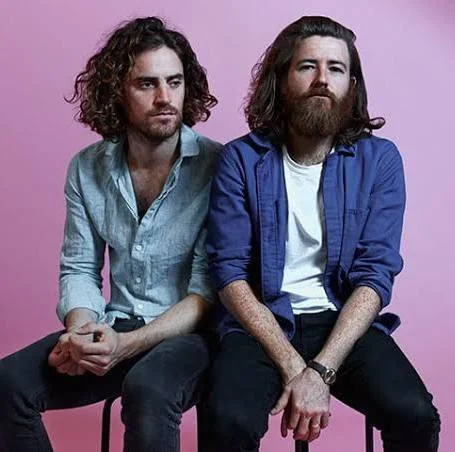 Holy Holy
Holy Holy Artist Guide
Read the complete Holy Holy guide with current background, live-show context, ticket planning notes and useful fan information.
Holy Holy built one of the more interesting journeys in modern Australian indie rock by continually changing what the band could sound like without losing the songwriting partnership at its centre. Formed in 2011 by vocalist and songwriter Timothy Carroll and guitarist, producer and composer Oscar Dawson, Holy Holy began with expansive guitar music and gradually moved through indie rock, art pop, electronic production, synth-driven arrangements and increasingly ambitious collaborations. Ryan Strathie and Graham Ritchie became important members of the group's live world, helping transform songs created between studios, cities and continents into a powerful concert experience. Across a catalogue that stretches from the guitar-focused debut When the Storms Would Come to the collaborative experimentation of Cellophane and the farewell-era Sweet Bitter Sweet, Holy Holy consistently treated change as part of the band's identity. For listeners exploring Holy Holy tours, songs, albums or the partnership between Carroll and Dawson, their story is ultimately about two musicians learning how to keep surprising each other after more than a decade of writing together.
How Timothy Carroll and Oscar Dawson Formed Holy Holy
Holy Holy did not begin through the typical story of musicians meeting in a rehearsal room and immediately forming a band. Timothy Carroll and Oscar Dawson first crossed paths while volunteering in Southeast Asia. Their musical partnership developed later, after the two found themselves living in different parts of Europe.
Carroll was spending time in Stockholm, while Dawson was based in Berlin. They reconnected in 2011 and began sharing ideas, demos and songs despite the distance between them.
That geographical separation became an important part of the early Holy Holy creative process. Instead of relying completely on constant rehearsals in the same room, the pair learned to develop material through exchanges, temporary recording sessions and periods of working together whenever their locations allowed.
Both eventually returned to Australia, where the project could become more fully established.
Carroll brought the lyrics, lead vocals and rhythm-guitar foundation, while Dawson contributed lead guitar, production knowledge, keyboards and an increasingly important role in shaping the sonic environment around the songs.
The partnership worked because their strengths were complementary rather than identical. Carroll could begin with melody, language and emotional ideas, while Dawson could expand those ideas through arrangement, guitar tone, production and experimentation.
Ryan Strathie and Graham Ritchie's Role in the Holy Holy Story
Although Holy Holy is fundamentally centred on Timothy Carroll and Oscar Dawson, the band's live history would be incomplete without drummer Ryan Strathie and bassist Graham Ritchie.
Both musicians became trusted long-term collaborators and helped give Holy Holy a consistent physical presence on stage.
This mattered because the band's recordings gradually became increasingly layered. Electronic production, synths, programmed elements, vocal textures and guest performances expanded the studio sound, but concerts still needed the immediacy of musicians interacting in real time.
Strathie's drumming provided both precision and energy, allowing the group to move from delicate passages into much larger rock arrangements. Ritchie's bass work helped connect rhythmic and melodic elements while supporting Dawson's guitar and Carroll's vocal lines.
The relationship extended beyond simply hiring musicians to reproduce recordings. Carroll and Dawson publicly acknowledged both Strathie and Ritchie as important parts of the band's journey when Holy Holy later announced its hiatus.
That recognition reflects how strongly live collaborators can shape a band's identity even when the songwriting partnership remains concentrated between two founding members.
The Pacific EP and the First Holy Holy Sound
Holy Holy's earliest releases introduced a group much more closely associated with expansive guitar music than with the electronic and collaborative styles that would define later records.
The Pacific EP provided an early introduction to Carroll and Dawson's musical chemistry, including material such as “Impossible Like You.”
The sound placed considerable emphasis on guitar tone, atmosphere and lyrical weight. Dawson's playing could be melodic and expansive rather than simply decorative, while Carroll's vocals carried the reflective quality that became one of the band's constants.
These early songs also revealed an important feature of Holy Holy's writing: the group was interested in emotional scale.
Quiet moments could gradually become large, cinematic passages. Guitar arrangements were capable of moving from restraint to release, making the songs particularly well suited to a live setting.
That approach provided the foundation for the band's first full-length album.

Holy Holy Upcoming Tours
When the Storms Would Come and the Guitar-Driven Beginning
When the Storms Would Come established Holy Holy as a serious Australian indie-rock act. Released in 2015, the album presented a version of the band built strongly around guitars, melodic songwriting and expansive arrangements.
“You Cannot Call for Love Like a Dog” became one of the important tracks from this period and demonstrated how effectively Carroll's songwriting could interact with Dawson's guitar work.
The album also introduced songs such as “History” and “Sentimental and Monday,” material that continued to carry meaning for listeners as the band's catalogue expanded.
What makes the debut particularly interesting in retrospect is how different it can sound from later Holy Holy records.
The electronic production, guest vocalists and genre-blurring collaborations that became more prominent later were not yet dominating the arrangements. Instead, listeners hear a band establishing itself through organic instrumentation and a more traditional indie-rock framework.
Yet the seeds of the later experimentation were already present. Dawson approached guitar with the mindset of a producer, while Carroll's writing was flexible enough to survive changes in instrumentation and production style.
Paint and the Breakthrough of “True Lovers”
Holy Holy's second album, Paint, represented a confident step forward. Released in 2017, the record reached the Australian top ten and expanded the possibilities of the band's sound.
Tracks such as “That Message,” “Elevator” and “Darwinism” demonstrated a group becoming increasingly comfortable with stronger production choices and a more immediate rhythmic approach.
The album also contained “True Lovers,” which became one of Holy Holy's most widely recognized songs.
“True Lovers” is important because it demonstrates how Holy Holy could make emotionally direct indie pop without abandoning musical detail. The song is accessible, melodic and immediate, yet it still carries the production personality associated with Dawson and the lyrical sensitivity connected to Carroll.
Its success introduced the band to a larger audience and helped establish Paint as more than simply a continuation of the debut.
The record marked the beginning of a pattern that would define the rest of the group's catalogue: each album could retain the Holy Holy name while substantially changing the sonic environment around the songwriting.
My Own Pool of Light and a Major Creative Shift
By the time Holy Holy released My Own Pool of Light in 2019, the band's transformation had become much more obvious.
The album moved beyond the guitar-led identity of the early work and embraced electronic production, synthesizers, unusual rhythmic ideas and a brighter, more adventurous form of indie pop.
“Teach Me About Dying” became one of the standout examples of this new approach. Its title suggests darkness, but the musical presentation demonstrates how Holy Holy had learned to create contrast between difficult emotional ideas and more colourful production.
“Maybe You Know” offered another example of the band's growing confidence in moving between rock instrumentation and electronic texture.
The willingness to change paid off creatively. My Own Pool of Light received an ARIA Award nomination for Best Rock Album, giving Holy Holy significant recognition within Australian music.
More importantly, the record established that listeners did not require the band to remain tied permanently to the sound of its debut.
Holy Holy could change substantially and still preserve the relationship between Carroll's writing and Dawson's production.
Why “Teach Me About Dying” Became an Important Holy Holy Song
“Teach Me About Dying” captures one of the qualities that makes Holy Holy difficult to categorize neatly.
The subject matter is emotionally heavy, but the music does not simply collapse into sadness. Rhythm, melody and production give the track movement, allowing serious ideas to exist inside something energetic and accessible.
That contrast appears repeatedly across the band's later catalogue.
Carroll's lyrics often deal with vulnerability, relationships, change, mortality and uncertainty. Dawson's production can respond by making those ideas feel larger, stranger or more colourful rather than merely reinforcing their darkness.
This creates a tension that rewards repeated listening. A song can work immediately because of its melody while revealing more complicated emotional details later.
It also demonstrates why Holy Holy increasingly resisted narrow genre labels. The group might have begun comfortably inside indie rock, but the music became progressively more interested in what could happen outside that boundary.
Hello My Beautiful World and the Expansion of Collaboration
Hello My Beautiful World arrived in 2021 and represented another significant stage in Holy Holy's development.
The album reached No. 4 on the Australian Albums Chart and received an ARIA nomination for Best Rock Album, giving the group a second nomination in that category.
Musically, the record continued moving away from the idea that Holy Holy needed to operate as a self-contained traditional rock band.
Guest artists became increasingly important. Collaborations allowed different voices, perspectives and production ideas to enter the Holy Holy world rather than simply appearing as decorative features.
“The Aftergone,” featuring CLEWS, became an important example of this approach. The combination of voices created an emotional dialogue that would have been impossible if every song had remained centred only on Carroll.
The band also worked with rapper Queen P, showing an increasing willingness to move outside the assumptions associated with Australian indie rock.
This collaborative openness became even more important on the next album.
Cellophane and Holy Holy's Most Collaborative Era
Cellophane, released in 2023, became the fifth Holy Holy studio album and one of the clearest demonstrations of the band's willingness to reinvent itself.
Instead of treating guest artists as occasional additions, collaboration became part of the album's basic creative philosophy.
The project involved artists including Tasman Keith, Kwame, Bag Raiders, Sumner, Darcie Haven and Tia Carys, allowing hip-hop, electronic music, indie pop, folk and other influences to interact with the Holy Holy songwriting framework.
This approach changed more than the sound. Different vocalists brought different perspectives and altered the emotional character of individual tracks.
The result was an album that could move between styles without feeling as though Holy Holy was attempting to demonstrate versatility for its own sake.
Cellophane reached No. 4 on the Australian Albums Chart and was also nominated for Australian Album of the Year at the J Awards.
By this stage, comparing Holy Holy's fifth album with the guitar-focused debut revealed just how much the project had changed.
Why Collaboration Became So Important to Holy Holy
Collaboration changed the way Holy Holy approached songwriting because it prevented the project from becoming a closed conversation between the same two musicians.
Carroll and Dawson already had a long creative relationship, which provided stability. Inviting other artists into that relationship created productive disruption.
A guest vocalist could interpret a song differently from Carroll. A rapper could change the rhythmic structure of a verse. An electronic producer could suggest textures that would not emerge naturally from a guitar-based arrangement.
Rather than defending one particular Holy Holy sound, the pair increasingly treated the band as a flexible songwriting environment.
That mentality is particularly visible on Cellophane, but it had been developing across earlier albums.
The approach helped Holy Holy maintain momentum over a long period because each new collaboration introduced another possibility.
It also made the band's later catalogue more representative of the wider Australian music community rather than restricting every track to one genre or scene.
Timothy Carroll's Songwriting and Emotional Perspective
Timothy Carroll's lyrics provide one of the strongest points of continuity across Holy Holy's changing sound.
Even when the production moves from indie rock into synth-pop or electronic experimentation, Carroll's writing frequently remains focused on relationships, memory, uncertainty, mortality, intimacy and change.
His vocal style suits this material because it can carry vulnerability without becoming overly theatrical.
Some Holy Holy songs feel conversational, while others expand into broad emotional statements. The strongest examples often begin with something personal and allow the production to increase the scale around it.
This relationship between small emotional detail and large musical arrangement became an important part of Holy Holy's identity.
Carroll also proved willing to give space to other vocalists as the band's collaborative approach developed. That decision prevented the project from treating the lead singer as the only possible narrator.
Instead, Holy Holy increasingly became a place where multiple voices could exist around the core songwriting partnership.
Oscar Dawson's Guitar Playing and Production
Oscar Dawson's contribution to Holy Holy extends far beyond being the band's lead guitarist.
His early guitar playing helped define the sweeping sound of When the Storms Would Come, but his role as producer became increasingly important as the band's music evolved.
Dawson's approach allowed guitar to change function depending on the song. Sometimes it could carry a traditional lead melody. Elsewhere it could become a texture buried inside layers of keyboards, electronics and processed sound.
This flexibility helped Holy Holy evolve without needing to abandon the instrument entirely.
The guitar did not disappear when the band became more electronic. It simply stopped being required to dominate every arrangement.
That distinction is important. Holy Holy's later music is not a rejection of the early records. It represents a wider production vocabulary in which guitar, synthesizer, programmed rhythm, guest vocals and acoustic instruments can all be used according to the needs of the song.
A Live Band Capable of Rebuilding the Studio Material
Holy Holy's records became increasingly complex, but live performance remained an important part of the group's identity.
Carroll, Dawson, Strathie, Ritchie and other collaborators had to find ways to make layered recordings feel immediate in a concert environment.
That did not necessarily mean recreating every studio detail exactly.
A live arrangement can become heavier, more direct or more spacious than the recording. Guitar parts can move forward. Drums can create greater physical impact. Vocal harmonies and electronic elements can be adjusted to suit the room.
This adaptability became particularly useful as the catalogue expanded.
A Holy Holy concert could move from expansive early guitar material into the brighter synth-driven songs of My Own Pool of Light, then into the collaborative pop and electronic work of later records.
The differences between albums therefore became a strength rather than a problem. A varied catalogue gave the live show changes in colour, rhythm and intensity.
Holy Holy's Two ARIA Award Nominations
Holy Holy received two ARIA Award nominations for Best Rock Album during the band's career.
My Own Pool of Light was nominated in 2019, recognizing a record that significantly expanded the band's sonic identity.
Hello My Beautiful World received another Best Rock Album nomination in 2021.
The nominations are interesting because both albums arrived after Holy Holy had already begun challenging a straightforward definition of rock.
Electronic production, synths and collaborations had become increasingly significant, yet the band's roots in live instrumentation and guitar music remained visible enough for the work to continue being recognized within the rock category.
This reflects the difficulty of placing Holy Holy inside one genre.
The band started from indie rock but gradually used that foundation as a launching point rather than a boundary.
Six Releases That Trace the Evolution of Holy Holy
Holy Holy's album catalogue provides a particularly clear record of the band's evolution:
- When the Storms Would Come — the guitar-driven debut that established Carroll and Dawson's songwriting chemistry.
- Paint — a more confident and immediate record featuring songs such as “True Lovers,” “That Message” and “Elevator.”
- My Own Pool of Light — a major shift toward colourful electronic production and adventurous indie pop.
- Hello My Beautiful World — an expansive record that brought collaboration and changing musical perspectives further into the foreground.
- Cellophane — the most openly collaborative album, incorporating guest artists from several different areas of Australian music.
- Sweet Bitter Sweet — a farewell-era project combining five new songs with seven reimagined versions of earlier Holy Holy material.
Listening to these releases chronologically shows a band refusing to treat its first successful sound as a permanent instruction manual.
The songwriting partnership remains recognizable, but the production around it changes substantially.
Sweet Bitter Sweet and the Closing of a Chapter
Sweet Bitter Sweet arrived in 2025 during the period surrounding Holy Holy's decision to step away from the band for an indefinite period.
The project has an unusual structure. Five new songs are followed by seven reworked versions of earlier Holy Holy tracks, including acoustic and orchestral reinterpretations.
This makes the release feel partly like a new chapter and partly like a reflection on everything that came before it.
The new material demonstrates that Carroll and Dawson still had creative chemistry, while the reimagined songs allow listeners to hear familiar writing in a different emotional setting.
Stripping away or reshaping production can reveal aspects of a melody or lyric that were less obvious in the original version.
That makes Sweet Bitter Sweet particularly appropriate for the end of this phase of Holy Holy. It does not simply collect old recordings. It actively revisits them.
Why Holy Holy Announced an Indefinite Hiatus
After more than a decade of recording and touring, Holy Holy announced that the band would enter an indefinite hiatus.
The decision was connected partly to geography and partly to the desire to explore different creative directions. Oscar Dawson was based in London, while Timothy Carroll was preparing for another period living in Sweden.
Rather than forcing Holy Holy to continue simply because the project had an established audience, the pair chose to create space for other work and different parts of their lives.
Importantly, the language around the decision was not presented as hostility or a dramatic breakup.
Carroll and Dawson spoke warmly about their collaboration, their audience and the musicians who had worked alongside them.
That distinction leaves the Holy Holy story open-ended. An indefinite hiatus is not a promise of a reunion, but neither does it require the history of the band to be treated as permanently closed.
Why Holy Holy's Evolution Matters
The most interesting part of Holy Holy's career may be the distance between where the band started and where it eventually arrived.
Many artists develop a recognizable formula and then spend years making increasingly refined versions of it. Holy Holy repeatedly disrupted its own formula.
The debut established expansive guitar-based indie rock. Paint sharpened the songwriting. My Own Pool of Light introduced a much broader electronic palette. Hello My Beautiful World expanded collaboration. Cellophane turned collaboration into a central principle.
That progression makes the catalogue useful for listeners who enjoy hearing a band change in real time.
Not every fan will prefer the same era, and that is part of the value. Someone drawn to guitar music may favour the debut, while another listener may connect more strongly with the electronic colour of the later records.
The common thread is the willingness of Carroll and Dawson to keep testing what Holy Holy could become.
Where New Listeners Should Start with Holy Holy
New listeners can approach Holy Holy from several different directions depending on what they enjoy.
For guitar-focused indie rock, When the Storms Would Come provides the clearest introduction to the band's early identity. “You Cannot Call for Love Like a Dog” and “History” reveal the scale and atmosphere of that period.
Listeners who prefer polished indie pop can move toward Paint and “True Lovers.”
For a more colourful and electronic version of the band, My Own Pool of Light is an excellent entry point, particularly through “Teach Me About Dying” and “Maybe You Know.”
Hello My Beautiful World and Cellophane are better starting points for listeners interested in collaboration and genre mixing.
Finally, Sweet Bitter Sweet offers an unusual overview because its reimagined material connects several earlier periods with the final phase of the band's active run.
The Lasting Legacy of Holy Holy
Holy Holy's legacy is not built around preserving one particular version of Australian indie rock.
The band's strongest achievement was its ability to develop a recognizable creative relationship while allowing almost everything surrounding that relationship to change.
Timothy Carroll remained a distinctive songwriter and vocalist. Oscar Dawson remained a guitarist and producer capable of reshaping the musical environment around those songs. Ryan Strathie and Graham Ritchie helped give the project a powerful live foundation, while an expanding group of collaborators introduced new voices and ideas.
The two ARIA Best Rock Album nominations demonstrate industry recognition, but the more interesting evidence is contained in the records themselves.
Compare the guitar landscapes of When the Storms Would Come with the guest-heavy experimentation of Cellophane and the difference is enormous. Yet both still sound connected to the same creative partnership.
That ability to evolve is why Holy Holy remains worth exploring as a complete catalogue rather than through only one successful single.
For fans searching for Holy Holy tours, songs or concert information, the band's live history also provides an important part of the story. Holy Holy built its reputation not only through recordings but through repeated touring and the process of translating increasingly complex studio ideas onto the stage.
Explore Holy Holy Tours and Future Live Activity
Holy Holy's decision to enter an indefinite hiatus changed the immediate touring picture, but it does not diminish the value of the band's live legacy or the possibility that listeners may continue looking for future performance information.
Anyone searching for Holy Holy concerts or tickets should check the most current event information before making plans, particularly because the band's touring status has changed over time.
If Timothy Carroll and Oscar Dawson choose to perform together again, the depth of the catalogue gives them a remarkable range of material to draw from: expansive guitar songs, synth-driven indie pop, collaborative tracks and stripped-back reinterpretations.
Until then, the six album-length releases provide a detailed record of a partnership that spent more than a decade refusing to remain creatively still. From the early guitar work to the final reimagined songs, Holy Holy's music documents what can happen when two songwriters trust each other enough to keep changing the rules.
Holy Holy FAQs
Get ready for the Holy Holy live show. Find the best Holy Holy tickets, check tour setlists, and get essential venue details. Read our quick fan FAQ to make the most of your Holy Holy music concert experience.
Who are Holy Holy?
Holy Holy are an Australian indie-rock project formed around the songwriting partnership of Timothy Carroll and Oscar Dawson. Carroll is the lead vocalist, lyricist and rhythm guitarist, while Dawson is a guitarist, producer, composer and multi-instrumentalist. They formed the project in 2011 after reconnecting while living in Europe and later returned to Australia to develop the band more fully. Drummer Ryan Strathie and bassist Graham Ritchie became important long-term touring collaborators. Holy Holy began with expansive guitar-based indie rock but gradually incorporated synth-pop, electronic production, art rock and collaborations with artists from different genres. Their catalogue demonstrates a continual willingness to change while preserving the creative partnership between Carroll and Dawson.
How did Timothy Carroll and Oscar Dawson meet?
Timothy Carroll and Oscar Dawson first met while volunteering in Southeast Asia before Holy Holy existed. Their musical partnership developed later when they reconnected in Europe. Carroll was living and performing in Stockholm, while Dawson was based in Berlin. Despite living in different cities, they began sharing musical ideas and demos and would work together whenever geography allowed. After returning to Australia, the pair developed those ideas into Holy Holy and began releasing music. This unusual beginning helped shape their collaborative style because the project was never dependent entirely on musicians working together in one rehearsal room. Songwriting, production and remote exchanges became natural parts of the partnership, allowing Holy Holy to continue evolving across different locations and stages of their careers.
What type of music does Holy Holy play?
Holy Holy is generally described as an Australian indie-rock band, but the group's sound changed considerably across its catalogue. Early releases were strongly guitar-driven, combining expansive indie rock with melodic songwriting and atmospheric lead guitar. Later albums introduced more synthesizers, electronic production, art-pop ideas and increasingly rhythmic arrangements. By Hello My Beautiful World and Cellophane, collaboration had become a central feature, allowing elements of hip-hop, electronic music, indie pop and other styles to enter the Holy Holy sound. Timothy Carroll's emotional songwriting and Oscar Dawson's production provide continuity across these changes. As a result, indie rock is a useful starting label, but it does not fully describe the variety heard across the band's albums.
What are some of Holy Holy's best-known songs?
Holy Holy's catalogue includes songs from several very different musical periods. “You Cannot Call for Love Like a Dog” became an important track from the guitar-driven debut era, while “True Lovers” grew into one of the band's biggest and most recognizable songs. Other fan favourites include “That Message,” “Elevator,” “History,” “Sentimental and Monday,” “Teach Me About Dying,” “Maybe You Know,” “The Aftergone” and “How You Been.” Later releases expanded the catalogue further through guest collaborations and more electronic production. The variety means there is no single song that represents every version of Holy Holy. Exploring tracks from multiple albums gives a much clearer picture of how dramatically Timothy Carroll and Oscar Dawson changed their sound over time.
How many albums has Holy Holy released?
Holy Holy's catalogue contains six album-length studio releases. The sequence begins with When the Storms Would Come, followed by Paint, My Own Pool of Light, Hello My Beautiful World and Cellophane. The final release from the band's active period was Sweet Bitter Sweet, issued in 2025. That project combines five new songs with seven reimagined versions of earlier Holy Holy material, including acoustic and orchestral arrangements. The six releases show a clear musical progression from expansive guitar-based indie rock into synth-driven pop, electronic production and increasingly ambitious collaboration. Listening to them chronologically is one of the best ways to understand how the partnership between Timothy Carroll and Oscar Dawson evolved while maintaining a recognizable songwriting identity.
Has Holy Holy received any ARIA Award nominations?
Yes. Holy Holy received two ARIA Award nominations for Best Rock Album. My Own Pool of Light was nominated in 2019, while Hello My Beautiful World received another nomination in the same category in 2021. The nominations are especially interesting because both records demonstrate how Holy Holy was expanding beyond straightforward guitar rock. My Own Pool of Light incorporated a stronger electronic and synth-pop influence, while Hello My Beautiful World continued widening the band's production and collaborative approach. Holy Holy also received recognition beyond the ARIA Awards, including Australian Album of the Year nominations at the J Awards. These nominations reflect the critical attention the band earned while repeatedly changing its musical style across different releases.
Is Holy Holy still touring and will the band perform again?
Holy Holy announced an indefinite hiatus after more than a decade of writing, recording and touring together. Timothy Carroll and Oscar Dawson explained that changing locations and a desire to explore other creative projects made it feel like the right moment to step away from the band. The decision was presented as a pause rather than an acrimonious breakup, and both musicians spoke positively about their shared history and collaborators. Because an indefinite hiatus has no fixed ending, future Holy Holy performances cannot be assumed or ruled out. Fans interested in Holy Holy tours or tickets should therefore check current concert information before making plans. Any future reunion or new performance activity would represent a new chapter in the band's story.
Holy Holy Recent Setlists
Recent setlists can be edited from the panel or managed in the setlists table.
Jun 27, 2026 Featured Arena, London 6 songs
Opening Moment
Fan Favourite
Acoustic Interlude
Main Set Highlight
Final Singalong
Encore Song
Jun 26, 2026 Featured Theatre, Manchester 6 songs
Encore Song
Final Singalong
Main Set Highlight
Acoustic Interlude
Fan Favourite
Opening Moment