
Heaven 17 Upcoming Tours
Discover the latest concert dates, artist blogs, and exclusive entertainment news all in one place. We keep fans ahead of the crowd with up-to-date tour announcements and in-depth stories about top performers from around the world.
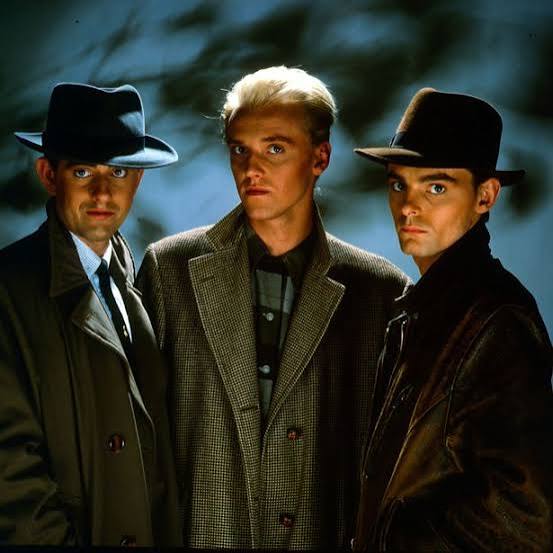 Heaven 17
Heaven 17 Artist Guide
Read the complete Heaven 17 guide with current background, live-show context, ticket planning notes and useful fan information.
Heaven 17 occupies a distinctive place in British pop history, combining electronic experimentation, sophisticated songwriting, dance rhythms and social observation in a way that helped define the possibilities of synth-pop. Formed in Sheffield in 1980, the group originally brought together vocalist Glenn Gregory with synthesizer musicians Martyn Ware and Ian Craig Marsh. Ware and Marsh had already played an important role in the development of The Human League before creating a new musical direction of their own. Heaven 17 became the most enduring expression of that next chapter, producing music that could sound stylish and accessible while still questioning politics, work, consumer culture and modern life. Their catalogue includes influential albums, memorable electronic arrangements and enduring songs such as “Temptation,” “Let Me Go,” “Come Live with Me” and “Crushed by the Wheels of Industry.” Decades after their formation, Heaven 17 continue to attract listeners because their music combines intelligence with immediacy: carefully constructed electronic pop that can make an audience think, dance and sing at the same time.
How Heaven 17 Began in Sheffield
The Heaven 17 story begins in Sheffield, a city that became one of the important centres of British electronic music during the late 1970s and early 1980s. Industrial surroundings, affordable synthesizers, experimental art and a growing interest in European electronic music created an environment where musicians could approach pop differently from traditional guitar bands.
Martyn Ware and Ian Craig Marsh were already part of this developing scene. Both had been founding figures in the original version of The Human League, where synthesizers and electronic rhythms were placed at the centre of the music rather than being treated as background decoration.
After Ware and Marsh left The Human League in 1980, they did not simply form another conventional band. Instead, they developed the British Electric Foundation, usually shortened to B.E.F. The concept gave them freedom to work as producers, writers and electronic musicians while collaborating with different vocalists and exploring different musical ideas.
Heaven 17 emerged from that creative structure. Glenn Gregory became the group's lead vocalist, providing the rich, controlled voice that would become one of the most recognizable elements of the Heaven 17 sound. Gregory had known Ware and Marsh within Sheffield's creative community, and his voice provided an important human contrast to their electronic arrangements.
The result was a group that sounded technologically modern without becoming emotionally distant. Machines, synthesizers and programmed rhythms were essential, but Gregory's voice gave the songs personality, drama and warmth.
Where Did the Name Heaven 17 Come From?
The name Heaven 17 reflects the group's interest in art, literature, modern culture and constructed pop identities. It was inspired by a fictional pop group mentioned in Anthony Burgess's novel A Clockwork Orange. Choosing the name suited Ware and Marsh's approach because Heaven 17 was never designed to function exactly like a conventional rock band.
From the beginning, the musicians were interested in the entire idea of pop presentation. Music, graphic design, clothing, photography, album artwork and the language surrounding the group could all contribute to the same artistic identity.
That approach made Heaven 17 feel deliberately modern. The band could present itself with the visual language of corporations, advertising and consumer culture while simultaneously questioning many of those systems through its music.
This tension became an important part of the group's identity. Heaven 17 could look polished and sophisticated while writing songs about inequality, politics, employment, ambition, desire and the pressures of modern society.
The name therefore fitted a project that treated pop music not only as entertainment but as a complete creative environment.

Penthouse and Pavement and the First Heaven 17 Era
Heaven 17 released their debut album, Penthouse and Pavement, in 1981. The record immediately demonstrated that the group was interested in combining electronic pop with funk, soul, political commentary and experimental production.
One of the band's earliest and most discussed songs was “(We Don't Need This) Fascist Groove Thang.” The track combined electronic rhythms with a direct political attitude, helping establish Heaven 17 as a group willing to address subjects that mainstream pop often avoided.
The song also demonstrated an important part of the band's musical philosophy. Electronic music did not have to feel cold or mechanical. Heaven 17 could combine synthesizers with funk-inspired rhythm, bass movement and dance-floor energy.
The broader Penthouse and Pavement album explored similar contrasts. Some tracks were rhythmic, polished and almost corporate in presentation, while others moved more deeply into atmospheric electronic territory.
That contrast helped distinguish Heaven 17 from many of their contemporaries. They were capable of writing accessible songs, but their arrangements often contained unusual details and ideas that rewarded closer listening.
The album title itself captured one of the band's recurring interests: the gap between aspiration and everyday reality. The language suggested wealth, business and status on one side and ordinary urban experience on the other. Heaven 17 repeatedly explored those kinds of contradictions without abandoning the fundamental pleasures of pop music.
Heaven 17 Upcoming Tours
The Luxury Gap and Heaven 17's Major Pop Breakthrough
If Penthouse and Pavement established Heaven 17's artistic identity, The Luxury Gap expanded it into a more commercially successful form. Released in 1983, the album retained the band's electronic intelligence while bringing melody, soul and polished pop production even further forward.
The album contained several songs that became closely associated with Heaven 17, including “Temptation,” “Let Me Go,” “Come Live with Me” and “Crushed by the Wheels of Industry.” Together, these tracks demonstrated just how broad the band's interpretation of synth-pop could be.
“Temptation” became Heaven 17's most instantly recognizable song. Its arrangement builds gradually rather than revealing everything immediately, combining electronics, rhythm, dramatic vocals and an increasingly powerful sense of release. Glenn Gregory's vocal is paired with the striking voice of Carol Kenyon, creating a musical conversation that gives the song much of its dramatic character.
“Let Me Go” takes a different approach, using an elegant electronic arrangement and a more restrained emotional atmosphere. It demonstrates the group's ability to make synthesizers feel expressive rather than simply futuristic.
“Come Live with Me” adds another emotional dimension, while “Crushed by the Wheels of Industry” combines energetic music with observations about employment and working life.
This balance between accessible pop and underlying ideas helped make The Luxury Gap such an important album in Heaven 17's catalogue. The music could work immediately on the radio or dance floor, yet listeners could also discover layers of social commentary and production detail beneath the surface.
Why “Temptation” Remains So Important
Some successful songs become attached to a particular period and gradually lose their impact. “Temptation” has proved more durable because its appeal is built on structure, performance and emotional tension rather than only the production fashion of its original era.
The opening creates anticipation before the arrangement expands. Electronic elements gradually interact with rhythm and vocals, allowing the song to increase in intensity rather than remaining at one level.
Glenn Gregory's delivery gives the track control and character, while Carol Kenyon's performance introduces a different vocal energy. The contrast between them helps transform the song from a straightforward electronic pop track into something closer to musical drama.
That dramatic quality explains why “Temptation” works particularly well in a live setting. Audiences recognize the introduction, understand where the arrangement is heading and anticipate the larger vocal moments.
The song has consequently become more than simply one successful Heaven 17 single. It functions as a shared moment between the band and its audience and remains an accessible introduction for listeners discovering Heaven 17 for the first time.
How Men Are and the Development of Their Sound
Heaven 17 continued developing their sound with How Men Are, released in 1984. Rather than simply attempting to repeat The Luxury Gap, the group moved toward more detailed and ambitious arrangements.
The album included songs such as “Sunset Now” and “This Is Mine,” demonstrating an interest in combining pop structures with increasingly sophisticated production.
By this stage, Heaven 17 had already proved they could create successful electronic singles. The challenge was to continue developing without losing the characteristics that made the group recognizable.
Their answer was not to abandon synthesizers but to widen the musical environment around them. Soul, funk, orchestral textures and more complex arrangements could sit alongside electronics.
This flexibility is important when considering Heaven 17's influence. Synth-pop is sometimes described as though every group involved followed the same musical formula, but Heaven 17's catalogue shows how varied electronic pop could become.
The technology was a tool rather than the entire identity. The songs still depended on melody, arrangement, lyrics and performance.
Heaven 17's Musical Style and Electronic Identity
Heaven 17 is commonly described as synth-pop, but that label only explains part of the band's sound. Electronic instruments are fundamental to their identity, yet their music also draws significantly from funk, soul, dance music and sophisticated pop.
Martyn Ware and Ian Craig Marsh approached synthesizers as instruments capable of rhythm, atmosphere, melody and experimentation. Instead of trying to make electronic equipment imitate traditional rock instruments, they explored what synthesizers could uniquely contribute.
This produced arrangements where electronic sounds could be clean and minimal in one moment, then dense and dramatic in another.
Glenn Gregory's voice provides the essential counterbalance. His deep vocal tone gives the songs a human centre and prevents the production from becoming purely technical. He can sound authoritative, romantic, detached or dramatic depending on what the song requires.
Rhythm is equally important. Heaven 17 never treated electronic pop as something that needed to remain static. Funk-influenced grooves and dance rhythms give many tracks physical movement.
That combination explains why the group can appeal simultaneously to fans of early electronic music, classic British pop, new wave, dance music and sophisticated songwriting.
Politics, Consumer Culture and Social Observation
Another defining aspect of Heaven 17 is the band's interest in the world beyond romantic relationships. Many pop groups naturally focus primarily on love and personal emotion. Heaven 17 frequently expanded the subject matter to include politics, employment, capitalism, social inequality and consumer culture.
This did not mean every song functioned as a political statement. Instead, the group often used irony, stylish presentation and energetic arrangements to create a contrast between what the music sounded like and what the words were examining.
That contrast remains one of the most interesting qualities of Heaven 17. A song can sound bright, polished or danceable while addressing something more uncomfortable underneath.
The band's visual presentation worked in a similar way. Corporate imagery, polished clothing and carefully designed graphics could resemble the language of business while simultaneously functioning as commentary on it.
This approach gave Heaven 17 a distinct intellectual identity without requiring the music to become inaccessible. Listeners could enjoy a chorus or rhythm immediately and return later to consider the ideas behind it.
Later Albums and the Continuing Heaven 17 Story
Following their major early albums, Heaven 17 continued recording through changing musical periods. Pleasure One arrived in 1986, followed by Teddy Bear, Duke & Psycho in 1988.
The group later returned with Bigger Than America in 1996, showing that Heaven 17 could reconnect with its electronic identity after a lengthy gap between studio albums.
Before After followed in 2005, while Naked as Advertised appeared in 2008. Across these records, the wider musical industry changed dramatically, moving through new production technology, changing radio formats and eventually the digital streaming era.
Heaven 17's earliest work nevertheless remained important because many of the ideas that once seemed futuristic became ordinary parts of mainstream music. Electronic production, programmed rhythms and synthesizer-based pop are now fundamental to contemporary music.
That makes the group's early catalogue interesting from two perspectives. It can be enjoyed simply as a collection of strong songs, but it can also be heard as part of a period when musicians were actively redefining how pop records could be created.
Ian Craig Marsh and the Evolution of the Lineup
Ian Craig Marsh was a crucial part of Heaven 17's original identity. Alongside Martyn Ware, he helped establish the electronic foundation from which both B.E.F. and Heaven 17 developed.
Marsh remained part of the group through its major recording years before eventually stepping away from active involvement. By the later 2000s, Heaven 17 had effectively developed around Glenn Gregory and Martyn Ware as the continuing public and live partnership.
That evolution did not erase Marsh's importance. The original trio created the framework, sound and artistic philosophy that established Heaven 17.
Band histories often change as musicians pursue different interests, and Heaven 17 is no exception. What has remained consistent is the electronic approach, Gregory's recognizable voice and Ware's strong interest in production, technology and creative presentation.
The ability to evolve without denying the group's original history has helped the Heaven 17 name continue across several decades.
From Studio-Focused Group to Powerful Live Act
One unusual part of the Heaven 17 story is the band's relationship with live performance. During much of their original 1980s peak, Heaven 17 were considerably more focused on records, production and presentation than on conventional touring.
That eventually changed. In later decades, live performance became an increasingly important part of the band's identity, particularly with Glenn Gregory and Martyn Ware leading Heaven 17 on stage.
This transformation allowed the catalogue to be experienced differently. Songs originally created through carefully constructed studio techniques had to work in front of an audience, where energy, musicianship and interaction mattered just as much as production detail.
The transition proved particularly effective because Heaven 17's strongest songs already contained powerful rhythms and memorable choruses.
The band has also revisited important albums in concert, giving audiences the opportunity to hear deeper material alongside familiar singles. Performing complete classic albums allows listeners to experience songs within their original sequence and musical context rather than only as individual hits.
What Makes a Heaven 17 Concert Different?
A Heaven 17 live performance combines electronic history with the direct energy of a modern concert. The most recognizable songs naturally create major audience reactions, but the deeper appeal comes from hearing how carefully produced electronic material translates onto the stage.
Glenn Gregory remains central to the live experience. His voice gives the songs continuity with the original records while also bringing the natural variation and energy that make live music different from listening at home.
Martyn Ware brings another dimension because his connection to the material extends beyond performance. He helped write, shape and produce the music, giving the live presentation a direct link to the band's original creative process.
For longtime fans, a Heaven 17 concert can carry powerful memories of discovering electronic music during an important period of British pop culture. For younger listeners, the experience can demonstrate why music created decades earlier still sounds relevant beside contemporary electronic pop.
That mixture of history and present-tense performance gives Heaven 17 live shows their particular character.
Heaven 17's Influence on Electronic Pop
Heaven 17 emerged during a period when British musicians were rapidly changing perceptions of electronic instruments. Synthesizers had previously been associated heavily with experimental music, progressive rock or expensive studio technology. Groups from Sheffield and other British cities helped demonstrate that electronic instruments could become the foundation of direct, intelligent pop songs.
Heaven 17 contributed to that shift by refusing to treat technology as a novelty. Synthesizers were simply part of the language through which the band expressed musical ideas.
The combination of electronic production, dance rhythms, strong vocals and carefully controlled visual presentation anticipated many qualities that later became normal in pop.
Their influence also extends through attitude. Heaven 17 demonstrated that commercially accessible music could still contain political observations, satire and conceptual thinking. Pop could be attractive without becoming empty, and electronic music could be emotional without abandoning experimentation.
Those principles remain relevant to generations of artists working with synthesizers, programmed production and electronic performance.
Why Heaven 17 Still Connects With Listeners
Longevity in music depends on more than nostalgia. Nostalgia can encourage someone to revisit an old record, but strong songwriting is what makes them continue listening.
Heaven 17's best material survives because the musical foundations remain effective. The rhythms move, the melodies are memorable, Gregory's voice is immediately distinctive and the production contains enough detail to reward repeated listening.
The themes also remain surprisingly recognizable. Questions about work, inequality, political power, consumption, technology, ambition and relationships have not disappeared. The social circumstances may change, but many of the underlying tensions remain familiar.
At the same time, Heaven 17's music carries the atmosphere of the era in which it was created. That historical character is a strength rather than a weakness. Listeners can hear the optimism and unease surrounding new technology, changing politics and rapidly developing pop culture.
The result is music that operates on several levels at once: an electronic time capsule, a collection of durable pop songs and an influence on later generations.
Discovering Heaven 17 for the First Time
New listeners do not need extensive knowledge of early British electronic music to appreciate Heaven 17. A useful starting point is simply to hear the contrast between different songs.
“Temptation” demonstrates the dramatic, soulful side of the band. “Let Me Go” reveals the elegance of their electronic arrangements. “Crushed by the Wheels of Industry” shows how social commentary can sit inside energetic pop, while material from Penthouse and Pavement reveals the more experimental foundations of their sound.
Listening to complete albums adds another layer because Heaven 17 placed considerable importance on sequencing, artwork and overall presentation. Penthouse and Pavement and The Luxury Gap are particularly useful entry points for understanding how quickly the group developed.
From there, later albums demonstrate how Gregory, Ware and Marsh responded to changing production styles while retaining a recognizable Heaven 17 identity.
The Lasting Legacy of Heaven 17
Heaven 17's importance comes from more than one famous single. The band's story connects several important strands of British music history: Sheffield's electronic scene, the original Human League, the ambitious B.E.F. concept, the rise of synth-pop and the development of electronically produced music as mainstream pop.
Glenn Gregory, Martyn Ware and Ian Craig Marsh created a group capable of combining those ideas with memorable songs. Their strongest work never required listeners to choose between experimentation and entertainment.
That balance remains the foundation of Heaven 17's legacy. The electronics can be innovative, the visual presentation can be conceptual and the lyrics can contain social commentary, yet a Heaven 17 song still needs a convincing melody, rhythm and performance.
For fans searching for Heaven 17 tours, Heaven 17 tickets, concert information or details about the band's history, the live experience provides another way to connect with that legacy. The songs that began inside Sheffield's experimental electronic culture now belong to several generations of listeners.
Heaven 17 therefore represents something broader than an 1980s synth-pop memory. The band is part of the story of how electronic music became pop music, while maintaining enough personality to remain immediately recognizable. From Penthouse and Pavement and The Luxury Gap to the continuing appeal of “Temptation,” their catalogue demonstrates how technology, ideas, rhythm and human performance can work together. That combination is why Heaven 17 remains meaningful to established fans and worth discovering for anyone interested in the history and continuing evolution of electronic pop.
Explore Heaven 17 Tours and Live Performances
For fans who want to experience Heaven 17 live, concert performances provide an opportunity to hear the electronic arrangements, distinctive vocals and classic songs in a shared setting. Tour schedules, venues, ticket availability and event details can change, so checking the latest Heaven 17 tour announcement before making travel plans is always important.
Whether you first discovered the band through “Temptation,” followed the Sheffield electronic scene from its early years or are only beginning to explore Heaven 17's albums, the live experience can bring a different dimension to the music. Explore the latest Heaven 17 concert announcements and ticket information to find performances that fit your plans.
Heaven 17 FAQs
Get ready for the Heaven 17 live show. Find the best Heaven 17 tickets, check tour setlists, and get essential venue details. Read our quick fan FAQ to make the most of your Heaven 17 music concert experience.
Who are the original members of Heaven 17?
Heaven 17 was originally formed by Glenn Gregory, Martyn Ware and Ian Craig Marsh in Sheffield in 1980. Gregory became the group's distinctive lead vocalist, while Ware and Marsh concentrated heavily on synthesizers, electronic arrangements, songwriting and production. Ware and Marsh had previously been founding members of the original Human League before leaving that group and establishing the British Electric Foundation. Heaven 17 emerged from that broader creative project and became its most enduring band identity. The combination worked because Gregory's rich voice provided a strong human presence against Ware and Marsh's electronic production. Although the active lineup evolved in later years, all three original members were fundamental to establishing Heaven 17's distinctive sound and artistic direction.
Are Heaven 17 connected to The Human League?
Yes. Heaven 17 has a direct historical connection to The Human League through Martyn Ware and Ian Craig Marsh. Ware and Marsh were founding members of the original Human League in Sheffield and played an important role in developing its early electronic sound. After leaving the group in 1980, they created the British Electric Foundation as a flexible production and musical project. Working with vocalist Glenn Gregory, they then developed Heaven 17. The two bands therefore share part of the same musical family tree, although they became separate groups with clearly different identities. The Human League moved in its own direction, while Heaven 17 combined electronic production with funk, soul, political commentary and Gregory's distinctive vocal style.
What is Heaven 17's most famous song?
“Temptation” is generally regarded as Heaven 17's most widely recognized song. Released during the The Luxury Gap era, it became a major British pop hit and has remained central to the band's identity ever since. The recording combines Glenn Gregory's vocals with a powerful guest performance from Carol Kenyon, while the arrangement gradually builds through synthesizers, rhythm and dramatic changes in intensity. Its enduring appeal comes from more than nostalgia because the structure still creates excitement in a live environment. New listeners frequently discover Heaven 17 through “Temptation,” but the band's catalogue extends much further, including songs such as “Let Me Go,” “Come Live with Me,” “Sunset Now” and “Crushed by the Wheels of Industry.”
Why were Heaven 17 important to synth-pop?
Heaven 17 helped demonstrate that synthesizer-based pop could combine experimentation with strong songwriting, dance rhythms and social ideas. Martyn Ware and Ian Craig Marsh had already explored electronic music in the original Human League, but Heaven 17 allowed them to develop a different approach around Glenn Gregory's deep vocal style. Their records incorporated electronic programming alongside influences from funk, soul and sophisticated pop, giving the band a broader musical identity than the synth-pop label sometimes suggests. They also treated artwork, fashion, photography and presentation as part of the overall creative project. This combination influenced perceptions of what an electronic pop group could be and helped establish synthesizers as normal expressive instruments within mainstream British popular music.
What is the best Heaven 17 album for a new listener?
The Luxury Gap is an excellent starting point for someone discovering Heaven 17 because it contains several of the group's best-known songs while clearly demonstrating their combination of electronic pop, soul, rhythm and sophisticated production. “Temptation,” “Let Me Go,” “Come Live with Me” and “Crushed by the Wheels of Industry” show different sides of the band's identity. However, listeners interested in the more experimental foundation of Heaven 17 should also explore <em>Penthouse and Pavement</em>. That debut captures the energy of the group's early Sheffield period and its interest in politics, corporate imagery and electronic funk. Hearing both albums provides a particularly useful introduction to how quickly Heaven 17 developed during the beginning of their career.
Does Heaven 17 still perform live?
Heaven 17 developed a substantial live identity after being much more studio-focused during the band's original 1980s period. Glenn Gregory and Martyn Ware became the central continuing partnership in the later live version of Heaven 17, performing well-known singles as well as deeper album material. The band has also revisited important records through concerts built around classic albums, allowing audiences to hear songs within their wider musical context rather than only as a greatest-hits collection. Exact touring schedules, musicians, venues and setlists can naturally change, so fans should always check current event information when planning a concert visit. The live format has become an important way for different generations to experience Heaven 17's electronic catalogue.
What can fans expect from a Heaven 17 concert?
A Heaven 17 concert typically focuses on the combination of electronic music, strong vocals and recognizable songs that established the band's reputation. Glenn Gregory's distinctive voice remains essential to the live character, while Martyn Ware's involvement provides a direct connection to the original songwriting and production history. Familiar tracks can create major audience sing-along moments, but deeper catalogue selections often demonstrate how varied Heaven 17's music actually is. The atmosphere can move between energetic electronic pop, funk-influenced rhythms, more atmospheric arrangements and dramatic vocal performances. Because individual shows and setlists can differ, no particular song should be considered guaranteed. Fans should check the specific concert details before attending, especially for venue information, schedules and ticket arrangements.
Heaven 17 Recent Setlists
Recent setlists can be edited from the panel or managed in the setlists table.
Jun 27, 2026 Featured Arena, London 6 songs
Opening Moment
Fan Favourite
Acoustic Interlude
Main Set Highlight
Final Singalong
Encore Song
Jun 26, 2026 Featured Theatre, Manchester 6 songs
Encore Song
Final Singalong
Main Set Highlight
Acoustic Interlude
Fan Favourite
Opening Moment