
David Byrne Upcoming Tours
Discover the latest concert dates, artist blogs, and exclusive entertainment news all in one place. We keep fans ahead of the crowd with up-to-date tour announcements and in-depth stories about top performers from around the world.
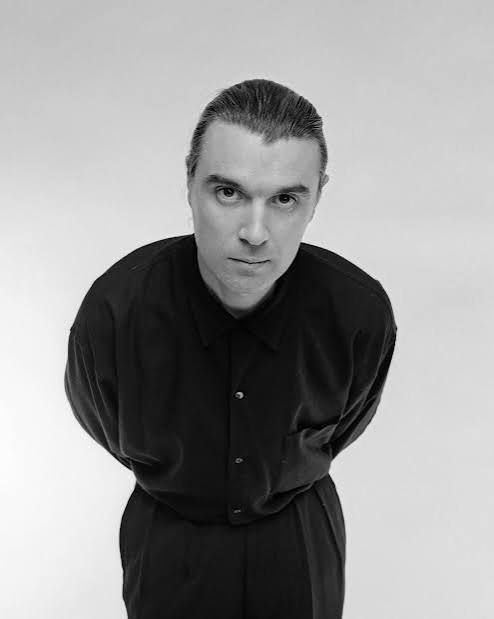 David Byrne
David Byrne Artist Guide
Read the complete David Byrne guide with current background, live-show context, ticket planning notes and useful fan information.
David Byrne Upcoming Tours, Tickets, Setlists and Latest News
David Byrne is a Scottish-American musician, songwriter, writer, visual artist, filmmaker, and stage innovator whose career has moved from the experimental clubs of 1970s New York to major concert halls, Broadway, film, and global touring. Best known as the co-founder, lead vocalist, guitarist, and principal songwriter of Talking Heads, Byrne helped create a sound that connected new wave, art rock, funk, minimalism, pop, and global rhythmic traditions. Decades later, he remains an active creative force rather than simply a nostalgia act.
For concert fans, that continuing evolution is what makes a David Byrne concert especially interesting. His performances have long been built around more than a list of songs: choreography, spatial design, costume, lighting, percussion, and movement are often treated as equal parts of the musical experience.
In 2025, Byrne released Who Is the Sky?, his first solo studio album since American Utopia, and the project developed into an extensive international tour continuing through 2026. That gives longtime Talking Heads listeners and younger fans another opportunity to experience Byrne’s unusual and highly theatrical approach to live performance.
Who Is David Byrne?
David Byrne was born on May 14, 1952, in Dumbarton, Scotland, and grew up in North America. He later studied at art schools in Massachusetts and Rhode Island before becoming part of New York City’s downtown creative scene.
That visual-art background matters when understanding his career because Byrne has rarely separated music from design, theater, film, movement, or ideas about public space. His artistic identity developed around the belief that the way music is presented can be almost as important as the sounds themselves.
He became one of the defining figures of late-20th-century alternative music through Talking Heads, but his work has always extended far beyond the band.
Across the decades, Byrne has released solo albums, written books, directed and appeared in films, composed for theater and dance, created installations, founded a record label, and collaborated with musicians working across rock, pop, electronic, classical, Latin, African, and experimental traditions.
How Did Talking Heads Begin?
Talking Heads formed in New York City in 1975 with David Byrne, drummer Chris Frantz, and bassist Tina Weymouth. Keyboardist and guitarist Jerry Harrison later joined, completing the lineup most listeners associate with the band.
Emerging from the same downtown scene surrounding legendary New York venues such as CBGB, Talking Heads sounded different from many of their punk contemporaries. Their songs could be tense and economical, yet they also carried a strong sense of rhythm, conceptual humor, unconventional songwriting, and art-school experimentation.
The group’s early material, including “Psycho Killer,” established Byrne as an unusual frontman whose clipped vocal delivery, distinctive guitar playing, and physically expressive stage presence immediately stood apart.
The band continued to broaden its sound across albums including Talking Heads: 77, More Songs About Buildings and Food, Fear of Music, and Remain in Light.
Working with producer Brian Eno during a crucial period, Talking Heads developed increasingly layered arrangements built around grooves, repeated patterns, studio experimentation, percussion, and musical influences reaching far beyond conventional guitar rock.
Remain in Light, released in 1980, became one of the clearest examples of that approach, while “Once in a Lifetime” eventually developed into one of Talking Heads and David Byrne’s most recognizable songs.

What Made David Byrne and Talking Heads So Influential?
Talking Heads became influential because musical experimentation never completely replaced accessibility.
The band could sound strange, cerebral, danceable, funny, anxious, funky, and melodic within the same song. Byrne’s lyrics frequently examined ordinary human behavior from an almost observational or anthropological distance, making familiar experiences suddenly feel unfamiliar.
Later records expanded the group’s commercial reach.
Speaking in Tongues produced “Burning Down the House,” while Little Creatures included “Road to Nowhere.” Meanwhile, “This Must Be the Place (Naive Melody)” became one of the group’s most enduring songs, particularly among listeners drawn to the warmer and more emotionally direct side of Byrne’s songwriting.
The band’s importance also came from its approach to live performance.
Stop Making Sense, the celebrated 1984 concert film directed by Jonathan Demme, demonstrated how a rock concert could be staged, designed, choreographed, and photographed almost like theatrical performance art.
Its gradual construction of the stage, controlled movement, famous oversized suit, and focus on the physical relationship between musicians and performance space helped make the film an enduring part of Talking Heads’ legacy.
Talking Heads were ultimately inducted into the Rock & Roll Hall of Fame in 2002, recognition of a body of work that helped change the vocabulary of new wave, alternative rock, dance-rock, art-pop, and modern live performance.
David Byrne Upcoming Tours
David Byrne’s Solo Career and Creative Expansion
David Byrne did not treat the end of Talking Heads as an opportunity to simply reproduce the band’s established formula.
Instead, his solo career became a laboratory for different musical languages, collaborators, production methods, cultural interests, and forms of presentation.
His solo catalog includes projects such as Rei Momo, Uh-Oh, David Byrne, Feelings, Look into the Eyeball, Grown Backwards, American Utopia, and Who Is the Sky?.
He also created important collaborative projects.
With Brian Eno, Byrne worked on the influential My Life in the Bush of Ghosts and later Everything That Happens Will Happen Today. With St. Vincent, he released the brass-driven collaborative album Love This Giant.
In 1988, Byrne founded Luaka Bop, a record label that became associated with introducing adventurous international music to wider audiences.
His interest in music from Latin America, Africa, and other parts of the world reflected a broader fascination with rhythm, community, dance, and musical exchange that has remained present throughout his career.
Byrne’s creative life has additionally included books, photography, installations, lectures, bicycle advocacy, filmmaking, and theater.
These projects reveal a consistent pattern: he is interested not simply in writing songs but in examining how people interact, how communities form, how audiences behave, how cities function, and how art can transform an ordinary physical space.
Awards, Film Work and Broadway Success
David Byrne’s achievements extend well beyond the recording studio.
One of his most significant film accomplishments came when he shared the Academy Award for Best Original Score for the 1987 film The Last Emperor with Ryuichi Sakamoto and Cong Su.
The project also earned major Golden Globe recognition and remains an important example of Byrne’s ability to work successfully outside conventional pop and rock music.
His theatrical career became especially visible through American Utopia.
The project began as a 2018 studio album before developing into a major touring production and eventually reaching Broadway.
Instead of placing every musician behind fixed equipment, Byrne and his collaborators created a largely open stage occupied by a mobile ensemble. Performers could move with wireless instruments while choreography, percussion, vocals, lighting, and music remained tightly connected.
American Utopia became one of the clearest expressions of Byrne’s long-running ideas about live performance.
Songs from his solo career appeared alongside Talking Heads classics, but the production was designed as a complete experience rather than simply a conventional greatest-hits concert.
Filmmaker Spike Lee later directed the acclaimed filmed version of the production, allowing Byrne’s distinctive stage concept to reach audiences far beyond Broadway.
What Is David Byrne’s Who Is the Sky? Album?
Who Is the Sky? was released in September 2025 through Matador and marked David Byrne’s first solo studio album in seven years.
The 12-track project was produced by Kid Harpoon, while the New York-based Ghost Train Orchestra contributed arrangements that gave the record a colorful orchestral and chamber-pop dimension.
The album also features contributions from artists including St. Vincent, Hayley Williams, Tom Skinner, and Mauro Refosco.
Songs such as “Everybody Laughs” reflect Byrne’s continuing fascination with shared human behavior. Across the project, bright melodies and energetic arrangements can accompany observations about connection, loneliness, love, uncertainty, everyday routines, and mortality.
Another notable song from the era is “What Is the Reason for It?”, featuring Hayley Williams.
Rather than attempting to recreate the classic sound of Talking Heads, Who Is the Sky? connects Byrne’s longstanding artistic interests with contemporary production, elaborate arrangements, and a large ensemble.
The album also provides much of the foundation for his current live show, where songs can be expanded through singers, dancers, percussionists, instrumentalists, choreography, movement, and video design.
David Byrne Tour 2026: What Fans Should Know
The David Byrne Who Is the Sky? Tour has continued through 2026, transforming the album into another ambitious live-performance project.
The touring company includes musicians, vocalists, dancers, percussionists, and a substantial creative team working across choreography, lighting, video, movement, and stage production.
The 2026 touring schedule has included appearances across Europe, Australasia, Asia, and North America.
As of August 21, 2026, David Byrne remains in an active touring period, with additional late-August and September concerts listed across the United States and Mexico.
Upcoming dates include performances connected with locations such as California, Mexico City, Guadalajara-area Zapopan, Monterrey, Saratoga Springs, and New York.
Because David Byrne tour dates, venues, ticket inventory, support acts, event times, and availability can change, fans should always verify final details through the artist’s official tour page and authorized ticket providers before booking transportation, accommodation, or non-refundable travel.
For TourAnnouncement readers, following the David Byrne performer page can make it easier to keep track of concert updates, ticket information, setlists, and related artist news in one place.
What Is a David Byrne Concert Like?
A David Byrne concert is generally more theatrical and choreographed than a traditional rock show.
The stage can function as an open performance environment rather than a collection of stationary instrument stations. Musicians and vocalists may move around the performance space instead of remaining fixed behind drum risers, keyboards, amplifiers, or microphone stands.
Percussion is particularly important to Byrne’s live sound, giving many songs an energetic, physical, and dance-oriented character.
Fans can also expect a career-spanning perspective.
Recent Byrne performances have connected new solo material with music from American Utopia and selected Talking Heads classics. Exact setlists can naturally vary between performances, but a major part of the appeal comes from hearing familiar songs reconstructed for the current ensemble instead of being reproduced exactly like their original studio recordings.
Visual presentation is another essential part of the experience.
Lighting, movement, video, staging, clothing, and choreography can alter the emotional meaning of individual songs. This explains why Byrne’s concerts frequently appeal not just to conventional rock audiences but also to theater fans, designers, dancers, filmmakers, visual artists, and listeners interested in experimental performance.
David Byrne Songs Fans Should Know Before a Concert
New listeners do not need to memorize David Byrne’s complete discography before seeing him live, but knowing several essential tracks can make a concert considerably more rewarding.
Start with these Talking Heads songs:
“Psycho Killer”
“Once in a Lifetime”
“Burning Down the House”
“This Must Be the Place (Naive Melody)”
“Life During Wartime”
“Road to Nowhere”
From Byrne’s solo catalog, American Utopia provides an important bridge into his modern stage work.
“Everybody’s Coming to My House” is an excellent introduction to that period, while Who Is the Sky? brings listeners directly into the current David Byrne tour cycle.
“Everybody Laughs” and “What Is the Reason for It?” are useful entry points for understanding how Byrne’s present-day songwriting combines humor, observation, emotional questions, ensemble arrangements, and rhythmic energy.
Fans preparing for their first David Byrne concert can also watch Stop Making Sense and American Utopia. Together, they demonstrate why stage architecture, movement, choreography, and physical performance are so closely connected to Byrne’s musical identity.
Why Does David Byrne Still Matter in Modern Music?
David Byrne remains relevant because his career has been built around reinvention rather than preservation.
Many artists with a back catalog as famous as Talking Heads could rely almost entirely on nostalgia. Byrne instead continues developing new albums, collaborations, theatrical concepts, performance systems, visual projects, and ways of organizing musicians onstage.
His influence can be heard throughout indie rock, art-pop, dance-punk, alternative music, experimental pop, and contemporary performance culture.
That influence is particularly visible among artists who treat concerts as complete visual experiences rather than simply opportunities to recreate studio recordings in front of an audience.
Byrne’s work also demonstrates that an old song does not need to remain frozen in the arrangement that originally made it famous.
A familiar piece can be transformed through choreography, percussion, new instrumentation, different vocal arrangements, lighting, and changes in staging while still retaining its essential identity.
For younger listeners discovering Talking Heads through streaming platforms, playlists, films, social media, and music recommendations, David Byrne’s current performances provide a living connection to an important period of music history.
For longtime fans, the attraction is somewhat different: the songs may remain recognizable, but the environment around them continues evolving.
Final Thoughts
David Byrne’s story is not simply the story of a famous former rock frontman.
It is the story of an artist who has spent more than five decades testing how music can interact with movement, visual art, theater, film, technology, rhythm, design, architecture, and public life.
From Talking Heads, Remain in Light, and Stop Making Sense to The Last Emperor, Luaka Bop, American Utopia, and Who Is the Sky?, his career has repeatedly moved beyond the boundaries traditionally expected of a rock musician.
That continuing curiosity is also why a David Byrne tour can still feel like a genuine event.
Fans may initially arrive hoping to hear “Once in a Lifetime,” “This Must Be the Place,” or “Burning Down the House,” but the larger experience is built around ensemble performance, rhythm, choreography, visual storytelling, and the possibility of seeing familiar music from an entirely different angle.
For the latest David Byrne tour announcements, tickets, setlist updates, concert information, and performer news, keep checking TourAnnouncement and always confirm final event details with official artist and authorized ticketing sources before making a purchase.
David Byrne FAQs
Get ready for the David Byrne live show. Find the best David Byrne tickets, check tour setlists, and get essential venue details. Read our quick fan FAQ to make the most of your David Byrne music concert experience.
What is David Byrne best known for?
David Byrne is best known as the co-founder, lead singer, guitarist, and principal songwriter of Talking Heads, one of the most influential American new wave and art-rock bands of the late 1970s and 1980s. His distinctive voice, rhythmic guitar style, conceptual lyrics, and highly visual approach to performance helped define the band’s identity. Beyond Talking Heads, Byrne has built a major solo career spanning music, film, theater, writing, visual art, and cultural projects. He also won an Academy Award for co-writing the original score of The Last Emperor and later brought American Utopia to Broadway.
Is David Byrne touring in 2026?
Yes. David Byrne remains active as a touring performer in 2026 with the Who Is the Sky? Tour, supporting his 2025 album of the same name. The tour has included North American, European, Asian, Australian, and New Zealand dates, with additional United States and Mexico shows listed for late summer and September 2026. Because concert schedules, venues, ticket availability, and added dates can change, fans should check the latest official tour listings and authorized ticketing pages before making travel plans. TourAnnouncement can also be used as a convenient place to follow performer updates and concert information.
What songs does David Byrne perform at concerts?
A David Byrne concert usually blends songs from his solo career with selected Talking Heads classics, although the exact setlist can change from night to night. Fans may hear well-known material such as “Once in a Lifetime,” “Burning Down the House,” “This Must Be the Place,” or other Talking Heads favorites alongside songs from American Utopia and Who Is the Sky?. Byrne’s shows are also known for choreography, mobile musicians, percussion-heavy arrangements, and carefully designed visual elements. Rather than presenting a conventional rock-band setup, he often treats the stage as a flexible theatrical space where movement and music work together.
Where was David Byrne born?
David Byrne was born on May 14, 1952, in Dumbarton, Scotland. He spent his childhood in North America after his family relocated, and he later studied at art schools in Massachusetts and Rhode Island. His art-school background became an important part of the way he approached music, performance, film, and visual presentation. Byrne eventually became a central figure in New York’s downtown music scene during the 1970s, where Talking Heads emerged alongside the city’s punk and new wave movement. His Scottish birth and North American upbringing are why he is often described as a Scottish-American artist.
What is David Byrne’s Who Is the Sky? album?
Who Is the Sky? is David Byrne’s 2025 solo studio album and the project behind his current touring era. Released through Matador, the 12-track record was produced by Kid Harpoon and features orchestral arrangements from New York’s Ghost Train Orchestra. Guest contributors include St. Vincent, Hayley Williams, Tom Skinner, and Mauro Refosco. The album combines Byrne’s familiar curiosity about human behavior with bright rhythms, chamber-pop textures, and playful observations about connection, love, loneliness, and everyday life. Its lead single, “Everybody Laughs,” introduced the project before the album’s September 2025 release and helped establish its upbeat, communal tone.
What genre of music does David Byrne perform?
David Byrne’s musical style is difficult to place in a single genre because his work has consistently mixed art rock, new wave, funk, world music, pop, experimental music, electronic textures, and theatrical composition. With Talking Heads, he helped turn nervous minimalism and angular guitar music into increasingly rhythmic, globally informed records. His solo work has expanded that approach through collaborations with musicians from many traditions, orchestral arrangements, dance music, film scores, and stage productions. What connects these different styles is Byrne’s interest in rhythm, repetition, social behavior, movement, and the way music can change how people experience a shared physical space.
Why is David Byrne considered an influential musician?
David Byrne is widely considered influential because he expanded the idea of what a rock frontman and songwriter could be. Talking Heads combined art-school experimentation with funk, minimalism, pop hooks, and polyrhythmic influences, while Byrne’s later work moved freely into film, theater, visual art, publishing, and global music. Talking Heads were inducted into the Rock & Roll Hall of Fame in 2002, and Byrne’s career has also included major honors such as an Academy Award and Golden Globe. His influence is especially visible in artists who treat concerts as complete visual experiences rather than simply performances of recorded songs.
David Byrne Recent Setlists
Recent setlists can be edited from the panel or managed in the setlists table.
Jun 27, 2026 Featured Arena, London 6 songs
Opening Moment
Fan Favourite
Acoustic Interlude
Main Set Highlight
Final Singalong
Encore Song
Jun 26, 2026 Featured Theatre, Manchester 6 songs
Encore Song
Final Singalong
Main Set Highlight
Acoustic Interlude
Fan Favourite
Opening Moment