
Bloc Party Upcoming Tours
Discover the latest concert dates, artist blogs, and exclusive entertainment news all in one place. We keep fans ahead of the crowd with up-to-date tour announcements and in-depth stories about top performers from around the world.
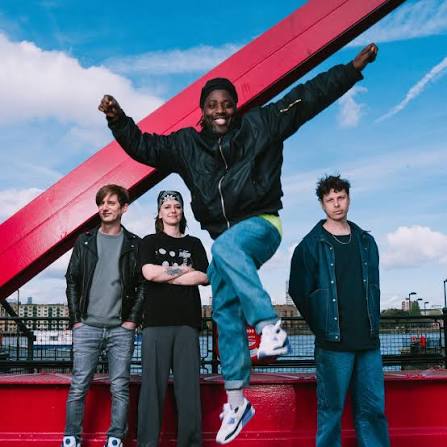 Bloc Party
Bloc Party Artist Guide
Read the complete Bloc Party guide with current background, live-show context, ticket planning notes and useful fan information.
Bloc Party are an English rock band whose combination of angular guitars, urgent rhythms, electronic experimentation and emotionally direct songwriting helped define a major period of twenty-first-century British indie music. Formed in London in 1999 around Kele Okereke and Russell Lissack, the group developed from an emerging guitar band into an internationally recognised act capable of moving between post-punk, indie rock, electronic music, dance rhythms and atmospheric alternative pop.
The current Bloc Party lineup consists of Kele Okereke, Russell Lissack, Louise Bartle and Harry Deacon. Okereke and Lissack remain from the group’s founding era, while drummer Bartle and bassist Deacon represent its newer generation.
More than two decades after Silent Alarm transformed the group’s career, Bloc Party are entering another major creative period. Their seventh studio album, Anatomy of a Brief Romance, is scheduled for release on September 11, 2026. Produced by Trevor Horn, the record follows Alpha Games and introduces a deeply personal collection of songs centred on relationships, connection and emotional change.
Table of Contents
Who Are Bloc Party?
How Did Bloc Party Form?
Who Are the Current Bloc Party Members?
How Did Silent Alarm Change Bloc Party’s Career?
How Has Bloc Party’s Sound Changed?
Which Bloc Party Albums Define Their Career?
What Are Bloc Party’s Most Important Songs?
What Is Anatomy of a Brief Romance?
What Makes Bloc Party’s Guitar Sound Distinctive?
Why Are Rhythm and Dance Music Important to Bloc Party?
What Is Bloc Party Like as a Live Band?
What Is Bloc Party Doing in 2026?
Awards and Career Achievements
Why Is Bloc Party Still Influential?
Frequently Asked Questions
Who Are Bloc Party?
Bloc Party are a London-formed alternative rock band recognised for combining the physical excitement of guitar music with rhythms and production ideas drawn from electronic and dance culture.
Their early recordings arrived during the revival of guitar-driven independent music in the early 2000s, but Bloc Party quickly developed characteristics that distinguished them from many contemporaries.
Russell Lissack’s guitar frequently avoids conventional rock chords in favour of sharp individual notes, unusual shapes, harmonics and delay effects. Kele Okereke’s guitar often adds rhythmic force rather than simply duplicating Lissack’s parts.
Underneath those guitars, Bloc Party have consistently treated drums and bass as active elements rather than background accompaniment.
This emphasis on rhythm explains why songs such as “Banquet,” “Helicopter” and “Flux” can function equally well in an indie-rock setting and on a dance floor.
Electronic music gradually became more prominent as the group developed, but it did not replace the band’s rock foundation. Instead, synthesizers, programmed beats and manipulated sounds became additional tools within an increasingly broad musical vocabulary.

How Did Bloc Party Form?
The origins of Bloc Party can be traced to 1999, when Kele Okereke and Russell Lissack began developing the idea of a band in London.
Apple Music identifies August 1999 as the group’s formation period and notes that the two musicians shared interests in artists including Sonic Youth, Joy Division, Pixies and DJ Shadow.
The developing group used different names before eventually becoming Bloc Party. As the project became more serious, bassist Gordon Moakes and drummer Matt Tong completed the lineup that would record the band’s first four studio albums.
An important early breakthrough came through the demo of “She’s Hearing Voices.” Okereke managed to bring the recording to the attention of BBC Radio 1 DJ Steve Lamacq, helping the band gain exposure at a critical stage of its development.
By 2004, Bloc Party were releasing singles and attracting substantial attention from the British independent music scene.
“Little Thoughts,” “Helicopter” and early versions of other songs demonstrated a group with an unusually tense rhythmic identity.
The momentum culminated in the release of Silent Alarm in February 2005.
Bloc Party Upcoming Tours
Who Are the Current Bloc Party Members?
Bloc Party currently perform as a four-piece consisting of Kele Okereke, Russell Lissack, Louise Bartle and Harry Deacon.
Kele Okereke – Vocals and Guitar
Kele Okereke is Bloc Party’s lead singer, principal lyricist and rhythm guitarist.
His voice can move from restrained introspection to sharp, urgent delivery, giving the band considerable emotional range. His songwriting has addressed relationships, identity, city life, sexuality, political tension, isolation and personal change.
Okereke has also developed an extensive career outside Bloc Party, particularly through his solo electronic work.
Russell Lissack – Lead Guitar
Russell Lissack is the other founding constant in Bloc Party.
His lead-guitar technique is one of the band’s most immediately recognisable musical characteristics. Instead of relying primarily on heavy power chords, Lissack frequently uses bright single-note figures, effects, harmonics and precise rhythmic patterns.
His playing creates space rather than filling every part of a song.
Louise Bartle – Drums
Louise Bartle joined Bloc Party during the band’s post-original-lineup era and has become an important part of its current rhythm section.
She performs drums, percussion and backing vocals, bringing a powerful but controlled approach that suits both Bloc Party’s older dance-rock songs and its more recent material. Radio X lists Bartle as one of the band’s four current members.
Harry Deacon – Bass
Harry Deacon joined Bloc Party’s performing lineup in 2023 following the departure of Justin Harris.
Deacon plays bass while also contributing keyboards and backing vocals when required. During Bloc Party’s 2025 Tiny Desk performance, he moved between bass, keys and glockenspiel in addition to providing backing vocals, demonstrating the multi-instrumental role required by the group’s current arrangements.
How Did Silent Alarm Change Bloc Party’s Career?
Released in 2005, Silent Alarm remains the album most strongly associated with Bloc Party’s emergence.
The record brought together fast post-punk rhythms, detailed guitar interaction, atmospheric passages and lyrics that moved between private emotion and wider social observation.
Its tracklist includes some of Bloc Party’s most enduring songs, including:
“Like Eating Glass”
“Helicopter”
“Positive Tension”
“Banquet”
“Blue Light”
“She’s Hearing Voices”
“This Modern Love”
“The Pioneers”
“So Here We Are”
Commercially, Silent Alarm reached number three on the UK Albums Chart and remained on the chart for 60 weeks. It was also nominated for the 2005 Mercury Prize.
The album’s significance extends beyond its chart position.
Bloc Party arrived at a moment when British guitar music was experiencing another wave of popularity, yet Silent Alarm sounded unusually precise and restless.
The rhythm section could create the forward motion of dance music while the guitars operated in sharp, interlocking patterns.
At other moments, songs such as “So Here We Are” and “This Modern Love” demonstrated that the band could create vulnerability and atmosphere without losing its distinctive instrumental identity.
Two decades later, Silent Alarm remains central to Bloc Party’s catalogue, and its twentieth anniversary became a major focus of the band’s 2024 and 2025 live activity.
How Has Bloc Party’s Sound Changed?
Bloc Party have rarely remained inside one musical style for long.
Their debut emphasised post-punk and indie rock, but later albums increasingly incorporated electronic production, synthesizers, heavier guitars, dance beats and experimental studio techniques.
That willingness to change has sometimes made each album feel like a reaction to the one before it.
The band can sound tightly controlled and minimal on one record, expansive and electronic on another, or return to direct guitar music after exploring more atmospheric territory.
This instability is an important part of Bloc Party’s identity.
Rather than spending twenty years attempting to recreate “Banquet,” the group repeatedly tested how far its core combination of voice, guitar and rhythm could stretch.
Which Bloc Party Albums Define Their Career?
Silent Alarm – 2005
Silent Alarm established Bloc Party internationally and became their defining early statement.
The album reached number three in the United Kingdom and produced several songs that remain fundamental to the band’s live repertoire.
A Weekend in the City – 2007
The second album expanded Bloc Party’s writing beyond the immediate energy of their debut.
A Weekend in the City explores urban life, relationships, social pressure, nightlife and political anxiety while introducing richer production and more electronic textures.
The album reached number two on the UK Albums Chart, the highest main-album-chart peak of Bloc Party’s career to date.
Songs including “The Prayer,” “Hunting for Witches” and “I Still Remember” demonstrate the broader emotional and sonic range of the record.
Intimacy – 2008
Intimacy pushed the electronic side of Bloc Party considerably further.
The album combines heavily manipulated rhythms with distorted guitars, emotional songwriting and experimental production.
“Mercury” represents the more aggressive electronic direction, while other songs show a softer and more reflective side of the band.
The album reached number eight in the United Kingdom.
Four – 2012
After a period away, Bloc Party returned with an album that deliberately emphasised the physical sound of a rock band.
Four contains heavier guitar tones and more aggressive performances than much of Intimacy.
The record reached number three on the UK Albums Chart.
Hymns – 2016
Hymns marked a substantial personnel and musical transition.
The album moved into more reflective, spiritual and electronically textured territory. By this stage, original drummer Matt Tong and bassist Gordon Moakes were no longer part of the recording lineup.
It reached number 12 in the United Kingdom.
Alpha Games – 2022
Alpha Games brought back more of the sharp guitar attack associated with classic Bloc Party while retaining lessons learned from the group’s electronic experimentation.
Tracks such as “Traps” and “Sex Magik” demonstrated that the later lineup could create energetic new material without simply copying the debut album.
Alpha Games reached number seven on the UK Albums Chart.
What Are Bloc Party’s Most Important Songs?
Bloc Party’s catalogue extends across rock, indie, post-punk and electronic music, making it difficult to reduce the group to one signature track.
However, several songs are particularly important to understanding their development.
“Banquet”
“Banquet” captures the early Bloc Party formula in concentrated form: interlocking guitars, sharp percussion, a prominent bass line and an explosive chorus.
It has become one of the group’s most recognisable recordings.
“Helicopter”
“Helicopter” demonstrates Bloc Party at their most urgent.
Its rapid guitar patterns and relentless rhythmic movement helped establish the band’s reputation for combining technical precision with physical energy.
“This Modern Love”
“This Modern Love” reveals a more vulnerable side of Silent Alarm.
The song became especially important to listeners drawn to Okereke’s ability to combine emotional uncertainty with expansive guitar music.
“The Prayer”
From A Weekend in the City, “The Prayer” combines confidence, ambition and electronic-influenced rhythm.
The single reached number four on the UK Singles Chart, making it one of Bloc Party’s highest-charting songs.
“Flux”
“Flux” pushed the connection between Bloc Party and electronic dance music into even clearer territory.
Released during the A Weekend in the City era, it reached number eight in Britain and remained on the chart for 19 weeks.
“So Here We Are”
“So Here We Are” demonstrates that atmosphere has always been as important to Bloc Party as speed.
Released with “Positive Tension,” it reached number five in the United Kingdom.
What Is Anatomy of a Brief Romance?
Anatomy of a Brief Romance is Bloc Party’s upcoming seventh studio album and is scheduled for release on September 11, 2026.
The record was produced by Trevor Horn, whose extensive production career makes the collaboration particularly interesting for a band that has always moved between rock instrumentation and electronic studio experimentation.
The album is described by Kele Okereke as unusually personal and autobiographical, developing from experiences surrounding the end of a long relationship and the emotional period that followed.
Its 14-song tracklist is:
“22.01.22”
“Coming On Strong”
“Love Bombs”
“Pigwig”
“Lagoon Blue”
“Muscleworks”
“Clark Kent”
“Worst Birthday Ever”
“Not Your Problem”
“Now We Can’t Be Friends”
“Rotherhithe”
“Stories”
“Moving On”
“Eulogy”
The complete tracklist and September release date are confirmed by Bloc Party’s official store.
“Coming On Strong” introduced the new album in May 2026, followed by “Love Bombs” in July.
Rather than functioning simply as another retrospective celebration of Bloc Party’s early success, the project gives the current lineup a new creative statement immediately following the twentieth-anniversary period surrounding Silent Alarm.
What Makes Bloc Party’s Guitar Sound Distinctive?
Bloc Party’s guitar identity comes largely from the way two different parts interact.
Russell Lissack often plays high-register melodies, sharp rhythmic fragments and processed textures while Kele Okereke provides complementary chords or percussive patterns.
The result can create the impression of several instruments operating simultaneously.
Space is equally important.
Rather than filling every moment with distorted guitar, Bloc Party frequently allow bass and drums to remain clearly audible. This gives the music a lighter, more mobile quality even when the performance is intense.
Delay, harmonics and unusual voicings help Lissack create sounds that do not always resemble conventional lead guitar.
That approach became influential because it offered an alternative to the thick guitar walls associated with many rock bands.
Why Are Rhythm and Dance Music Important to Bloc Party?
Bloc Party have always been unusually rhythm-focused for a guitar band.
The original combination of Gordon Moakes and Matt Tong gave the earliest records a highly active bass-and-drum foundation. Bass lines frequently functioned as melodies, while Tong’s drumming used fast hi-hat patterns, sudden accents and dynamic changes to create tension.
Later records made the connection with electronic dance music even clearer.
Synthesizers, drum programming and club-oriented production entered the music without eliminating live instruments.
This helps explain why Bloc Party have been associated with terms including post-punk revival, indie rock, alternative dance and electronic rock rather than fitting comfortably inside a single category.
What Is Bloc Party Like as a Live Band?
Bloc Party’s strongest live performances depend on movement between precision and release.
Songs such as “Helicopter,” “Banquet” and “Flux” generate immediate physical energy, while slower material gives the band opportunities to change atmosphere and pacing.
The current quartet also has to recreate songs recorded by several different versions of Bloc Party.
That requires flexibility from Louise Bartle and Harry Deacon, who must interpret rhythm-section parts associated with previous members while contributing their own musical character.
A 2025 Tiny Desk performance showed another side of the group. Instead of relying on large amplification and festival energy, Bloc Party rearranged material including “Banquet,” “Signs,” “Mercury” and “Blue” for the smaller performance environment.
The performance demonstrated that the band’s songs remain effective when their individual instrumental parts are exposed.
What Is Bloc Party Doing in 2026?
Bloc Party are having an especially active year in 2026.
The band performed during the North American summer as part of selected dates connected with Muse’s tour, continuing a period of major live activity following the twentieth anniversary of Silent Alarm.
Their major autumn release is Anatomy of a Brief Romance, arriving September 11.
Later in the year, Bloc Party will reunite with fellow early-2000s alternative-rock band Interpol for a major European, UK and Ireland co-headline tour.
The UK and Ireland schedule includes Birmingham, Cardiff, Manchester, Brighton, Sheffield, Dublin, Glasgow and two London performances at Olympia on December 4 and December 5.
The pairing has historical relevance because Bloc Party and Interpol toured together during Bloc Party’s early period before later sharing stages again.
For Bloc Party, the 2026 schedule therefore connects three parts of the band’s identity: its early indie-rock history, its continuing live reputation and a completely new studio era.
Awards and Career Achievements
Bloc Party’s influence has received significant formal recognition.
Silent Alarm was nominated for the 2005 Mercury Prize and became one of the defining British alternative-rock debuts of its period.
The band have achieved:
Five UK Top 10 albums
Four UK Top 10 singles
13 UK Top 40 singles
A number-two album with A Weekend in the City
A number-three album with both Silent Alarm and Four
Official Charts records these achievements across the band’s British chart career.
In 2025, Bloc Party received one of the most significant songwriting honours of their career.
The original four members — Kele Okereke, Russell Lissack, Gordon Moakes and Matt Tong — received an Ivor Novello Award for Outstanding Song Collection.
The Ivors Academy stated that the honour recognised the songwriting legacy created across Bloc Party’s career.
The award was particularly meaningful because it recognised the collective contribution of the original lineup while the current version of Bloc Party continued moving forward.
Why Is Bloc Party Still Influential?
Bloc Party’s influence comes from the way they expanded the vocabulary available to British guitar bands.
They proved that rock could be sharp and physical without depending entirely on heavy distortion.
They treated bass and drums as equal creative forces, incorporated electronic production without abandoning guitars and allowed vulnerable songwriting to coexist with energetic performances.
Their willingness to change also matters.
Silent Alarm, Intimacy, Four, Hymns and Alpha Games do not sound like variations of one album. Some experiments connected more immediately with audiences than others, but the band continued testing its identity rather than turning its debut into a permanent formula.
The result is a catalogue that documents more than twenty years of change within alternative music.
With Anatomy of a Brief Romance arriving in September 2026, Bloc Party are once again focusing on what comes next rather than existing entirely through nostalgia.
Final Thoughts
Bloc Party’s history is defined by movement.
The group formed around Kele Okereke and Russell Lissack in 1999, developed its breakthrough lineup with Gordon Moakes and Matt Tong, released one of the defining British indie-rock albums of the 2000s and then repeatedly challenged the boundaries of its own sound.
Silent Alarm established the foundation, but A Weekend in the City, Intimacy, Four, Hymns and Alpha Games demonstrated that Bloc Party were never interested in making the same record indefinitely.
Lineup changes introduced another period of evolution. Louise Bartle and Harry Deacon now join Okereke and Lissack in a four-piece capable of interpreting more than twenty years of material while contributing to the group’s current direction.
The arrival of Anatomy of a Brief Romance on September 11, 2026, makes the present moment particularly important. It will be Bloc Party’s seventh studio album and follows a period in which the band celebrated the twentieth anniversary of its debut, received an Ivor Novello Award and returned to major international stages.
That combination of history and forward movement explains Bloc Party’s durability.
They can celebrate songs that defined the 2000s without becoming exclusively a nostalgia act. The guitars remain recognisable, the rhythms remain physical and the desire to experiment remains central.
More than two decades after Silent Alarm, Bloc Party continue to occupy a distinctive position between indie rock, post-punk and electronic music — and their story is still developing.
Bloc Party FAQs
Get ready for the Bloc Party live show. Find the best Bloc Party tickets, check tour setlists, and get essential venue details. Read our quick fan FAQ to make the most of your Bloc Party music concert experience.
Why is the band called Bloc Party?
The name Bloc Party emerged after the musicians had already experimented with earlier band names during their formative period. Its spelling gives the phrase a distinctive visual identity while avoiding a direct connection to one specific political organisation. The name also suits the tension found throughout the band’s music: serious ideas exist alongside songs designed for movement and communal release. By the time the first important singles appeared in the early 2000s, Bloc Party had become the permanent identity under which Kele Okereke, Russell Lissack, Gordon Moakes and Matt Tong built their initial reputation.
What does Kele Okereke’s solo career add to his work with Bloc Party?
Kele Okereke’s solo music has given him space to explore electronic production, house rhythms and more personal songwriting without requiring every idea to fit the structure of Bloc Party. That independence has helped him develop as a producer, vocalist and composer while maintaining his role within the band. His solo career also demonstrates that the electronic elements in Bloc Party are not simply decorative additions. Dance culture has been a genuine part of Okereke’s musical vocabulary for years, helping explain why electronic rhythms and synthesizers repeatedly appear throughout Bloc Party’s evolving catalogue.
Why is Russell Lissack considered an unusual rock guitarist?
Russell Lissack often treats the guitar as a source of texture and rhythm rather than simply using it for chords and traditional solos. His playing frequently incorporates harmonics, delay, high-register patterns, rapid single notes and sharply separated phrases. This approach allows him to occupy sonic space without overwhelming the bass, drums or vocals. Lissack’s precision became particularly influential during the 2000s because his guitar work sounded immediately identifiable without depending on conventional virtuoso displays. His musical relationship with Kele Okereke remains one of the defining elements connecting Bloc Party’s different lineups.
How has Louise Bartle changed Bloc Party’s rhythm section?
Louise Bartle entered a role originally associated strongly with Matt Tong, whose energetic drumming helped define Bloc Party’s earliest records. Rather than functioning as an imitation of her predecessor, Bartle brings her own combination of power, precision and adaptability. She must handle fast post-punk material, electronically influenced songs and newer compositions created specifically with the later lineup. Bartle also contributes backing vocals, increasing her role beyond percussion. Her continued presence has helped Bloc Party establish a stable modern lineup while preserving the rhythmic intensity that has always been essential to the band’s musical identity.
What does Harry Deacon contribute to the current Bloc Party lineup?
Harry Deacon provides much more than conventional bass support. His role can include bass guitar, keyboards, additional instruments and backing vocals, allowing the current four-piece to reproduce music created across several different studio eras. This versatility became particularly visible during Bloc Party’s Tiny Desk performance, where Deacon played bass, keys and glockenspiel while also singing backing vocals. His presence helps connect electronic textures with the live rhythm section, giving the band flexibility when moving between older guitar-driven material and newer arrangements that require additional layers.
Why were Gordon Moakes and Matt Tong important to early Bloc Party?
Gordon Moakes and Matt Tong completed the lineup responsible for Bloc Party’s first four studio albums, making their contributions fundamental to the band’s original sound. Moakes’ bass frequently acted as an independent melodic instrument instead of merely following the guitars, while Tong’s fast, highly dynamic drumming created much of the nervous energy associated with the early records. Together with Okereke and Lissack, they developed the interaction between rhythm and guitar that distinguished Silent Alarm. Their importance was formally acknowledged in 2025 when all four original members received an Ivor Novello Award for Outstanding Song Collection.
What makes Bloc Party different from other 2000s British indie bands?
Bloc Party distinguished themselves by treating indie rock, post-punk and dance music as compatible languages rather than separate genres. Their guitars could be intricate and angular, yet the rhythm section often created patterns closer to dance-floor music than conventional rock. Electronic experimentation became increasingly important without eliminating the human energy of the band. Kele Okereke’s writing also brought subjects including sexuality, identity, urban anxiety and emotional vulnerability into an intensely rhythmic setting. That combination made Bloc Party difficult to reduce to one revivalist movement and helped their strongest recordings remain distinctive long after the 2000s indie boom.
Bloc Party Recent Setlists
Recent setlists can be edited from the panel or managed in the setlists table.
Jun 27, 2026 Featured Arena, London 6 songs
Opening Moment
Fan Favourite
Acoustic Interlude
Main Set Highlight
Final Singalong
Encore Song
Jun 26, 2026 Featured Theatre, Manchester 6 songs
Encore Song
Final Singalong
Main Set Highlight
Acoustic Interlude
Fan Favourite
Opening Moment