
Bleech 9:3 Upcoming Tours
Discover the latest concert dates, artist blogs, and exclusive entertainment news all in one place. We keep fans ahead of the crowd with up-to-date tour announcements and in-depth stories about top performers from around the world.
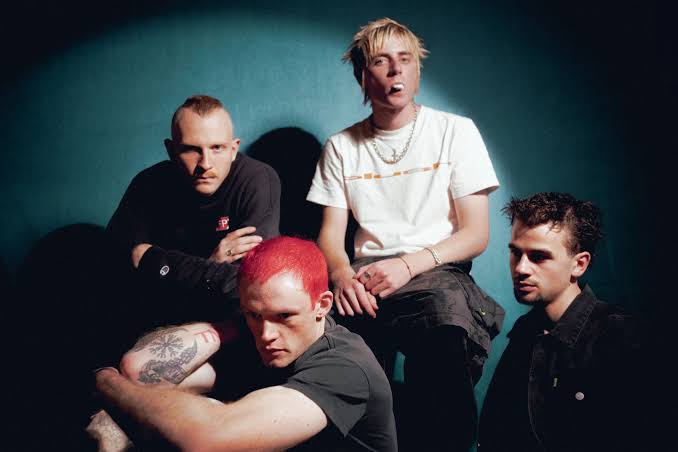 Bleech 9:3
Bleech 9:3 Artist Guide
Read the complete Bleech 9:3 guide with current background, live-show context, ticket planning notes and useful fan information.
Bleech 9:3 are a rising Irish alternative-rock band whose emotionally intense songwriting, distorted guitars and powerful live performances have made them one of the most closely watched new guitar acts of 2026. Originating from Dublin and later relocating to London, the four-piece consists of Barry Quinlan, Sam Duffy, James Quinlan and Luke O’Neill. Apple Music lists the band as formed in August 2024 and identifies its sound as alternative rock shaped by melodic songwriting and heavy 1990s-style distortion.
The band’s emergence has been remarkably fast. After releasing early singles including “Ceiling” and “Jacky” in 2025, Bleech 9:3 signed with Polydor and issued their five-track self-titled debut EP on May 15, 2026. The release contains “Jacky,” “Underrated,” “Cannonball,” “No Surprise” and “Ceiling.”
Their story is also closely connected with recovery, friendship and second chances. Barry Quinlan and Sam Duffy became friends through recovery before beginning to make music together, eventually joining forces with Barry’s brother James Quinlan and drummer Luke O’Neill. That personal history gives Bleech 9:3’s songs an unusual emotional weight while helping explain why themes of survival, vulnerability, loss and hope recur throughout their music.
Who Are Bleech 9:3?
Bleech 9:3 are a four-piece alternative-rock band made up of singer and guitarist Barry Quinlan, guitarist Sam Duffy, bassist James Quinlan and drummer Luke O’Neill. All four members have Irish roots, and the project developed from musicians who had previously played in separate bands around Dublin.
Their music occupies the space between melodic alternative rock and heavier guitar music.
Songs can begin with restrained verses before opening into dense layers of distortion, forceful drums and emotional vocal peaks. That contrast gives the band a sound that feels heavy without relying entirely on aggression.
Bleech 9:3 also arrive at a moment when guitar music is becoming increasingly diverse.
Rather than copying one historical indie-rock formula, the band combines elements associated with 1990s alternative rock, grunge, post-punk and contemporary British and Irish guitar music. Their sound has been compared with artists connected to noisy alternative rock, while their own musical environment includes newer bands such as Wunderhorse and other acts emerging from the current UK and Irish scene.
Where Did Bleech 9:3 Come From?
Bleech 9:3 originated through connections between musicians from Dublin before becoming a London-based project.
Barry and James Quinlan had previously played music together, while Sam Duffy and Luke O’Neill came from another musical partnership. These two pairs eventually joined forces, creating the lineup that became Bleech 9:3.
The band’s move to London proved important.
Sam moved first, partly because of personal circumstances and partly because he believed the group needed to operate closer to the British music industry. Barry followed, and James and Luke later joined them. The musicians established themselves around South London, where rehearsal spaces, venues and the wider guitar community provided a new environment in which to develop.
That relocation helped Bleech 9:3 progress from an idea between friends into a professional band.
London provided access to venues, managers, labels, photographers, producers and other musicians, but the band’s identity remained strongly tied to Ireland.

Who Are the Members of Bleech 9:3?
Each Bleech 9:3 member performs a clearly defined role while contributing to the group’s songwriting.
Barry Quinlan – Vocals and Guitar
Barry Quinlan is the band’s frontman, guitarist and one of its principal creative voices.
His singing gives Bleech 9:3 much of its emotional character. He can move from quieter, more controlled passages into intense vocal peaks that match the growing weight of the guitars.
Barry’s personal history with recovery also informs the emotional world surrounding the band’s music. Rather than presenting that experience as a detached theme, Bleech 9:3 often write from perspectives shaped by consequences, change and attempts to rebuild.
Sam Duffy – Guitar
Sam Duffy contributes guitar and songwriting.
His musical relationship with Barry developed through a friendship built during recovery. Barry helped Sam through Alcoholics Anonymous, and music gradually became another important connection between them.
Within the band, Sam’s guitar helps create the dense alternative-rock textures surrounding Barry’s vocals.
James Quinlan – Bass
James Quinlan is Barry’s younger brother and plays bass.
The sibling connection gives Bleech 9:3 another layer of musical familiarity. Bass plays an important role because the group’s guitars can become extremely dense; James provides movement and definition underneath that distortion.
He is also credited as a songwriter on the band’s recorded material.
Luke O’Neill – Drums
Luke O’Neill provides drums and completes Bleech 9:3’s rhythm section.
His playing helps the music move between restrained verses and explosive choruses without losing control.
Luke is also credited as a songwriter, demonstrating that Bleech 9:3 operates as a collaborative four-member group rather than a singer accompanied by hired musicians.
Bleech 9:3 Upcoming Tours
How Did Bleech 9:3 Form?
Bleech 9:3 formed from both musical ambition and a strong personal connection between its members.
Barry Quinlan and Sam Duffy had each experienced addiction and recovery before the band came together. Barry became Sam’s sponsor through Alcoholics Anonymous, creating a level of trust that eventually extended into songwriting.
The pair began working on music and eventually combined their previous musical circles.
Barry’s brother James joined on bass, while Luke O’Neill completed the group on drums.
Apple Music lists Bleech 9:3’s formation date as August 16, 2024.
From there, the development moved quickly.
The members relocated to London, began writing and rehearsing intensively, and started establishing themselves through live performances.
Their first major releases arrived in 2025, when “Ceiling” and “Jacky” began introducing the band to a wider audience.
By 2026, they had signed with Polydor, released an EP and moved onto increasingly prominent festival and support slots.
What Does the Name Bleech 9:3 Mean?
The band has deliberately avoided providing a complete explanation for the name Bleech 9:3.
Barry Quinlan has explained that the word “Bleech” relates to the idea of cleaning or beginning again, which fits naturally with the band’s wider themes of recovery and rebuilding. However, the meaning behind “9:3” has intentionally remained undisclosed.
Keeping part of the name unexplained works surprisingly well.
It gives the band a memorable identity without turning the name into a literal description of its music.
The unusual spelling of “Bleech” also makes the name visually distinctive in search results, festival posters and streaming platforms.
Most importantly, the idea of a clean beginning connects with the circumstances that brought the musicians together.
What Does Bleech 9:3 Sound Like?
Bleech 9:3 combine melodic songwriting with thick alternative-rock guitars and emotionally forceful dynamics.
Apple Music describes the group in terms of melodic rock surrounded by 1990s-style distortion. Other coverage has connected the band’s sound with grunge, alternative rock and the heavier edges of contemporary guitar music.
The most effective aspect of their sound is contrast.
Bleech 9:3 rarely need to begin a song at maximum intensity. A guitar may initially sound spacious or restrained, allowing the rhythm section and vocals to establish tension.
When the arrangement expands, several layers arrive together.
Distortion becomes thicker. Drums hit harder. The vocal becomes more urgent.
That dynamic construction makes the heavier passages feel earned.
The band also values melody.
Even when guitars become abrasive, songs retain identifiable vocal lines and structured choruses. That balance could help Bleech 9:3 reach listeners beyond specialist heavy-rock audiences.
What Is the Bleech 9:3 Debut EP?
Bleech 9:3 released their self-titled debut EP on May 15, 2026, through Polydor Records.
The five-song release runs for approximately 17 minutes and contains:
“Jacky”
“Underrated”
“Cannonball”
“No Surprise”
“Ceiling”
The EP is credited to Bleech 9:3 under exclusive licence to Universal Music Operations Limited.
For a debut release, the project establishes a surprisingly complete identity.
“Ceiling” had already introduced the band’s ability to build emotional tension through distorted rock.
“Jacky” expanded the character-driven side of Barry’s writing.
“Cannonball” demonstrated the band’s interest in complicated relationships and emotional collapse.
“Underrated” added another relationship-focused perspective, while “No Surprise” helped complete the emotional arc.
The EP functions less like five unrelated singles and more like an introduction to the subjects Bleech 9:3 want to explore.
Which Bleech 9:3 Songs Should New Listeners Hear?
Because the band’s released catalogue is still compact, their entire debut EP provides an accessible starting point.
“Ceiling”
Released in October 2025, “Ceiling” became one of Bleech 9:3’s earliest important recordings. It was produced by Ken Scott and later included on the self-titled EP.
The song demonstrates the band’s combination of emotional darkness and large guitar dynamics.
“Jacky”
“Jacky” arrived during the band’s early release period and presents a more narrative-driven side of their writing.
Rather than relying exclusively on direct autobiography, Bleech 9:3 can build songs around characters and situations that reflect larger emotional ideas.
“Cannonball”
Released in January 2026, “Cannonball” became another important step toward the debut EP.
The song was connected with experiences inside Sam Duffy’s personal life, giving it an emotional foundation that fits the wider honesty of the band’s songwriting.
“Underrated”
“Underrated” was released around the announcement of the debut EP and became another key 2026 track.
The recording credits all four band members as songwriters, while Bleech 9:3 and Dani Bennett-Spragg are credited as producers.
“No Surprise”
“No Surprise” completes the five-track EP and has become one of the group’s better-performing songs on streaming services.
Together, these five recordings show a band whose identity is already unusually concentrated.
What Makes Bleech 9:3’s Songwriting Different?
Bleech 9:3’s songwriting is effective because personal difficulty is rarely treated as decoration.
Their history means themes such as addiction, recovery, damaged relationships, grief and emotional rebuilding come from experiences that shaped the musicians before the group existed.
However, the songs are not simply diary entries.
The band uses characters, scenes and fictionalised elements to transform experience into broader stories.
That method allows listeners to engage even if their lives are completely different from those of the musicians.
Hope is equally important.
Bleech 9:3 may write about destructive circumstances, but the existence of the band itself carries an optimistic message.
The members built something creative from periods of instability.
That tension between darkness and survival gives the music greater emotional complexity than straightforward despair.
Why Was Moving From Dublin to London Important?
Moving to London allowed Bleech 9:3 to place themselves directly inside one of Europe’s most active live-music ecosystems.
The members established themselves around Brixton and began interacting with the wider South London guitar scene. The Windmill, a venue strongly associated with emerging alternative bands, became part of the environment surrounding their development.
The move also placed the musicians closer to labels and managers.
After releasing “Ceiling” in October 2025, the band’s progress toward a Polydor deal happened quickly.
London did not replace their Dublin identity.
Instead, it gave the band a second base from which to build internationally.
That combination is increasingly common among Irish artists whose creative identity remains connected to Ireland while their professional infrastructure operates across Britain and Europe.
How Did Bleech 9:3 Build Their Live Reputation?
Live performance has become one of the fastest-growing parts of Bleech 9:3’s story.
The band spent 2026 playing headline club dates, festivals and support appearances.
One of the biggest moments came on June 10, 2026, when Bleech 9:3 supported Nick Cave & The Bad Seeds at Malahide Castle in Dublin. RTÉ listed the appearance alongside the band’s other major summer dates.
They have also supported or shared bills with Wunderhorse and appeared across a growing range of UK and European events.
The combination makes sense.
Their music depends heavily on dynamics, and those changes can become more physical in a concert environment.
Quiet sections create anticipation.
Heavy guitar passages generate release.
Barry Quinlan’s performance style then provides a visual focal point around which the other musicians can build.
For a band with only one EP, the scale of the live schedule is particularly notable.
What Is Bleech 9:3 Doing in 2026?
Bleech 9:3 are spending much of 2026 performing while preparing for the next stage of their recording career.
Their self-titled debut EP arrived in May, followed by extensive live activity.
The remaining 2026 schedule includes several significant appearances.
Bleech 9:3 are confirmed for Reading Festival on Friday, August 28, performing on The Ballroom stage.
They are also listed for Leeds Festival, where they appear on The Ballroom stage during the same festival weekend.
Apple Music additionally lists upcoming dates in Lisbon, Sheffield, Edinburgh, Paris, Berlin and Cardiff.
RTÉ reported further Irish dates connected with Wunderhorse and Electric Picnic.
The band has also indicated that an album is part of the next creative phase, with writing planned around their extensive touring schedule.
Where Could Bleech 9:3 Go Next?
The logical next step for Bleech 9:3 is a debut full-length album.
The EP already establishes the essential pieces: an identifiable vocal presence, strong guitar dynamics, personal lyrical themes and a clear four-member chemistry.
An album would give the band more space to develop contrasts.
The heavier side could become heavier.
Quieter songs could receive more room.
Characters and personal stories could connect across a larger sequence.
The biggest challenge will be preserving the intensity that made the early material effective while expanding the sound enough to prevent repetition.
The band’s current schedule should help.
Playing dozens of shows exposes songs to immediate audience reactions and gives the musicians an opportunity to understand which arrangements survive outside the rehearsal room.
With album writing already discussed publicly, Bleech 9:3 appear to be moving toward that next phase.
Why Is Bleech 9:3 Part of Ireland’s New Alternative Wave?
Bleech 9:3 are emerging during an unusually strong period for Irish alternative music.
Recent years have produced internationally visible artists working across post-punk, indie rock, hip-hop, folk and experimental pop.
The Guardian placed Bleech 9:3 within a broader contemporary Irish alternative movement that includes acts such as Fontaines D.C., Kneecap and Sprints.
Bleech 9:3 do not sound identical to those artists, and that is precisely why the wider movement is interesting.
The connection is cultural rather than stylistically uniform.
These artists demonstrate that Irish identity can exist inside multiple modern genres without requiring musicians to conform to one traditional sound.
Bleech 9:3 bring another perspective: distorted alternative rock built around friendship, recovery and deeply personal storytelling.
Final Thoughts
Bleech 9:3 are at the beginning of their recording career, but their development has already moved at a remarkable pace.
The four musicians came together from two existing musical partnerships, with Barry Quinlan and Sam Duffy’s friendship through recovery becoming particularly important to the group’s creation. Barry’s brother James Quinlan joined on bass, while Luke O’Neill completed the band on drums.
Their move from Dublin to London gave them a base from which to develop professionally, but Irish identity remains fundamental to their story.
The first releases established a clear direction.
“Ceiling,” “Jacky” and “Cannonball” introduced emotionally charged alternative rock built around distortion and melody. “Underrated” and “No Surprise” expanded that world, and all five songs were brought together on the self-titled Bleech 9:3 EP in May 2026.
The next phase is already unfolding.
Support appearances with major artists, an extensive festival schedule and upcoming Reading and Leeds performances are exposing Bleech 9:3 to increasingly large audiences.
What makes the band particularly interesting is that its story and sound point in the same direction.
Bleech 9:3’s music is about pressure, damage, relationships, recovery and the possibility of starting again. The band itself also represents a new beginning for musicians whose lives took difficult routes before they found one another.
That gives the project an authenticity that cannot be manufactured through clever branding alone.
If the debut EP introduced the emotional foundations of Bleech 9:3, a future full-length album could reveal how broad their musical world can become.
For now, they remain one of the most compelling new Irish alternative-rock bands to watch as 2026 continues.
Bleech 9:3 FAQs
Get ready for the Bleech 9:3 live show. Find the best Bleech 9:3 tickets, check tour setlists, and get essential venue details. Read our quick fan FAQ to make the most of your Bleech 9:3 music concert experience.
Who are the four members of Bleech 9:3?
Bleech 9:3 consist of Barry Quinlan on vocals and guitar, Sam Duffy on guitar, James Quinlan on bass and Luke O’Neill on drums. The lineup developed from two earlier musical partnerships: Barry and his younger brother James had played together, while Sam and Luke had their own history as musicians. Eventually the four joined forces and relocated their activity toward London. Each member is credited as a songwriter on the band’s recorded work, reinforcing that Bleech 9:3 function as a collaborative four-piece rather than a solo project built around one frontman.
Are Barry Quinlan and James Quinlan from Bleech 9:3 related?
Yes. Barry Quinlan and bassist James Quinlan are brothers. Their shared musical background predates Bleech 9:3, giving the rhythm and songwriting relationships inside the band an additional family connection. Barry is the older brother and serves as the group’s principal vocalist and guitarist, while James anchors the lower end on bass. Their upbringing included a strong presence of music within the family, something Barry has recalled when discussing childhood experiences in Ireland. That family history became one of several different musical relationships that eventually converged when Bleech 9:3 formed.
How did Barry Quinlan and Sam Duffy meet?
Barry Quinlan and Sam Duffy became close through recovery before they became bandmates. Both had struggled with alcohol addiction, and Barry eventually helped Sam through Alcoholics Anonymous as a sponsor. The trust developed through that process later extended into music, where they discovered that their experiences could provide the foundation for unusually direct songwriting. They began creating material together before combining with James Quinlan and Luke O’Neill. The relationship is therefore central to Bleech 9:3’s identity because the band grew from genuine friendship and mutual support rather than being assembled through conventional auditions.
Why does Bleech 9:3 use so much distortion in its guitar sound?
Distortion gives Bleech 9:3 a way to translate emotional pressure into physical sound. Their arrangements often begin with enough space for melody and voice to remain exposed before guitars become denser as the song builds. Apple Music characterises the group through melodic rock surrounded by 1990s-style distortion, an effective description of how heaviness and accessibility coexist in their recordings. The approach connects them with alternative-rock and grunge traditions without requiring them to recreate a specific older band. Distortion becomes part of the storytelling, increasing intensity when the emotional content demands a larger release.
Is Bleech 9:3 an Irish band or a British band?
Bleech 9:3 are best described as an Irish band based in London. The musicians come from Dublin and developed their earliest musical relationships in Ireland, but relocating to London became important to the group’s professional formation. Apple Music identifies Dublin as the band’s place of origin, while later profiles describe the members establishing themselves in London to pursue the project more seriously. This dual geography influences how Bleech 9:3 fit into the current scene: culturally they are part of Ireland’s new generation of alternative artists while professionally operating inside the wider UK and European rock circuit.
Who writes Bleech 9:3’s songs?
Songwriting is shared across the band. Credits for tracks such as “Underrated” list Barry Quinlan, Sam Duffy, James Quinlan and Luke O’Neill as writers, demonstrating that the creative process extends beyond the vocalist. Barry’s experiences and lyrical perspective naturally give him a prominent role in shaping the narratives, but the finished recordings depend on how all four musicians construct the arrangement. This collaborative structure is particularly valuable for guitar music because bass, drums and two guitars can influence the emotional direction of a track as strongly as its words or central melody.
Why are Bleech 9:3 attracting attention so quickly?
Bleech 9:3 combine several qualities that can accelerate a new band’s development: distinctive songs, an emotionally credible story, an intense live presence and a clear visual and musical identity. Their first major releases arrived only in 2025, yet by 2026 they had signed with Polydor, released a debut EP, supported Nick Cave & The Bad Seeds and earned places at major festivals including Reading and Leeds. The speed is impressive, but the underlying musicians had already spent years developing before the public-facing Bleech 9:3 project emerged.
Bleech 9:3 Recent Setlists
Recent setlists can be edited from the panel or managed in the setlists table.
Jun 27, 2026 Featured Arena, London 6 songs
Opening Moment
Fan Favourite
Acoustic Interlude
Main Set Highlight
Final Singalong
Encore Song
Jun 26, 2026 Featured Theatre, Manchester 6 songs
Encore Song
Final Singalong
Main Set Highlight
Acoustic Interlude
Fan Favourite
Opening Moment