
Bellowhead Upcoming Tours
Discover the latest concert dates, artist blogs, and exclusive entertainment news all in one place. We keep fans ahead of the crowd with up-to-date tour announcements and in-depth stories about top performers from around the world.
 Bellowhead
Bellowhead Artist Guide
Read the complete Bellowhead guide with current background, live-show context, ticket planning notes and useful fan information.
Bellowhead are an English contemporary folk band known for transforming traditional songs, dance tunes and maritime material into colourful, large-scale performances. Formed in 2004, the group became famous as an eleven-piece ensemble combining fiddles, melodeon, concertina, cello, guitars, percussion, brass, woodwind and low-brass instruments.
Their music is firmly connected to English folk tradition, but Bellowhead have never sounded like a conventional acoustic group. Their arrangements incorporate ideas from jazz, rock, funk, classical music, cabaret, music hall and big-band performance. A song can begin with a quiet fiddle melody before expanding into pounding drums, massed horns and a chorus delivered with the force of a festival anthem.
Bellowhead ended their original run in 2016 but reunited during 2020, later returning for successful tours in 2022 and 2024. The band’s official history credits them with five studio albums, more than a quarter of a million album sales, two silver discs and eight BBC Radio 2 Folk Awards. In November 2026, Bellowhead are celebrating the twentieth anniversary of their debut full-length album, Burlesque.
Table of Contents
What Is Bellowhead?
How Did Bellowhead Begin?
Who Are the Bellowhead Band Members?
What Instruments Does Bellowhead Use?
What Makes Bellowhead’s Music Different?
How Does Bellowhead Rework Traditional Songs?
Which Albums Define Bellowhead’s Career?
Why Is Bellowhead Known as a Great Live Band?
Why Did Bellowhead Stop Performing in 2016?
How Did Bellowhead Reunite?
What Is Bellowhead Doing in 2026?
What Is Bellowhead’s Musical Legacy?
Frequently Asked Questions
What Is Bellowhead?
Bellowhead are best described as a contemporary English folk big band. Their repertoire draws heavily from traditional ballads, dance melodies, work songs and maritime material, but their presentation is modern, theatrical and deliberately adventurous.
Most folk groups are built around a small collection of acoustic instruments. Bellowhead expanded that format by combining traditional strings and bellows-driven instruments with saxophones, trombone, trumpet, oboe, bass clarinet, percussion and low brass.
This unusual construction gives the musicians enormous freedom. One section can perform a simple dance melody while another introduces a jazz-influenced counter-melody. Brass instruments may create a powerful climax, imitate a street parade or add humorous interruptions to a song.
Bellowhead’s purpose has never been to reproduce historical performances exactly. Instead, the band treats traditional music as living material that can be rearranged, intensified and presented to a modern audience.
The stories and melodies remain recognisable, but the energy, instrumentation and dramatic structure belong unmistakably to Bellowhead.
How Did Bellowhead Begin?
Bellowhead developed from the musical partnership between singer and fiddler Jon Boden and melodeon player John Spiers.
Before creating Bellowhead, the two musicians performed together as Spiers and Boden. Their duo work demonstrated how fiddle, singing, melodeon and concertina could make traditional English music feel immediate and energetic.
The idea for a larger ensemble reportedly emerged while Spiers and Boden were delayed in traffic. They began discussing which friends and fellow musicians could help them create a folk group with the size, power and tonal variety of a big band.
That idea gradually brought together performers from folk, classical, jazz and world-music backgrounds. Instead of creating a normal rhythm section with several additional instruments, Bellowhead gave every performer an important musical role.
The group released the E.P.Onymous EP in 2004. Its first complete studio album, Burlesque, arrived in 2006 and established the approach that would define Bellowhead’s career.
Traditional melodies were surrounded by elaborate brass writing, forceful percussion, unusual instrumental combinations and communal singing. The album proved that folk music could support arrangements as detailed and physically exciting as rock, jazz or orchestral pop.

Bellowhead Upcoming Tours
Who Are the Bellowhead Band Members?
Bellowhead’s defining lineup brought together eleven multi-skilled musicians whose instruments rarely appeared in one folk ensemble.
Jon Boden
Jon Boden is Bellowhead’s principal singer, fiddler and central stage performer. His dramatic vocal delivery gives traditional stories a strong sense of character, while his fiddle playing connects the group to English dance and ballad traditions.
John Spiers
John Spiers plays melodeon and concertina. His instruments provide melody, harmony and rhythmic movement, making him an essential part of the band’s internal pulse.
Benji Kirkpatrick
Benji Kirkpatrick contributes guitar, bouzouki, mandolin, banjo and vocals. His ability to move between several plucked-string instruments allows Bellowhead to change texture without losing momentum.
Rachael McShane
Rachael McShane performs on cello and fiddle and also contributes vocals. Her cello gives the ensemble a rich lower-register string sound, while her fiddle can reinforce or contrast with the group’s other melody players.
Sam Sweeney
Sam Sweeney plays fiddle and bagpipes. His precise, expressive playing can support a delicate melody or add considerable force to a fast instrumental arrangement.
Pete Flood
Pete Flood is responsible for percussion. His setup has included conventional drums alongside unusual objects and sound-making devices, helping Bellowhead move between folk dance, rock, jazz, marching music and theatrical noise.
Brendan Kelly
Brendan Kelly plays saxophones and bass clarinet. His instruments add both warmth and bite, allowing the woodwind section to carry melodies, create harmony or respond directly to the brass.
Justin Thurgur
Justin Thurgur plays trombone. His work contributes weight, rhythmic punctuation and a strong connection with jazz, funk and Afrobeat-influenced brass traditions.
Andy Mellon
Andy Mellon performs on trumpet and flugelhorn. His bright upper-register sound is a major part of Bellowhead’s celebratory climaxes and tightly arranged horn passages.
Paul Sartin
Paul Sartin contributed fiddle, oboe, vocals and arrangements. He died in September 2022, shortly before Bellowhead’s reunion tour. The band continued with the concerts while incorporating a musical tribute to him into every performance.
Ed Neuhauser
Ed Neuhauser played helicon, sousaphone and tuba, supplying Bellowhead’s deep low-brass foundation. He performed during the 2024 tour while undergoing treatment for a brain tumour and died in December 2025. His sound and stage personality remain an important part of the band’s history.
The official Bellowhead profiles document the musicians and the remarkable range of instruments used throughout the group’s career.
What Instruments Does Bellowhead Use?
Bellowhead’s instrumentation is one of the main reasons the group sounds different from other English folk bands.
The ensemble has featured:
Fiddles
Cello
Melodeon
Concertina
Guitar
Bouzouki
Mandolin
Banjo
Bagpipes
Oboe
Saxophones
Bass clarinet
Trumpet
Flugelhorn
Trombone
Helicon
Sousaphone
Tuba
Drums and additional percussion
These instruments are not divided into a simple lead section and backing section. Their functions change continuously.
A fiddle may introduce a dance tune before becoming part of a rhythmic pattern. The cello can provide bass movement in one arrangement and a lyrical melody in another. Trumpet and trombone may produce disciplined harmonies before breaking into something resembling a noisy street procession.
The helicon or tuba performs a particularly distinctive role. Instead of relying entirely on an electric bass guitar, Bellowhead can build its lowest frequencies through the breath, vibration and physical weight of a large brass instrument.
That low-brass sound connects naturally with the rest of the horn section while giving the entire ensemble a lively, human pulse.
What Makes Bellowhead’s Music Different?
Bellowhead’s music is distinctive because it combines carefully planned arrangements with the impression of joyful disorder.
Every entrance, pause, instrumental exchange and dynamic change can be precisely organised. However, the performers deliver the material with enough physical energy and humour to make it feel spontaneous.
The band can move from a restrained acoustic opening into a full brass and percussion section within moments. A serious narrative may be followed by a playful instrumental passage, while a straightforward dance tune can develop into something resembling jazz improvisation.
Bellowhead also avoids allowing one instrument to dominate every song. The focus may shift between voice, fiddle, melodeon, cello, reeds, brass or percussion.
This constantly changing balance keeps the arrangements lively. Listeners are not simply waiting for the singer to return after an instrumental break; they are hearing eleven musicians participate in a musical conversation.
The result is sophisticated without becoming formal. Bellowhead can demonstrate considerable technical skill while still creating music that encourages an audience to sing, dance and respond physically.
How Does Bellowhead Rework Traditional Songs?
Bellowhead normally begins with the story, melody or rhythmic identity of traditional material before constructing a new arrangement around it.
A maritime song may become a swaggering brass number. A dark ballad might be surrounded by tense strings and carefully controlled percussion. An English dance melody can expand into a sequence of solos, instrumental responses and dramatic tempo changes.
This approach avoids treating old music as an untouchable museum object. Bellowhead respects the source while recognising that traditional songs have always changed as different singers, musicians and communities performed them.
The group’s best-known repertoire includes “New York Girls,” “London Town,” “Roll Alabama,” “Gosport Nancy,” “Yarmouth Town,” “Prickle-Eye Bush,” “Fakenham Fair” and “Roll the Woodpile Down.”
These songs existed before Bellowhead recorded them, but the band created arrangements that became closely associated with its own performances.
The 2015 compilation Pandemonium – The Essential Bellowhead selected thirteen tracks from the group’s five studio albums. The collection demonstrates how effectively the band turned traditional material into a recognisable modern catalogue.
Bellowhead also performs instrumental tune sets. Several melodies may be connected in one arrangement, allowing different musicians to lead before the complete ensemble joins together.
Which Albums Define Bellowhead’s Career?
Bellowhead released five studio albums during its original twelve-year period.
Burlesque (2006)
Burlesque introduced Bellowhead’s full folk-big-band identity. The album includes “London Town,” “Rigs of the Time” and “Frog’s Legs and Dragon’s Teeth,” all of which became closely connected with the group’s live performances.
Its combination of traditional songs, elaborate horns, strings and percussion established Bellowhead as something new within British folk music. The album is being celebrated during the band’s 2026 twentieth-anniversary tour.
Matachin (2008)
Matachin developed the rhythmic and theatrical possibilities of the debut. The musicians appeared increasingly confident in using the full size of the ensemble, creating arrangements that moved quickly between intimate acoustic detail and powerful group passages.
The album reached number 73 on the main UK Albums Chart and number nine on the Official Independent Albums Chart.
Hedonism (2010)
Hedonism became one of Bellowhead’s most important releases. The official band site describes it as a silver-selling record and the highest-selling independently released folk album of its time.
Its songs include “New York Girls,” “A-Begging I Will Go,” “Cold Blows the Wind,” “Yarmouth Town” and “The Hand Weaver and the Factory Maid.”
The album strengthened Bellowhead’s reputation beyond specialist folk audiences and later inspired the streamed anniversary performance that began the group’s reunion.
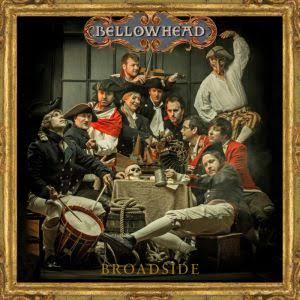
Broadside (2012)
Broadside brought Bellowhead further into the mainstream album market. It reached number 16 on the UK Albums Chart and number one on the Official Independent Albums Chart.
The record includes “Roll the Woodpile Down,” “10,000 Miles Away,” “The Old Dun Cow” and “Roll the Woodpile Down.” Its arrangements are direct, energetic and strongly connected with the group’s stage identity.
Revival (2014)
Revival was Bellowhead’s fifth studio album and its highest-charting release. It peaked at number 12 in the United Kingdom.
Released through Island Records, the album presented a polished version of the band’s sound without removing its instrumental variety or eccentric character.
A later concert recording, Reassembled, was created from Bellowhead’s 2020 streamed performance. It reached number one on the Official Folk Albums Chart in 2021.
Why Is Bellowhead Known as a Great Live Band?
Bellowhead’s reputation was established as much through concerts as through studio recordings.
Eleven performers create constant visual and musical movement. Musicians step forward for melodies, exchange phrases, contribute backing vocals and react visibly to changes in the arrangement.
Jon Boden acts as the central storyteller, but the performance never depends on one individual. Brass players may operate like a tightly controlled section before suddenly behaving like a street band. Fiddlers can move from delicate harmony into aggressive rhythmic playing, while the percussion introduces unexpected noises and accents.
The group’s repertoire also creates variety. Fast dance tunes, maritime songs, tragic ballads and instrumental sequences prevent a concert from remaining in one emotional mood.
Repeated choruses naturally encourage audience participation. The musicians do not need to force communal singing because many of the songs were developed through traditions in which participation was already important.
Bellowhead won eight BBC Radio 2 Folk Awards, including multiple Best Live Act honours. Those awards reflect how central performance has been to the group’s reputation.
Why Did Bellowhead Stop Performing in 2016?
Bellowhead completed its original twelve-year run with a farewell tour in 2016.
The ending was presented as a deliberate decision rather than the result of public conflict. Maintaining an eleven-member group requires extensive coordination, particularly when every performer also has independent musical commitments.
Recording and touring involve multiple schedules, families, instruments and technical requirements. Several members were already established as solo musicians, collaborators, composers, teachers and performers in other ensembles.
The farewell allowed the group to close that phase of its career properly. Its final concert took place at Oxford Town Hall, the location where Bellowhead had played its first complete-band performance.
The live recording Bellowhead Live: The Farewell Tour later reached number 24 on the UK Albums Chart, demonstrating that interest in the group remained strong when it stepped away.
How Did Bellowhead Reunite?
Bellowhead’s reunion began during 2020, when the musicians remotely recorded an at-home version of “New York Girls.”
The project encouraged the members to reconnect in person for a streamed concert marking the tenth anniversary of Hedonism. Thousands of viewers watched the performance, confirming that Bellowhead still had a substantial audience after nearly five years away.
A recording from the broadcast was released as Reassembled in 2021. The response then led to a 2022 tour celebrating the tenth anniversary of Broadside.
Paul Sartin died unexpectedly only weeks before the tour began. The remaining musicians made the difficult decision to continue while honouring him during the shows.
Bellowhead returned again in 2024 to mark twenty years since the band’s formation and the release of E.P.Onymous, as well as ten years since Revival. According to the official biography, the nineteen-date tour attracted more than 30,000 attendees.
These performances transformed the reunion from a single anniversary event into a new period of activity for the band.
What Is Bellowhead Doing in 2026?
Bellowhead’s principal 2026 project is the Burlesque 20th Anniversary Tour, scheduled across the United Kingdom during November.
The production is promoted as an eleven-piece folk show and will feature songs from the 2006 album alongside other established live favourites. Material connected with the anniversary includes “London Town,” “Rigs of the Time” and “Frog’s Legs and Dragon’s Teeth.”
Celebrated Senegalese kora musician Seckou Keita is listed as the special guest for many performances.
The anniversary carries considerable importance because Burlesque established the scale and creative confidence behind the rest of Bellowhead’s career. Revisiting the album allows the musicians to explore those early arrangements with another two decades of performance experience.
The shows will also carry emotional significance following the deaths of Paul Sartin and Ed Neuhauser. Their instruments, arrangements and personalities played essential roles in building Bellowhead’s sound.
What Is Bellowhead’s Musical Legacy?
Bellowhead changed expectations about how English traditional music could be performed and presented.
The group showed that folk repertoire could support a large touring production without surrendering its stories, melodies or regional character. Traditional music did not need to become quieter or simpler to remain authentic.
Bellowhead also created greater visibility for instruments that rarely appeared together in mainstream music. Listeners encountered melodeon, concertina, oboe, helicon, fiddle, cello, bouzouki, bagpipes and bass clarinet operating as equal parts of a modern ensemble.
Commercially, the band brought folk albums onto the main UK chart. Artistically, it demonstrated that preservation and experimentation are not opposing ideas.
A song can remain connected to previous singers and communities while receiving a new arrangement for a completely different audience.
Bellowhead’s greatest contribution may be the sense of possibility the band created. Its music encourages performers to research tradition carefully but approach it with confidence, imagination and personality.
Final Thoughts
Bellowhead are more than a large folk group. They demonstrate what can happen when traditional repertoire is placed in the hands of adventurous musicians who understand both its history and its capacity for transformation.
Across five studio albums, award-winning performances, a farewell, several reunions and the 2026 Burlesque anniversary, the band has remained defined by collective musicianship.
No single performer or instrument explains the complete sound. Its power comes from the interaction between voices, strings, bellows, reeds, brass and percussion.
That combination made Bellowhead accessible without making them ordinary. Their performances can feel ancient and immediate, carefully arranged and joyfully unruly at the same time.
For established folk listeners and curious newcomers, Bellowhead remain one of the clearest demonstrations that traditional English music can fill a modern concert hall with movement, personality and life.
Bellowhead FAQs
Get ready for the Bellowhead live show. Find the best Bellowhead tickets, check tour setlists, and get essential venue details. Read our quick fan FAQ to make the most of your Bellowhead music concert experience.
Who founded Bellowhead, and how did their partnership shape the band?
Jon Boden and John Spiers were the creative starting point for Bellowhead. Before assembling the larger group, they had built a reputation as the duo Spiers and Boden, combining fiddle, voice, melodeon and concertina. That partnership gave Bellowhead its initial musical language: Boden supplied narrative singing and arrangement ideas, while Spiers brought the pulse and melodic lift of English dance music. Their decision to invite musicians from contrasting backgrounds turned an intimate duo sound into a flexible folk orchestra capable of both subtle ensemble work and explosive climaxes.
What does Jon Boden contribute beyond being Bellowhead’s lead singer?
Jon Boden functions as a musical director, arranger, fiddler and stage focal point as well as the principal vocalist. His delivery often treats a song as a piece of theatre, using phrasing and physical movement to clarify characters, humour or danger. As a fiddler, he can reinforce a traditional melody, add rhythmic pressure or join the string section’s harmony. His background in composition and theatre helps explain why Bellowhead arrangements frequently feel dramatic, with carefully planned entrances, contrasts and endings rather than a simple sequence of verses.
Why is John Spiers’ melodeon so important to Bellowhead’s rhythm?
The melodeon can produce melody, harmony and rhythmic emphasis simultaneously, making John Spiers central to Bellowhead’s internal momentum. His playing connects the ensemble to English country-dance traditions, but it also works like a rhythmic engine beneath brass, strings and vocals. The instrument’s bellows create natural accents that can make a tune feel buoyant or urgent. Spiers also uses concertina and electronic possibilities when an arrangement requires another texture, allowing him to bridge the band’s acoustic folk foundations and its larger, more contemporary stage sound.
How do Bellowhead’s string players divide their musical roles?
The string section is designed around contrasting ranges and techniques. Fiddles can state the main tune, build harmony or create repeated figures that drive the arrangement. Rachael McShane’s cello adds a lower register that can behave melodically, rhythmically or atmospherically rather than merely supplying bass notes. Benji Kirkpatrick’s guitar, bouzouki, mandolin and banjo provide changing patterns of attack and resonance. Because several performers are multi-instrumentalists, the balance can be redesigned from song to song, preventing the acoustic side of the band from becoming predictable.
What made Paul Sartin’s musicianship especially valuable to Bellowhead?
Paul Sartin brought an unusual combination of folk instinct, classical training, arranging skill and vocal character. His oboe gave Bellowhead a penetrating sound rarely heard in a folk big band, while his fiddle playing allowed him to blend naturally with the ensemble’s traditional core. He could also step forward as a singer, bringing a different personality from Jon Boden’s lead performances. Sartin’s work as an editor and arranger helped preserve the detail behind the spectacle, making his contribution structural as well as immediately audible during concerts and recordings.
How did Ed Neuhauser’s low-brass instruments affect the band’s sound?
Ed Neuhauser’s helicon, sousaphone and tuba gave Bellowhead a deep, breathing foundation that was very different from a conventional electric bass. Those instruments could anchor a dance rhythm, imitate a marching band, add comic weight or make a full-ensemble climax feel enormous. Because low brass produces sound through air and physical resonance, it connected naturally with the trumpets, trombone and reeds while still supporting the strings and percussion. Neuhauser’s stage presence also made the bass line visible, turning a supporting musical function into part of the show’s personality.
Do Bellowhead’s musicians perform in other bands and solo projects?
Yes. Bellowhead has always operated as a meeting point for established musicians rather than as the members’ only professional activity. Jon Boden has released solo work and led other ensembles; John Spiers continues duo and collaborative projects; Sam Sweeney has developed a prominent solo career; and Rachael McShane performs with her own band. Benji Kirkpatrick, Justin Thurgur, Pete Flood and the other players also work across folk, jazz, world music, theatre and session projects. Those outside experiences continually expand the vocabulary each performer brings back to Bellowhead.
Bellowhead Recent Setlists
Recent setlists can be edited from the panel or managed in the setlists table.
Jun 27, 2026 Featured Arena, London 6 songs
Opening Moment
Fan Favourite
Acoustic Interlude
Main Set Highlight
Final Singalong
Encore Song
Jun 26, 2026 Featured Theatre, Manchester 6 songs
Encore Song
Final Singalong
Main Set Highlight
Acoustic Interlude
Fan Favourite
Opening Moment