Alice Cooper Upcoming Tours
Discover the latest concert dates, artist blogs, and exclusive entertainment news all in one place. We keep fans ahead of the crowd with up-to-date tour announcements and in-depth stories about top performers from around the world.
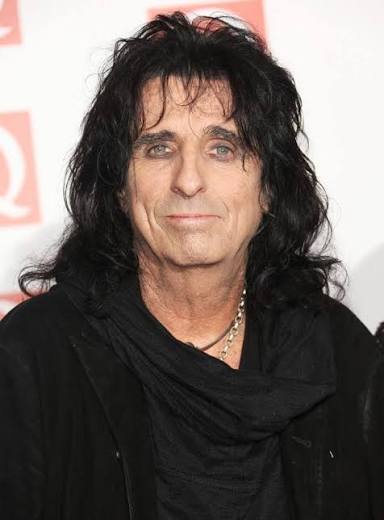 Alice Cooper
Alice Cooper Artist Guide
Explore Alice Cooper upcoming tours, ticket details, setlists, FAQs and latest performer news. Use this guide to check concert updates, live-show context and fan planning information before booking.
Overview & Band Identity
Alice Cooper is the stage name and persona of Vincent Damon Furnier, an American singer, songwriter, and actor who is widely recognized as the "Godfather of Shock Rock." Born in Detroit, Michigan in 1948 and raised in Phoenix, Arizona, Alice Cooper pioneered a style of theatrical rock performance that incorporated horror imagery, guillotines, electric chairs, fake blood, and elaborate stage props into rock concerts. This fusion of music and macabre theater revolutionized live performance and influenced generations of artists across metal, punk, and alternative music.
Alice Cooper originally began as a band — the Alice Cooper Band — before Furnier legally adopted the name as his own solo persona in 1975. The distinction matters because the early Alice Cooper albums were genuinely collaborative band efforts. Over five decades, Alice Cooper has released 21 studio albums and sold over 50 million records worldwide. His most famous hits include "School's Out," "Poison," "No More Mr. Nice Guy," "I'm Eighteen," "Under My Wheels," and "Welcome to My Nightmare."
Beyond music, Cooper is an accomplished actor, a skilled golfer, a restaurateur, a radio host (Nights with Alice Cooper), and a born-again Christian who has spoken openly about his faith and his recovery from alcoholism. His longevity and adaptability have made him one of the most enduring figures in rock music.
Formation & Early Years (1964–1970)
The origins of Alice Cooper trace back to Cortez High School in Phoenix, Arizona, where Vincent Furnier formed a band called the Earwigs in 1964 with his cross-country teammates Glen Buxton, Dennis Dunaway, and John Tatum. After Tatum left, they recruited Michael Bruce, added drummer Neal Smith (Dunaway's brother-in-law), and renamed themselves the Spiders. By 1967, they had become the Nazz, but discovered that Todd Rundgren had a band with the same name, forcing another name change.
According to legend, the band's new name — Alice Cooper — came from an Ouija board session, after which Furnier claimed to be the reincarnation of a 17th-century witch named Alice Cooper. The name was deliberately chosen to provoke and confuse. In the late 1960s, the band moved to Los Angeles and quickly became fixtures of the Sunset Strip scene, alongside acts like the Doors and Love.
Despite their growing local following, the Alice Cooper Band struggled to find label support. Their big break came when Frank Zappa saw them perform and signed them to his Straight Records label. Their debut album, Pretties for You (1969), was a psychedelic, experimental work that bore little resemblance to the hard rock they would later pioneer. A second album, Easy Action (1970), showed progression but still failed commercially. The band relocated to Detroit, the city where Furnier was born, and found a more receptive audience in the Midwest's hard rock and proto-metal scene.
Breakthrough: I'm Eighteen & School's Out (1971–1973)
The turning point came when the band signed with Warner Bros. Records and recorded Love It to Death (1971) with producer Bob Ezrin. Ezrin helped focus the band's chaotic energy into tight, hard-rocking songs. The album's lead single, "I'm Eighteen," became a massive hit, reaching number 21 on the Billboard Hot 100. With its anthem of teenage angst and frustration, "I'm Eighteen" connected powerfully with young audiences and established Alice Cooper as a national name.
The band's live shows had already earned a reputation for shocking theatrics, and the success of "I'm Eighteen" brought these performances to a much wider audience. The iconic stage show now included a guillotine, fake blood, and a boa constrictor. Killer (1971) followed quickly, delivering classics like "Under My Wheels," "Be My Lover," and "Halo of Flies."
School's Out (1972) was the commercial peak of the band era. The title track, with its unforgettable chorus — "School's out for summer!" — became a global anthem and remains one of rock's most recognizable songs. The album reached number 2 on the Billboard 200. The single came packaged in a pair of paper panties, adding to the band's reputation for provocative marketing. Billion Dollar Babies (1973) continued the hot streak, becoming Alice Cooper's highest-charting album in both the US (number 1) and UK (number 1). Hits like "No More Mr. Nice Guy" and "Elected" cemented the band's place at the top of the rock world.

Alice Cooper Upcoming Tours
Solo Career: Welcome to My Nightmare (1975–1979)
By 1974, tensions within the original Alice Cooper Band were growing. The relentless touring and recording schedule had taken its toll, and Furnier's increasing alcoholism was affecting the group dynamic. The original band members decided to part ways amicably, and Furnier legally adopted the Alice Cooper name for his solo career.
The first solo album, Welcome to My Nightmare (1975), was a masterpiece of theatrical rock. Produced again by Bob Ezrin, the album was a concept piece that followed young Stephen through his nightmares, introducing the character that would become central to Cooper's solo work. The title track and "Only Women Bleed" (a surprisingly tender ballad) became hits. The supporting tour was the most elaborate in rock history at that point, featuring a full stage show with dancers, film interstitials, and state-of-the-art special effects.
Subsequent 1970s albums included Alice Cooper Goes to Hell (1976), Lace and Whiskey (1977), and From the Inside (1978), a concept album co-written with Bernie Taupin about Cooper's experiences in a sanitarium. From the Inside was particularly personal, reflecting Cooper's struggles with alcoholism. By the end of the decade, the quality of Cooper's output had become inconsistent, and the changing musical landscape — punk and disco dominating — left him searching for direction.
The Dark Years & Comeback (1980–1990)
The early 1980s were challenging for Alice Cooper. His alcoholism had reached crisis levels, affecting both his personal life and his career. Albums like Flush the Fashion (1980), Special Forces (1981), Zipper Catches Skin (1982), and DaDa (1983) experimented with new wave and post-punk sounds but failed to match the commercial success of earlier work. After DaDa, Cooper took a hiatus from recording.
In 1983, Cooper was hospitalized for alcoholism and began his journey to sobriety. He checked into a New York hospital and, with the support of his then-girlfriend (later wife) Sheryl Goddard, successfully detoxed and began attending church. His recovery from alcoholism — he has been sober since the mid-1980s — is one of the most frequently cited aspects of his personal story.
Cooper returned with Constrictor (1986), a harder, heavier album that marked a deliberate return to his shock rock roots. Raise Your Fist and Yell (1987) followed a similar direction, with songs like "Freedom" and "Prince of Darkness" (written for the John Carpenter film). These albums re-established Cooper's presence in the metal scene, which had exploded in popularity with the rise of thrash and glam metal. Trash (1989) brought the comeback to commercial fruition, thanks in large part to the ballads "Poison" and "Bed of Nails."
Mainstream Revival: Poison & Hey Stoopid (1991–1999)
"Poison" became Alice Cooper's biggest solo hit, reaching number 2 on the UK Singles Chart and number 7 on the Billboard Hot 100. The song's music video received heavy rotation on MTV, introducing Cooper to a new generation of fans. Trash (1989) was certified platinum, and Cooper was once again a mainstream presence.
Hey Stoopid (1991) followed a similar formula, featuring guest appearances from rock luminaries including Joe Satriani, Ozzy Osbourne, Steve Vai, and Slash. The title track and "Love's a Loaded Gun" became fan favorites. The album wasn't as commercially successful as Trash but maintained Cooper's comeback momentum.
The 1990s also saw Cooper expand his presence in popular culture. He appeared in films including Wayne's World (1992), where his famous "We're not worthy!" scene became iconic. He voiced characters on The Simpsons and appeared in numerous television shows. His spoken-word contributions to "Feed My Frankenstein" (featured in Wayne's World) connected him to the grunge-era audience. Cooper also launched the "Nights with Alice Cooper" radio show in 2004, which became one of the most widely syndicated rock radio programs in the United States.
The Last Temptation (1994) was a concept album that saw Cooper exploring darker, more serious themes, with comic book art by Neil Gaiman accompanying the release. The album was well-received critically but didn't match the sales of his late-80s comeback.
Musical Style & Theatrical Identity
Alice Cooper's musical style has evolved considerably over five decades, but certain elements remain consistent:
- Hard Rock Foundation — Chunky guitar riffs, driving rhythms, and memorable melodies form the bedrock of Cooper's sound, connecting him to the hard rock tradition from its earliest days.
- Pop Sensibility — Despite the shock rock image, Cooper's songs typically feature strong pop hooks and accessible choruses, from "School's Out" to "Poison" to "No More Mr. Nice Guy."
- Theatrical Songwriting — Many songs are written as miniature stories or scenes, reflecting the theatrical nature of Cooper's performances. Character-driven narratives are common.
- Genre Versatility — Cooper has successfully incorporated elements of glam rock, blues, new wave, heavy metal, and hard rock across his catalog.
- Ballerin Themes — The Alice Cooper persona draws on horror, vaudeville, and carnival imagery, creating a distinctive aesthetic that is both menacing and playful.
The theatrical dimension of Alice Cooper cannot be overstated. His shows are properly theatrical productions, complete with characters, narrative arcs, costumes, and elaborate set pieces. The on-stage beheading, the electric chair, the giant Frankenstein monster — these are not mere stunts but integral elements of the Alice Cooper experience. This theatricality has influenced everyone from Marilyn Manson and Rob Zombie to Lady Gaga and Slipknot.
Band Members & Collaborators
Original Alice Cooper Band (1968–1974)
| Member | Role | Years Active | | Vincent Furnier (Alice Cooper) | Lead vocals, harmonica | 1968–1974 (band), 1975–present (solo) | | Glen Buxton | Lead guitar | 1968–1974 | | Michael Bruce | Rhythm guitar, keyboards | 1968–1974 | | Dennis Dunaway | Bass guitar | 1968–1974 | | Neal Smith | Drums, percussion | 1968–1974 |
Notable Solo Band Members Over the course of his solo career, Cooper has worked with numerous musicians, including guitarists Steve Hunter, Dick Wagner, Kane Roberts, Nita Strauss, and Ryan Roxie; drummers including Tommy Lee and Eric Singer; and bassists including Kip Winger and Chuck Garric.
Key Collaborators Bob Ezrin (producer) — The most important figure in Cooper's career outside the band itself. Ezrin produced the breakthrough albums Love It to Death, Killer, School's Out, Billion Dollar Babies, and later Welcome to My Nightmare, among others. Nita Strauss — Cooper's lead guitarist from 2014 to 2022, one of the most prominent female guitarists in rock history.
Tours & Live Legacy
Alice Cooper's touring legacy is monumental. He has performed thousands of shows across more than five decades:
- 1970s — The original band tours were legendary for their theatricality, culminating in the Billion Dollar Babies tour, one of the highest-grossing tours of 1973
- 1975–1979 — Solo tours for Welcome to My Nightmare and subsequent albums broke new ground in stage production
- 1980s — The "comeback" tours of the late 80s re-established Cooper's live reputation after his recovery
- 1990s–2000s — Consistent touring across North America, Europe, and beyond, often with major rock festivals
- 2010s–Present — Annual touring has become a hallmark of Cooper's career, with his band featuring young, talented musicians
Key festival appearances include Download Festival, Hellfest, Wacken Open Air, Rock in Rio, Glastonbury, and Ozzfest. Cooper has also headlined several package tours, including the "Mötley Crüe / Alice Cooper" 2014 tour and frequent co-headlining bills. His 2019 tour with Halestorm was one of his most successful.
Cooper has been inducted into the Rock and Roll Hall of Fame (2011, by the original band) and the Hollywood Walk of Fame (2023). His influence on theatrical rock is immeasurable.
Alice Cooper FAQs
Get ready for the Alice Cooper live show. Find the best Alice Cooper tickets, check tour setlists, and get essential venue details. Read our quick fan FAQ to make the most of your Alice Cooper music concert experience.
Is Alice Cooper a band or a person?
Alice Cooper is both. Originally, Alice Cooper was the name of a band formed in Phoenix in the late 1960s, consisting of Vincent Furnier (vocals), Glen Buxton (guitar), Michael Bruce (guitar, keyboards), Dennis Dunaway (bass), and Neal Smith (drums). When the original band dissolved in 1974, Furnier legally changed his name to Alice Cooper and continued as a solo artist. The early albums — Love It to Death, Killer, School's Out, Billion Dollar Babies — were collaborative band efforts. All subsequent albums are solo works by Furnier, though he has always toured with a band. The legacy encompasses both the band era and the extensive solo catalog.
What is Alice Cooper's biggest-selling album?
Alice Cooper's biggest-selling album is Billion Dollar Babies (1973), released during the original band era. The album reached number 1 on the Billboard 200 chart and the UK Albums Chart. It was certified platinum in the United States and multiple platinum in Canada. The album features iconic tracks like "No More Mr. Nice Guy," "Elected," and the title track. In Cooper's solo career, Trash (1989) is his best-seller, driven by the hit single "Poison." Trash achieved platinum status in multiple countries. School's Out (1972) and Welcome to My Nightmare (1975) are also among the highest-selling records in his catalog.
Has Alice Cooper ever won a Grammy Award?
Despite his immense influence and longevity, Alice Cooper has never won a competitive Grammy Award. He received the Grammy Lifetime Achievement Award in 2020 as part of the Recording Academy's Special Merit Awards. The lack of competitive Grammys is often noted as an oversight by the Recording Academy, similar to the lack of competitive Grammys for other influential rock acts. Cooper's impact on music and performance has been recognized through other honors, including his induction into the Rock and Roll Hall of Fame in 2011 (as part of the original band) and a star on the Hollywood Walk of Fame in 2023. His music continues to be celebrated by fans and peers worldwide.
What was Alice Cooper's relationship with the original band members?
The original Alice Cooper Band — Furnier, Buxton, Bruce, Dunaway, and Smith — parted ways in 1974 primarily due to the pressures of relentless touring and Furnier's escalating alcoholism. The split was amicable, and the former band members have reunited on several occasions. They performed together at various charity events in the 1980s and 1990s. In 1999, the original lineup reunited for a full tour called "The Nightmare Returns." The original band was inducted together into the Rock and Roll Hall of Fame in 2011, where they performed "School's Out" and "I'm Eighteen." Glen Buxton passed away in 1997, but the remaining members maintain friendly relationships.
How did Alice Cooper overcome his alcoholism?
Alice Cooper was a severe alcoholic for over a decade, at one point consuming a case of Budweiser daily. In 1983, his drinking had become life-threatening, and he was hospitalized with bleeding ulcers and pancreatitis. He entered a New York hospital for detoxification and treatment, supported by his then-girlfriend Sheryl Goddard (whom he married in 1976). During his recovery, Cooper began attending church and became a born-again Christian, though his faith is private and not something he typically preaches from the stage. He has been sober since 1983, making him one of rock's most prominent recovery success stories. He credits his wife and faith with saving his life.
What is Alice Cooper's connection to golf?
Alice Cooper is an avid golfer and has played the sport since the 1970s. He has spoken extensively about how golf helped him maintain his sobriety and provided a healthy outlet during his recovery. He has a handicap that has been reported as low as 4, placing him among the better amateur players. Cooper participates in numerous celebrity golf tournaments and has served as a host for his own charity golf events. He has also invested in golf-related businesses. His love of golf might seem incongruous with his macabre stage persona, but Cooper has always embraced the contrast, noting that golf's precision and discipline appeal to the same part of his personality that craves the structure of theatrical performance.
Who is the current guitarist for Alice Cooper?
As of 2023, Alice Cooper's touring band features guitarists Ryan Roxie (who has been with Cooper since 1996) and Nita Strauss (who departed in 2022 after an eight-year tenure). Nita Strauss, often called "the hurricane," became one of the most prominent female rock guitarists in history during her time with Cooper, earning endorsements from Ibanez and becoming a role model for young female musicians. After her departure, Cooper recruited additional guitarists to maintain the twin-guitar attack that has characterized his live sound. The rhythm section has remained stable with bassist Chuck Garric (since 2002) and drummer Glen Sobel (since 2011), providing the foundation for Cooper's ever-evolving live show. *This article was compiled from verified information gathered from official sources, including Alice Cooper's official website, Wikipedia, and authorized media partners. All facts have been cross-checked for accuracy. For the latest news, tour dates, and merchandise, visit the official Alice Cooper website.*
Alice Cooper Recent Setlists
Recent setlists can be edited from the panel or managed in the setlists table.
Jun 27, 2026 Featured Arena, London 6 songs
Opening Moment
Fan Favourite
Acoustic Interlude
Main Set Highlight
Final Singalong
Encore Song
Jun 26, 2026 Featured Theatre, Manchester 6 songs
Encore Song
Final Singalong
Main Set Highlight
Acoustic Interlude
Fan Favourite
Opening Moment