
The Neighbourhood Upcoming Tours
Find The Neighbourhood tours and tickets. Explore Sweater Weather, Daddy Issues, Softcore, the albums and their worldwide live return.
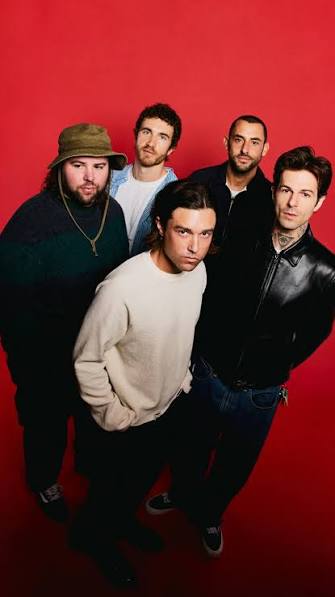 The Neighbourhood
 Upcoming Tours, Tickets and Music Guide
The Neighbourhood band history, Jesse Rutherford, Sweater Weather, albums through ultraSOUND, touring return and concert ticket guide.
The Neighbourhood created one of the most recognizable atmospheres in modern alternative music by combining shadowy guitar tones, understated R&B rhythms, pop melodies and an unusually consistent visual identity. Formed in Newbury Park, California, in 2011, the band became internationally known through “Sweater Weather,” but its catalogue extends far beyond that defining song.
Albums including I Love You., Wiped Out!, The Neighbourhood, Chip Chrome & The Mono-Tones and ultraSOUND reveal a group interested in romance, isolation, image-making and the strange atmosphere of life in Southern California.
Frontman Jesse Rutherford's intimate vocal style helps connect the different phases, while the guitars, bass, drums and changing electronic textures give the music a distinctive late-night energy. After a lengthy pause, the group returned with new recordings and a global tour.
For listeners exploring The Neighbourhood tours, concert tickets or songs beyond the famous singles, their story is about the balance between a recognizable aesthetic and a willingness to keep changing what happens inside it.
The Band's Beginnings in Southern California
The Neighbourhood formed in the Newbury Park area of California in 2011. The musicians developed within a Southern California environment shaped by rock, hip-hop, pop and the visual language of the region. That combination helped them build a sound that was difficult to reduce to one alternative-rock subgenre.
Jesse Rutherford became the lead voice, while guitarist Zach Abels, guitarist Jeremy Freedman, bassist Mikey Margott and drummer Brandon Fried contributed to the band's familiar musical identity. The relationships within that lineup helped create a sound where guitars could be atmospheric rather than dominant and rhythm could be as important as distortion.
What Made Their Early Music Different
The group's early recordings stood apart from many guitar bands because they embraced space and mood. A song could rely on a subtle bass pattern, a restrained beat and a guitar line that seemed to hover in the background. Rutherford often delivered lyrics with a conversational closeness rather than a shouted rock approach.
That restraint was deliberate. It created an atmosphere suited to themes of longing, anxious attraction and uncertain relationships. Instead of building every track toward a huge chorus, the band frequently allowed a small musical detail to become the most memorable part of the arrangement.

The Neighbourhood Upcoming Tours
The I'm Sorry... EP and First Recognition
The 2012 EP I'm Sorry... helped introduce The Neighbourhood's musical language. Songs including “Female Robbery” and “Wires” established the group's interest in dark textures, memorable hooks and the uneasy side of romantic storytelling. Those early tracks still feel connected to the larger catalogue even though the production developed later.
The EP also showed the value of a strong visual identity. The band's black-and-white imagery was not simply attached after the songs became successful; it complemented the restrained colors and ambiguous emotions in the music. Hearing and seeing The Neighbourhood increasingly felt like entering one coordinated creative world.
I Love You. and the Debut Album
The 2013 debut album I Love You. gave the band a full-length platform for the sound it had begun building. The record includes “Sweater Weather,” “Afraid,” “Let It Go,” “Female Robbery” and “W.D.Y.W.F.M.?,” songs that approach tension and relationships from different angles while sharing a darkly melodic atmosphere.
Its success was important because it showed that a restrained alternative-rock record could reach a wide audience without surrendering its personality. Guitar, bass, electronic details and Rutherford's voice worked together rather than competing for prominence, allowing the album to feel coherent across its changes in pace.
How “Sweater Weather” Became a Signature Song
“Sweater Weather” became The Neighbourhood's breakthrough single and reached No. 1 on Billboard's Alternative chart. The song's appeal depends on a memorable guitar figure, a controlled rhythm and a vocal that feels intimate even when the chorus expands. It creates a particular sense of closeness without describing every emotion directly.
The recording developed a long cultural life beyond its initial radio success, finding new listeners through streaming and social platforms. For many people, it serves as the introduction to the band's entire sound. Yet the quieter details of the arrangement explain its influence just as much as the easily recognizable hook.
“Afraid” and the Anxiety Beneath the Mood
“Afraid” provides a different perspective from the romantic atmosphere of “Sweater Weather.” The song confronts insecurity and the fear of being replaced, using a strong rhythm and an increasingly tense vocal performance. Its emotional language is direct, but the production preserves the band's characteristic sense of distance.
This mixture is central to The Neighbourhood's identity. Their songs often sound smooth on the surface while describing a much less comfortable inner experience. The contrast encourages repeated listening because the atmosphere can feel inviting even when the words are uneasy.
Black-and-White Imagery as a Creative Language
The Neighbourhood became closely associated with monochrome photography, clothing and artwork. That decision gave the band's visual world an instantly recognizable quality and reinforced the emotional ambiguity of its songs. It also distinguished the project from alternative acts that used more colorful or chaotic promotional imagery.
The visual approach did not dictate every musical choice, but it supplied continuity. A record could experiment with hip-hop production or dreamlike guitar textures while still appearing to belong to the same aesthetic world. In live performance, lighting and presentation can extend that atmosphere without needing an elaborate story.
Wiped Out! and a Wider Emotional Range
The second studio album, Wiped Out!, arrived in 2015. Songs such as “R.I.P. 2 My Youth,” “Daddy Issues,” “Cry Baby,” “Prey” and “Wiped Out!” explored a darker and sometimes more expansive version of the band's sound. The album also strengthened the group's connection with listeners drawn to reflective, emotionally complicated alternative music.
“Daddy Issues” became especially recognizable as the catalogue continued reaching new generations online. Its rhythm and melody are accessible, but the emotional implications are far less straightforward. That blend of easy listening and difficult feeling is one of the reasons the album remained important long after its original release.
“R.I.P. 2 My Youth” and Growing Older
“R.I.P. 2 My Youth” uses its title to announce a change in perspective. Rather than treating youth as an uncomplicated period of freedom, the song considers loss, experience and the distance between expectation and reality. It became an important example of how The Neighbourhood could build an emotionally heavy subject into an appealing alternative-pop arrangement.
The track also works as a bridge between albums. It retains the earlier atmosphere but suggests a group becoming more comfortable with larger themes. The music remains intimate, yet its emotional setting has expanded beyond the earliest romantic stories.
A Willingness to Use Hip-Hop and R&B Influences
The group's 2014 mixtape #000000 & #FFFFFF demonstrated how naturally hip-hop collaborations and rhythmic experimentation could fit within The Neighbourhood's identity. That direction separated the band from guitar groups that regarded pop or rap influences as something outside the boundaries of alternative rock.
The broader catalogue continues to show that flexibility. Beats, processed vocals, synthesizers and bass-heavy arrangements can appear alongside indie guitar without making the music lose its shape. Rutherford's singing style remains an important connection between those different choices, often providing the same close, restrained emotional tone.
The Self-Titled Album and “Softcore”
The 2018 album The Neighbourhood developed the band's melodic alternative-pop identity further. Songs including “Softcore,” “Void,” “Nervous” and “You Get Me So High” helped introduce this period to listeners who connected with the mixture of atmospheric guitars, electronic details and personal lyrics.
“Softcore” became particularly prominent across streaming communities, illustrating how a song can gain new cultural momentum outside its original release cycle. It also reveals the group at its most direct: a memorable melody paired with a feeling that is more complicated than the smooth arrangement might first suggest.
Hard to Imagine the Neighbourhood Ever Changing
The 2018 collection Hard to Imagine the Neighbourhood Ever Changing brought together material from several related releases, giving listeners another way to explore the band's work from that period. It is useful context for songs that circulated through EPs and streaming playlists rather than appearing only on one traditional studio album.
Its long title also fits a band whose public identity was so visually consistent. The music could change considerably while fans still recognized the atmosphere. That apparent contradiction became increasingly important as The Neighbourhood moved into more concept-driven creative work.
Chip Chrome & The Mono-Tones
The 2020 album Chip Chrome & The Mono-Tones introduced a stronger theatrical concept, with Rutherford performing through the persona of Chip Chrome. Songs such as “Cherry Flavoured,” “Pretty Boy,” “Lost in Translation” and “Devil's Advocate” broadened the arrangements and challenged assumptions about the band's visual identity.
The project shows how an artist can create a new character while retaining familiar musical instincts. Even with brighter and stranger imagery, the songwriting often returned to attraction, insecurity and the desire for connection. The experiments enlarged the Neighbourhood world rather than replacing the entire foundation.
Taking Time Away from the Band
After years of recording and touring, The Neighbourhood entered a prolonged hiatus. This interruption created uncertainty for fans who associated the group with an unusually cohesive musical and visual identity. Rutherford pursued other creative work, while listeners continued discovering older songs through digital platforms.
A pause can alter how a catalogue is heard. Tracks from different periods become available without the pressure of a continuous release schedule, and new audiences may encounter the albums in an entirely different order. By the time the band returned, its older recordings had continued developing a life of their own.
Reuniting for a New Recording Chapter
The band returned with its 2025 album ultraSOUND, stylized as (((((ultraSOUND))))). The release marked a substantial comeback after the hiatus, with the familiar group identity appearing again in promotional and touring materials. Brandon Fried was also listed in the reunited touring lineup after having left the band in 2022.
The return was not presented only as a request to remember the early hits. A full album and international touring plans showed that The Neighbourhood wanted to develop new work in a recognizable but updated musical environment. The combination gave returning fans a chance to hear both continuity and change.
What ultraSOUND Adds to the Catalogue
The 2025 album contains songs such as “Hula Girl,” “OMG,” “Lovebomb,” “Private,” “Lil Ol Me,” “Planet,” “Rabbit” and “Daisy Chain.” The record incorporates guitar-driven indie sounds, dreamier textures and rhythmic influences that connect with several earlier periods of the band.
Some tracks approach an expansive British-rock sensibility, while others retain the close, late-night atmosphere associated with The Neighbourhood's classic recordings. The stylistic variation prevents the comeback from functioning as a simple imitation of I Love You. or Wiped Out!.
“Private” and a Familiar Kind of Intimacy
“Private” is useful for understanding how the new material connects to the group's established identity. Its title suggests a world of hidden emotion, boundaries and closeness, ideas already central to much of the earlier catalogue. The arrangement gives those concerns a new musical setting without demanding a dramatic change in the singer's approach.
The track also demonstrates how a mature band can use restraint as an advantage. After years of success and a long pause, not every return needs to be louder or more elaborate. Sometimes the distinctive part is the controlled atmosphere that made the work recognizable in the first place.
THE WOURLD TOUR and the Live Return
The Neighbourhood announced THE WOURLD TOUR in connection with the comeback album. The global run included major venues in North America and international dates, bringing the group's music back to audiences who had been waiting through the hiatus. For longtime fans, that return carried both musical and emotional significance.
A live show now has a substantial range to draw from: the breakthrough songs, the darker second-album material, the electronic experiments of 2018, the Chip Chrome chapter and the tracks from ultraSOUND. The setlist is subject to change, but the catalogue provides enough breadth for a concert to feel like more than a greatest-hits replay.
Why Their Songs Translate on Stage
The band's music often uses soft vocals and atmospheric production, but a concert reveals the physical role of bass, drums and guitars. A guitar figure that sounds delicate on record can become much larger through live amplification, while a restrained rhythm can still produce a powerful audience response.
These contrasts make songs such as “Sweater Weather,” “Daddy Issues,” “Softcore” and newer tracks effective in different ways. Some create large singalong moments, while others encourage the audience to stay inside the mood rather than constantly shouting along. That variety is an important live strength.
Where New Fans Should Begin
Start with “Sweater Weather” and “Afraid” to understand the breakthrough era, then move to “Daddy Issues,” “R.I.P. 2 My Youth” and “Cry Baby” for the expanded atmosphere of Wiped Out!. “Softcore” and “You Get Me So High” offer a route into the 2018 recordings.
Next, explore Chip Chrome & The Mono-Tones and ultraSOUND as complete albums. Hearing the records in sequence makes the changes in production and visual identity more meaningful. It also prevents a streaming playlist from defining the band entirely through the two or three songs that circulate most widely.
Finding The Neighbourhood Tour Tickets
For The Neighbourhood tours, a useful ticket listing should identify the specific date, city, venue and event title. A global tour announcement may cover many countries and ticketing arrangements, so an older promotional post should not be treated as confirmation that every date is still available.
TourAnnouncement's StubJet buttons can use full event-specific URLs when a matching real event ID exists in the connected inventory. The article explains the music and history; the event section is where changing practical details should appear. Avoid assuming that an album release automatically means a concert in a particular city.
Explore The Neighbourhood Tours and Live Music
The Neighbourhood built a lasting identity by combining intimate vocals, atmospheric production and a visual world that listeners could recognize immediately. The return with ultraSOUND expanded that story, bringing new music into a catalogue whose earlier tracks continued reaching fresh audiences during the band's absence.
Explore current The Neighbourhood concert listings to compare confirmed performances and ticket options. The live experience can connect different periods of the group without flattening them into the same sound, offering both the familiar atmosphere and the unpredictability that comes with a band still developing its music.
The Neighbourhood FAQs
Get ready for the The Neighbourhood live show. Find the best The Neighbourhood tickets, check tour setlists, and get essential venue details. Read our quick fan FAQ to make the most of your The Neighbourhood music concert experience.
Where and when did The Neighbourhood form?
The Neighbourhood formed in Newbury Park, California, in 2011. The group's musical identity developed around alternative-rock guitars, restrained rhythms, melodic vocals and influences from R&B and hip-hop. Jesse Rutherford became the lead singer, joined by musicians including Zach Abels, Jeremy Freedman, Mikey Margott and Brandon Fried. Early releases such as the I'm Sorry... EP helped establish the band's shadowy atmosphere and black-and-white visual style before the 2013 album I Love You. introduced it to a larger audience. The Neighbourhood's sound has continued evolving across several albums, but the close vocal delivery and carefully controlled mood remain recognizable parts of its music and live performances.
Who are the members of The Neighbourhood?
The Neighbourhood is identified with singer Jesse Rutherford, guitarists Zach Abels and Jeremy Freedman, bassist Mikey Margott and drummer Brandon Fried. The musicians first developed their sound together in California and helped establish the band's mixture of indie rock, atmospheric production and R&B-influenced rhythm. The group's history has included a lengthy hiatus and lineup developments, so older descriptions of who was active at a particular moment may not describe every later period. Brandon Fried was included again in the band's announced 2025 reunion and 2026 touring lineup. For an individual concert, the event announcement remains the most appropriate place to check the lineup and any specially billed guests.
Why is Sweater Weather by The Neighbourhood famous?
Sweater Weather is The Neighbourhood's signature breakthrough song from the 2013 album I Love You. It reached No. 1 on Billboard's Alternative chart and became closely associated with the band's intimate vocals, moody guitar atmosphere and understated rhythm. The track's popularity continued well beyond its original radio release as new listeners discovered it through streaming and social platforms. Its appeal comes from a recognizable opening figure, an immediately memorable melody and a sense of closeness that fits the lyrical subject. Although it is the group's most widely recognized song, tracks such as Daddy Issues, Softcore and R.I.P. 2 My Youth reveal important additional sides of the catalogue.
What are The Neighbourhood’s main albums?
The Neighbourhood's main studio albums include I Love You. from 2013, Wiped Out! from 2015, The Neighbourhood from 2018, Chip Chrome & The Mono-Tones from 2020 and ultraSOUND from 2025, stylized with multiple parentheses. The band has also released EPs, mixtapes and collections such as Hard to Imagine the Neighbourhood Ever Changing. Each project explores a different combination of guitar music, alternative pop and rhythmic production. I Love You. contains Sweater Weather, Wiped Out! includes Daddy Issues, and the self-titled album features Softcore. ultraSOUND marked a new recording chapter after a long break, so listening chronologically makes the changes easier to hear.
Did The Neighbourhood break up and reunite?
The Neighbourhood entered a lengthy hiatus after several years of recording and touring. During that period, singer Jesse Rutherford and other members pursued different activities, while earlier songs continued gaining listeners through streaming platforms. The group returned with the 2025 album ultraSOUND and a major international tour announced for 2026. The comeback included new material rather than only performances of earlier hits. Official touring announcements also listed Brandon Fried as part of the reunited lineup. A hiatus is not the same as a permanent end, and the band's return created opportunities to hear several musical eras together. Current performance details should always be checked separately from older reunion news.
What genre of music does The Neighbourhood play?
The Neighbourhood is generally classified as alternative rock or alternative pop, but its music also draws substantially from R&B, indie rock, hip-hop, dreamlike guitar textures and electronic production. Songs such as Sweater Weather and Afraid established the group's restrained, shadowy sound, while later records introduced stronger rhythmic experimentation and concept-driven presentation. The band often uses soft vocals and memorable melodies against unsettling or emotionally complicated lyrics. This contrast gives the music an intimate feeling even when the production becomes expansive. No single genre label captures every release, which is why new listeners often find that different albums suit very different moods and listening preferences.
What should fans expect from The Neighbourhood tours?
The Neighbourhood's concerts can draw from several distinct recording periods, including early favorites such as Sweater Weather and Afraid, later songs including Daddy Issues and Softcore, and material from the comeback album ultraSOUND. The live sound combines atmospheric guitars, bass, drums, electronic textures and Jesse Rutherford's intimate vocal style. A performance may alternate between large singalong moments and quieter songs built around mood. Exact setlists, support acts and venue arrangements can change. Fans seeking tickets should confirm the city, performance date, venue and current availability. TourAnnouncement should display a full StubJet ticket URL only when the connected inventory provides a real event-specific ID.