
Gary Owen Upcoming Tours
Follow Gary Owen’s stand-up career from Navy performances and BET ComicView to touring theaters, comedy specials, films and new live material.
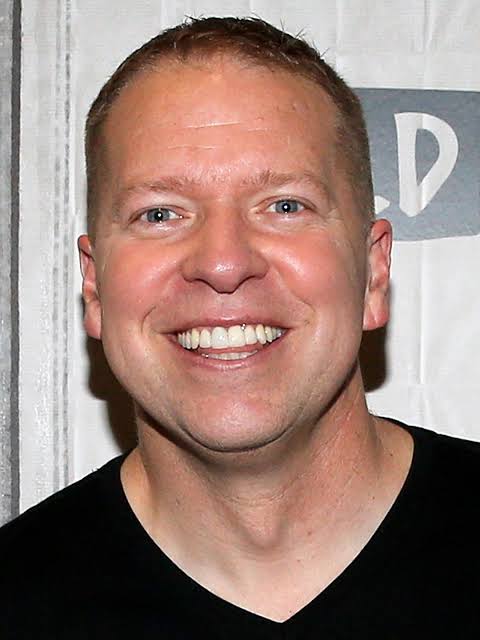 Gary Owen
: From BET ComicView to Live Stand-Up
Gary Owen’s journey from early club comedy to BET, movies, stand-up specials, podcasting and theater tours, with practical advice for ticket buyers.
Gary Owen built a stand-up career by performing in rooms where the audience decided whether a comedian belonged long before a television producer could make that decision. Born in Ohio, he began telling jokes while serving in the United States Navy, then found an especially receptive following at predominantly Black comedy venues in San Diego. His breakthrough came through BET's ComicView, where his willingness to discuss cultural differences and his own outsider position helped him connect with viewers who might not have expected him on that stage. Since then, Owen has remained a touring comedian while appearing in films, television series, podcasts and a long succession of recorded specials. His material draws on family, relationships, parenting, race, awkward social encounters and events from his own life. A Gary Owen comedy show is therefore less about a single famous punch line than about hearing a practiced storyteller turn personal experiences into the kind of blunt, energetic conversation that has defined his career for decades.
Who Is Gary Owen?
Gary Owen is an American stand-up comedian and actor whose professional name differs slightly from the name Gary Stephen Owens commonly listed in biographical references. He was born in Cincinnati, Ohio, and developed his reputation through comedy clubs, BET television exposure, national touring and film roles.
Although movie audiences may recognize him from popular comedies, stand-up remains the core of his professional identity. On stage, he tells stories with a fast, conversational style and frequently addresses uncomfortable subjects rather than treating them as forbidden territory. His material is personal enough that his own family history and relationships can become recurring subjects, but he also uses those stories to reach wider observations about communication, expectations and cultural misunderstandings.
Growing Up in Ohio Before Comedy
Owen's early life in Ohio became part of the biographical background he later discussed in interviews and on stage. Before national television and movie roles, he had an upbringing far removed from the polished entertainment image sometimes associated with successful comedians.
Those experiences helped shape his plainspoken delivery. He often presents a story as a problem he encountered rather than a neatly rehearsed philosophical argument. A family disagreement, workplace misunderstanding or ordinary embarrassment can become funny because he admits his own confusion or bad judgment. The approach works best when the audience feels it is hearing a person describe a real situation, even though the storytelling has clearly been sharpened through performance.
Military Service and Early Performances
Before stand-up became his full-time profession, Owen served in the United States Navy. He has described performing at military functions and trying material in front of fellow service members as part of his early development. Military life provided a distinctive audience: people from different backgrounds sharing routines, rules and the absurdities of working inside a large organization.
Owen's military experience remained a source of anecdotes long after he began touring nationally. He learned that humor could connect people who had little in common socially, provided the performer understood the room. That skill would become especially important when his career shifted toward comedy venues with audiences quite different from the spaces where he had first experimented with jokes.

How San Diego Comedy Rooms Changed His Path
After beginning stand-up, Owen struggled to secure enough stage time in some conventional club settings. He began appearing regularly in rooms serving predominantly Black audiences in San Diego, where he discovered both opportunities and an audience willing to judge the material on its own merits.
This part of his history is important because it helps explain the relationship between Owen and the audience that later made him recognizable on BET. He did not become involved in that comedy circuit only after television exposure. He built connections through repeated performances, learning which references worked and how to respond when the crowd was skeptical. Trust was earned through jokes and stagecraft rather than assumed from the outset.
The BET ComicView Breakthrough
Owen auditioned for BET's ComicView in 1997 and quickly became associated with the program. His television appearances led to further opportunities, including hosting the stand-up showcase. The platform introduced him to a much wider national audience and created one of the defining relationships of his career.
The importance of ComicView is sometimes simplified into the surprise of a white comedian appearing on a network with a strong Black audience. That description leaves out the work involved. Owen had already performed in those rooms, learned how to tell stories there and developed the confidence needed to withstand immediate audience reactions. The BET opportunity gave that experience a national platform. It also helped establish that his career would not follow the most conventional path of a stand-up performer.
Why Gary Owen's Audience Is Distinctive
Gary Owen has long been noted for attracting a strong Black following, a relationship that began in comedy clubs and grew through BET. His jokes frequently address differences between communities, everyday assumptions and the awkward moments that occur when people believe they understand one another better than they do.
This is a subject that requires an audience's trust. Cultural jokes can fail when they feel distant, patronizing or designed merely to provoke. Owen's successful material tends to begin with his own experiences and willingness to be the person who looks foolish. The comedy works through recognizable interactions rather than pretending that one story explains an entire community. This established audience relationship remains a major part of how his live career developed.
From the Comedy Stage to Film Roles
Owen expanded into film while maintaining his stand-up schedule. His credits include Daddy Day Care, Little Man, College, Think Like a Man, Think Like a Man Too, Ride Along, Meet the Blacks and Back on the Strip. These roles placed him alongside well-known performers and exposed his comic personality to moviegoers who might not have followed his stand-up specials.
Film comedy operates differently from stand-up. The actor needs to work within a script, accept the rhythm of other performers and make a scene succeed as part of a larger story. Owen's screen appearances demonstrate that his timing can function in those collaborative settings. Nevertheless, his tour work has always allowed a more direct connection with audiences than a supporting film part can provide.
College, Think Like a Man and Ride Along
Three film credits illustrate different parts of Owen's screen career. In College, his character Bearcat added to the film's broad comedy style. Think Like a Man and its sequel placed him within an ensemble built around relationships and competing expectations. Ride Along connected him with the action-comedy world associated with Ice Cube and Kevin Hart.
These projects matter to fans because they show the range of audiences that may recognize his face. Somebody attending a Gary Owen show might know him from one of those films without having seen ComicView, while a longtime stand-up follower may regard the screen work as a secondary part of his career. Both routes lead back to the same performer, but the live set is his own rather than a character written for him.
Television Work Beyond ComicView
Owen appeared in Tyler Perry's House of Payne as Zach the barber and co-hosted the truTV sketch series Upload with Shaquille O'Neal. He also starred in the BET reality series The Gary Owen Show, which presented more of his family life to television audiences.
These projects highlight a tension common in celebrity comedy: viewers may know the performer through edited television appearances, while the stage persona can be more confrontational or adult-oriented. A comedy concert should not be assumed to resemble a family sitcom just because the headliner has appeared in one. Owen's live material is designed for the audience in the room and can be substantially more candid than a scripted program.
Stand-Up Specials Across His Career
Gary Owen has released multiple stand-up specials, including Urban Legend, True Story, I Agree with Myself, I Got My Associates, #Doin' What I Do and Black Famous. These projects document different stages of his career and the way his storytelling changed as his personal circumstances and public profile developed.
Watching more than one special is useful because a comedian's recurring interests do not necessarily produce identical material. Early sets may explore getting established and feeling out of place; later work can focus more on marriage, parenting, divorce, fame and the responsibilities that arrive with age. Owen's willingness to draw on his own situation means the tone of the jokes can evolve even when his delivery remains unmistakably his.
Black Famous and a Recognizable Comedy Identity
The title Black Famous reflects a long-running feature of Owen's career: recognition within a particular audience that may not always match mainstream perceptions of celebrity. That identity grew from his club performances and BET success, and it later informed the way he described his public following.
The special is also a useful example of how Owen approaches a potentially uncomfortable subject through the specific circumstances of his own work. Instead of simply offering general observations about fame, the material draws on the strange situations created when different people know him for different reasons. Audience recognition can be flattering, confusing or embarrassing, and he turns those contradictions into stories.
Broken Family and Gary Owen... No S
More recent recorded material has included specials titled Broken Family and Gary Owen... No S. These titles show that Owen continues to draw on personal circumstances and his own professional identity for comedic material. The missing final letter in No S even plays with the difference between his public name and his birth surname.
Personal comedy can invite audiences to treat a performer's life as an ongoing public argument. A more useful way to approach the specials is to recognize that stage material is a crafted point of view. Owen chooses which events to discuss and how to frame them for laughter. It is entertainment built from personal experience, not a substitute for hearing every side of a private disagreement.
No Hard Feelings and Theater Touring
The No Hard Feelings tour became an important later stage in Owen's live career, bringing his stand-up to theaters across North America. The name fits a comic style that often enters potentially tense territory while asking the audience to follow the story rather than become defensive about every observation.
Moving from club rooms into larger theaters changes both delivery and expectation. A crowd can include longtime BET viewers, podcast listeners and people who first encountered Owen through a film or a recent clip. The material has to communicate across those different points of entry. Tour branding and show programs change over time, so the title of one successful run should never be treated as a guarantee that every future appearance contains the same set.
The Get Some Podcast and Long-Form Conversation
Owen also hosts Get Some with Gary Owen, a podcast that allows a less compressed form of storytelling than stand-up. Podcasts offer room to revisit current events, discuss career experiences, respond to audience topics and have extended conversations without requiring a punch line every thirty seconds.
For listeners, the podcast can provide useful context before attending a show. It reveals the conversational side of a comedian whose stage material is necessarily condensed and edited for maximum response. But the two formats serve different purposes. A podcast episode is built around discussion; a ticketed stand-up performance is crafted to produce sustained laughter and the distinct energy of a live audience.
The Balance Between Personal and Observational Humor
A typical Gary Owen set draws energy from stories about recognizable experiences: relationships, family expectations, mistaken assumptions or people behaving unpredictably. He often presents himself as the person in the story who fails to understand what everyone else seems to know. That position gives the audience permission to laugh at him, not only at the other characters.
He also makes observational jokes about cultural habits and the small differences that can create confusion between people. These observations work because of the quick shifts between description and reaction. A seemingly ordinary exchange can escalate through the way Owen repeats a phrase, changes his voice or reveals the misunderstanding that makes the situation absurd.
What to Expect at a Gary Owen Comedy Show
A Gary Owen live show is typically direct, conversational and intended for audiences comfortable with candid adult comedy. Stories can involve sensitive personal topics, cultural references and strong language. Unlike a prerecorded special, the pacing depends partly on the room: laughter can extend a pause, and an audience's energy may influence how a story is delivered.
The event should be approached as a stand-up performance rather than a guarantee of film appearances, celebrity guests or a reproduction of a particular TV segment. Fans may recognize his voice and comic perspective, but the material can differ between tours. Official event details are the best source for start times, age guidance and any support performers.
Planning Tickets and Venue Details
Before purchasing Gary Owen tickets, confirm the exact performance date, venue, door time and seat location. Comedy tours can involve multiple shows in the same city, sometimes with different performance times or restrictions. Age policies and rules about recording are set by individual venues and may differ even when the headliner is the same.
Any premium package should be evaluated separately from standard admission. Do not assume that a meet-and-greet, photographs or merchandise are included unless the listing explicitly says so. At a large theater, accessibility, parking and late-entry policies can also affect the experience. Checking those details is more useful than relying on generalized assumptions about a comedian's previous appearances.
Why Gary Owen Has Remained a Touring Performer
Owen's career has lasted because it connects several kinds of recognition. Some fans remember his early breakthrough on BET. Others know his film roles, television work, podcast or newer recorded specials. The stage brings those groups together without requiring him to perform as any single screen character.
His delivery retains the speed and confidence developed through years of club work, while the source of material changes as life changes. That combination is essential to a long-running comedian: audiences want the voice they recognize, but they do not necessarily want the same jokes repeated indefinitely. Owen's willingness to use new experiences keeps the familiar style from becoming entirely predictable.
Explore Gary Owen Tours and Stand-Up Comedy
Gary Owen tours provide a direct way to experience a comedian whose career has connected military performances, club stages, BET, films and long-form podcasting. His live storytelling can be blunt, personal and energetic, with material that reflects different points in his life rather than one fixed television persona.
For an individual Gary Owen performance, verify the venue, date, admission requirements, seating details and ticket availability. No specific joke, supporting act or special event benefit is guaranteed simply because it appeared elsewhere. The core attraction is hearing an experienced stand-up performer shape familiar problems and awkward encounters into a shared evening of laughter.
Gary Owen FAQs
Explore Gary Owen stand-up and comedy performances, learn what makes the act distinctive, and check the venue and ticket details that matter before attending.
Who is Gary Owen, the American comedian?
Gary Owen is an American stand-up comedian and actor born in Cincinnati, Ohio. Biographical sources commonly give his birth name as Gary Stephen Owens, while his professional comedy name omits the final letter. He began developing his stand-up career while serving in the United States Navy and later became strongly associated with BET's ComicView. Owen is known for direct, conversational storytelling about family, relationships, culture and awkward personal experiences. His career also includes television roles, film appearances, comedy specials and the Get Some with Gary Owen podcast. Stand-up remains central to his identity, and his tours allow audiences to hear material shaped by his experiences rather than characters written for a film or sitcom.
How did Gary Owen become famous on BET ComicView?
Gary Owen auditioned for BET's ComicView in 1997 after developing stage experience, including performances before predominantly Black audiences in San Diego. His appearances on the program led to a hosting opportunity, helping introduce him to a large national television audience. The breakthrough was notable because he was a white comedian working successfully in a comedy environment with a strong Black following. However, that audience relationship was built through live performances before the television exposure, not invented for the show. ComicView became the platform through which many viewers first recognized his name, and it helped him move toward a full-time touring career. Later film and television roles expanded his visibility further.
Did Gary Owen serve in the military before comedy?
Yes. Gary Owen served in the United States Navy before stand-up became his full-time profession. He has described performing for fellow service members and developing confidence by entertaining military audiences. Those experiences exposed him to different personalities and gave him material about workplace rules, authority and the odd situations created by military routines. Afterward, he continued working in comedy clubs, particularly in the San Diego area. The early years are important because they show how gradually his stage career developed before BET made him nationally recognizable. His military background remains one part of the story, but his professional identity was built through the repeated work of learning to connect with live audiences.
What movies and television shows has Gary Owen appeared in?
Gary Owen has appeared in films including Daddy Day Care, Little Man, College, Think Like a Man, Think Like a Man Too, Ride Along, Meet the Blacks and Back on the Strip. On television, he appeared in Tyler Perry's House of Payne, starred in The Gary Owen Show on BET and co-hosted Upload with Shaquille O'Neal on truTV. These roles introduced him to viewers who might not have followed his stand-up career. Film and television comedy require a different performance style from working alone on stage, but his conversational timing remains recognizable. Attending a Gary Owen stand-up show does not mean the characters or actors from those screen projects will appear.
Which Gary Owen stand-up specials should new fans watch?
Gary Owen's recorded specials cover several phases of his career. Titles include Urban Legend, True Story, I Agree with Myself, I Got My Associates, #Doin' What I Do and Black Famous. More recent recorded shows include Broken Family and Gary Owen... No S. Watching material from different periods reveals how his subjects evolved from early professional experiences into family, relationships and later personal circumstances. The delivery remains recognizably direct, but the stories reflect changing parts of his life. A recorded special can help newcomers understand his style before buying a ticket, though a touring set may use newer jokes and should not be expected to repeat any one special exactly.
What is Gary Owen's Get Some podcast?
Get Some with Gary Owen is a conversational podcast hosted by the comedian. It gives him room to discuss entertainment, personal experiences, current topics and stories without the tight setup-and-punch-line structure required during a stand-up show. Podcast listeners can hear a less compressed version of the personality they may already recognize from his stage performances. The project also gives Owen a way to maintain a connection with an audience between tours and specials. However, a podcast and a ticketed show are different formats: episodes can move through extended discussions, while stand-up is designed around the rhythm of jokes and live reactions. Each may appeal to different parts of his following.
What should fans expect from a Gary Owen live comedy show?
Gary Owen's stand-up shows typically feature energetic storytelling, candid observations and material drawn from personal experiences, cultural encounters and family life. His delivery is conversational but direct, and the jokes may include mature language or subjects. The exact material depends on the tour, so titles such as No Hard Feelings should not be interpreted as permanent descriptions of every future set. Fans should check the performance listing for age guidance, seating, door times and any restrictions on cameras or recording. They should also confirm whether a premium package includes a meet-and-greet rather than assuming it does. The central attraction is hearing an experienced comedian work with a real audience.